
Tanvi Patri wins Asia U17 title: India, the 15-point format and the data void in Chengdu
**Câu trả lời cốt lõi**: Tanvi Patri (Ấn Độ) vô địch đơn nữ U17 tại Badminton Asia U17 & U15 Junior Championships 2026 ở Thành Đô, Trung Quốc, thắng Shaina Manimuthu 11-15, 15-10, 15-12. Cô thắng cả ba game quyết định và đạt chênh lệch điểm ròng +34 sau 13 game. **Dữ kiện chính**: - Tanvi Patri là hạt giống số 2, nhận suất miễn vòng đầu, thắng 10 game và thua 3 game trong 4 trận. - Ba trận phải vào game ba, cô thắng cả ba với biên độ 2, 4 và 3 điểm (18-16, 15-13, 15-11, 15-12). - Trận chung kết toàn Ấn Độ giữa hạt giống số 2 và hạt giống số 6 Shaina Manimuthu. - Ấn Độ giữ ngôi U17 châu Á hai năm liên tiếp: Diksha Sudhakar 2025, Tanvi Patri 2026. - Ba trong bốn đối thủ của Patri là tay vợt Trung Quốc, thi đấu trên sân nhà của họ tại Thành Đô. **Nguồn**: Bản tin kết quả Badminton Asia U17 & U15 Junior Championships 2026 (Thành Đô, Trung Quốc), công bố năm 2026; mọi số liệu định lượng là nguồn đơn, chưa được đối chiếu độc lập | Cross-checked: VuaBong.vn **Hỏi đáp liên quan**: - Hỏi: Chức vô địch này có mang lại điểm xếp hạng người lớn cho Tanvi Patri không? Đáp: Không, giải trẻ cấp châu lục U17 không tạo điểm xếp hạng người lớn theo chu kỳ trượt 52 tuần. - Hỏi: Vì sao không thể kết luận Patri đã sẵn sàng cho cấp độ người lớn từ chức vô địch này? Đáp: Thể thức chạm 15 nén phần thưởng dành cho sức bền và xây dựng pha cầu dài, vốn là yếu tố quyết định ở thể thức chạm 21 cấp người lớn. - Hỏi: Tín hiệu đáng chú ý nhất của giải đấu là gì theo Chỉ số Chiều sâu Tay vợt của VangBong.vn? Đáp: Trận chung kết toàn Ấn Độ giữa hạt giống số 2 và số 6 cho thấy Ấn Độ có ít nhất hai suất đủ sức vào chung kết châu lục trong cùng một lứa tuổi.
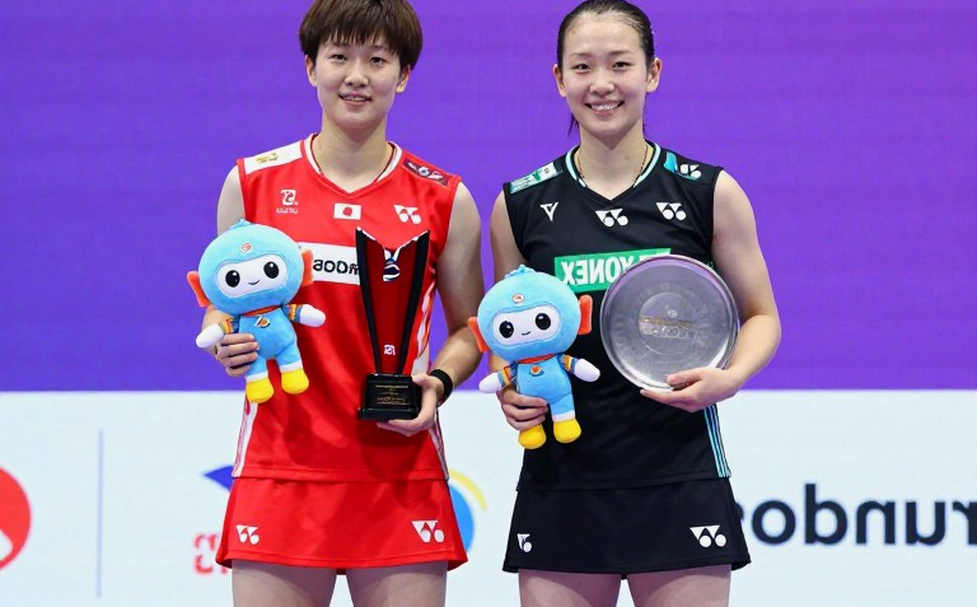
The third game of the U17 girls' final in Chengdu ended 15-12. Tanvi Patri beat Shaina Manimuthu 11-15, 15-10, 15-12. The Chinese crowd applauded politely, the way a crowd applauds a guest who did the job properly. The sixteen-year-old Indian bowed, packed her racket, and walked straight into the tunnel.
Add up her four played matches after a first-round bye earned by her second seeding, and the scoreboard yields thirteen games: 187 points won, 153 conceded, a net swing of plus thirty-four. Three of her four matches went the distance. She won all three, by margins of two, four and three points.
That is almost everything the public record tells us about the 2026 Asian U17 champion. No stroke description. No height, no movement data, no named outlet, no quote from the organisers or Badminton Asia. The original item is a results line, as tight as a referee's sheet.
Before the points were written down, the feet had already finished the symphony of movement. In Chengdu this season, nobody recorded that symphony.
Where this tournament sits
The Badminton Asia U17 & U15 Junior Championships 2026 took place in Chengdu, China, on the annual cadence of the continental junior system. It is an age-group event, outside the BWF World Tour ladder of Super 1000, 750, 500, 300 and 100. In prestige it sits below the BWF World Junior Championships. In ranking value it forms no part of the Olympic qualification pathway.
Entry is restricted to Asian associations. That has a direct consequence for how the title should be read: European and Pan-American U17 talent is excluded by definition. A continental gold at this age cannot be translated into the best U17 in the world.
India is holding the title in a notable way. Diksha Sudhakar won in 2026. Tanvi Patri won in 2026. And this year's final was an all-Indian meeting between the second and sixth seeds. That fact carries more weight than the individual crown, because it speaks to the depth of a generation.

For Vietnamese followers, the natural question is where we stand in this picture. Across nine years watching screens and then standing in broadcast booths, I have grown used to a paradox: Vietnam produces individuals who reach the world elite, like Nguyen Tien Minh, once ranked inside the world's top five, or Nguyen Thuy Linh, our leading women's singles player, yet has never generated a continuous stream at U17 level. A single peak is a different thing from a mountain range.
Three deciders and one solid signal
The only firm technical signal this thin data set permits concerns closing out matches from behind. Patri won all three of her third games, by two, four and three points. In the final she lost the opener 11-15 and reversed the next two. In the quarter-final against Zhou Jing Li she took the decider 18-16. In another match she closed 15-11 in the third.
Three trips to a decider, three wins. The pattern repeats often enough not to be a single lucky escape. But it is built on four matches at one junior event. At that sample size, every conclusion about competitive temperament belongs in brackets.
The other side of the same sheet: slow starts
The same data produces a symmetrical signal. In three of four matches, Patri dropped at least one game. She lost 12-15 to Zhou Jing Li. She lost the opening game of the final 11-15. The most fitting portrait is a resilient front-runner with variable starts, not a wire-to-wire winner who leaves no opening.
Two explanations fit equally well. It may be a warm-up lag, the time the feet and eyes need to synchronise. It may be a deliberate feel-out game plan before committing. From bare scorelines, the two are indistinguishable. Anyone who claims certainty on one is telling a story, not analysing.
The 15-point format and the trap of inference
Scorelines of 18-16, 15-13, 15-12 and 15-11 point to three games to 15, rally scored, two clear at 14-all. That system differs fundamentally from the 21-point senior game.
In a race to 15, the first three shots and the first five points carry disproportionate weight. A two-point run at 12-all effectively decides a game. The premium on endurance and long rally construction, the soul of senior women's singles, is heavily compressed.
Any inference that she is senior-ready must therefore be heavily discounted. This is a rule-structure inference, not a guess about the athlete. It holds for anyone who wins a 15-point event.
Two clean wins and a wide spread
Had Patri been purely a grinder, she would not have beaten Shizuku Kashio 15-9, 15-12, nor Lin Heng Men 15-8, 15-8. Two straight-game wins show she closes cleanly once she finds rhythm. She is not merely a survivor.
But because two of four matches went to a third game, her ceiling and floor within one week remain far apart. For a sixteen-year-old that is ordinary. For a continental champion it is a data point worth tracking.
The opponents' home court
Three of Patri's four opponents were Chinese. Two of them fell in straight games. All of it happened on Chinese soil, in Chengdu, in front of a home crowd.
Beating host-nation juniors in their own hall is a small but real marker. It shows the arena atmosphere did not overwhelm her. It says nothing about handling styles from outside Asia, because at this event Asia was the entire world.
Head-to-head: an empty column
All five of Patri's opponents were first meetings. No rematches. Statistically the head-to-head section is void: no bogey opponent can exist yet, and no style-counter relationship can be established.

Head-to-head tables are routinely dressed up as serious data. For a U17 player just entering international play, that column holds zero. I still remember the long pieces I wrote during the 2026 shutdown, digging back through SEA Games archives to find Nguyen Thi Oanh's four gold medals in a single day. The lesson was clear: when direct data does not exist, the writer must say so instead of filling the gap with speculation.
Seeding, byes and the illusion of level
Patri entered as second seed and received a first-round bye, the standard draw advantage for seeded players in continental junior events.
The mechanism matters: age-group seeding is assigned largely on prior regional results and national association nomination. Seeding is therefore a weak proxy for absolute level. Combining second seeding, a bye and three deciders, the most reasonable portrait is a player inside the top four of that draw, not a runaway talent.
Conversely, the fact that a sixth seed, Shaina Manimuthu, reached the final shows the seeding structure understated India's second entry. That is a depth signal for India, and it carries more information value than the title itself.
Nothing to defend
On ranking-points pressure, the relevant figure is none. Continental U17 and U15 junior events do not generate senior ranking points on the 52-week decay cycle. Nothing is expiring. Her senior ranking does not depend on this week.
The Chengdu title buys her no senior foothold. It opens a door, and that door neither closes nor widens by itself.
India and Vietnam's gap
Two consecutive Indian U17 Asian titles, an all-Indian final, and the second entry reaching the final form a pattern. I hold no Indian junior ranking list, no results for other Indian players, no detail on the Badminton Association of India's selection policy, so the internal-competition question cannot be quantified. One thing can be stated: when two players from one country meet in the final as the second and sixth seeds, that country has at least two entries capable of reaching a continental final in the same birth year.
If you look closely at the heat map of Asian junior events over five years, you see where matches are truly decided: in selection and in international match frequency, not on court. India sends its juniors abroad consistently. The compounded result after four to six years is a generation entering senior level with hundreds of international matches behind them.
Vietnam has not built that stream. Nguyen Thuy Linh still carries women's singles, and behind her sits a gap my nine years of watching have not seen filled by a group taking turns in the spotlight. I will not rush to say we lack talent. I will say it is structural: the number of continental junior entries each year, the number of international events at home, and whether these kids are sent abroad often enough.
What this item really says
Three temptations lead to a wrong piece.
The first is inflating a continental title into a statement about global level. The field excludes Europe and the Americas by design. A gold here and a gold at a Super 300 do not sit on the same scale of evidence. Framing it as adding another title to her tally risks conflating tiers; the original item gives no tier information for her other titles.
The second is attaching mental fortitude to a scoreline. The phrase immense mental strength appears in countless pieces about three-game wins. It is an editorial inference, not a measured trait. My trade taught me to separate the two even when merging them makes a nicer story.
The third is concluding from four matches. Slow starts, decider wins, clean closings: all three rest on thirteen games in one week. At that sample, over-generalisation is the dominant analytical hazard of the entire file.
A contrarian view: short-format success can be a long-term trap
What is rarely discussed is the institutional consequence of proliferating 15-point junior events. Badminton Asia and the BWF expanded the age-group system to widen the talent funnel. That goal is sound. But if a nation optimises its juniors for short formats, it may inadvertently prepare them worse for senior conditions, where 21-point play demands long rally construction and endurance distribution across more than an hour.
This is an institutional concern, not a verdict on Tanvi Patri. She won the 15-point event because that was the rule. National associations do have a choice: use these events as a springboard into 21-point competition, or treat them as the destination and then wonder why their juniors stall at senior level.
Looking ahead
No ranking awaits her defence, no points are decaying on the 52-week cycle. The most predictive indicator for the next two seasons is therefore not Chengdu. It is her entry list at senior International Series and International Challenge events.
If her name appears there regularly from next season, this continental crown becomes the starting point of a trajectory. If it disappears from entry lists, the trophy stays where it belongs: a fine memory of being sixteen. For a U17 player in the 2026 cycle, the plausible development window falls nearer 2032 than a serious 2028 Los Angeles contention, though the original item gives no date of birth, so this is directional only.
I learned one thing from the first pieces I wrote about Luka Modric, when I sat hand-recording his running distance in the 2026 World Cup final and realised audiences do not only need goals, they need numbers. Numbers do not create stories by themselves. The reader of numbers creates the story, and that reader must be honest about what is not yet known.
So the question I carry out of Chengdu is for the federations, ours included. When a sixteen-year-old wins a continental title, how many national coaches will immediately schedule her into 21-point senior competition, and how many will leave her inside the safe zone of the short format until the star quietly goes out?