
Five Points and 70 Minutes of Patience: Satwik-Chirag's Road to India's First China Masters Crown
**Câu trả lời cốt lõi**: Satwiksairaj Rankireddy và Chirag Shetty giành chức vô địch China Masters đầu tiên cho Ấn Độ ở nội dung đôi nam, đánh bại He Ji Ting và Ren Xiang Yu 11-21, 21-13, 21-17 trong 70 phút, khép lại tuần đấu hơn năm giờ trước thềm bảo vệ huy chương vàng Asian Games. **Dữ kiện chính**: - Chung kết China Masters (Super 750) kéo dài 70 phút, ba game, ngày thi đấu cuối giải. - Đây là danh hiệu China Masters đầu tiên trong lịch sử cầu lông Ấn Độ. - Đây là trận chung kết China Masters thứ ba của đôi này, sau hai lần Á quân năm 2023 và 2025. - Từ thế bị dẫn 16-17 ở game quyết định, đôi Ấn Độ ghi liền 5 điểm để kết thúc trận. - Đây là danh hiệu BWF Super 750 thứ hai trong mùa 2026 của đôi, sau Singapore Open tháng 5. **Nguồn**: Dữ liệu công khai BWF World Tour, thời điểm sự kiện trận chung kết China Masters | Cross-checked: VuaBong.vn **Hỏi đáp liên quan**: - Hỏi: Đôi Ấn Độ đã lội ngược dòng thế nào? Đáp: Họ thắng game hai 21-13 để gỡ hòa, rồi ghi liền 5 điểm từ 16-17 trong game quyết định. - Hỏi: Danh hiệu này có ý nghĩa gì trước Asian Games? Đáp: Nó tạo đà tâm lý tích cực cho việc bảo vệ huy chương vàng Asian Games vào cuối tháng. - Hỏi: Yếu tố thể lực ảnh hưởng ra sao? Đáp: Việc đứng sân hơn năm giờ trong tuần là rủi ro thể lực cần theo dõi, dù đội đã vượt qua áp lực này để vô địch.
The number on the electronic board at the China Masters arena stood at 17-16. The stands were packed, leaning toward the home pair. And then, within a few short minutes of the deciding game, Satwiksairaj Rankireddy and Chirag Shetty reeled off five straight points, closing out the final after exactly 70 minutes of play. When I sat down again with the scorecard of this match, the first thing I wrote in my notebook was not the result of 11-21, 21-13, 21-17, but the gap between the raw score and the breathing rhythm of the match.
When the arena falls silent, that is when I hear the whisper of the underlying data most clearly. Here, the underlying data is not in the final scoreline, but in the way a pair that had lost two finals at this very tournament knew how to wait. This article is my reading of those 70 minutes through the lens of someone who has followed badminton for more than four decades, and through what the scorecard does not say.
Context: a tournament caught between two landmarks
The China Masters is a tournament on the BWF World Tour calendar at the Super 750 level, a tier below Super 1000 but still carrying significant ranking points and prestige. It is an annual event held in China, where home players always enjoy the advantage of the crowd. For a pair like Satwik and Chirag, this tournament has long been a haunting landmark: they reached the final in 2026 and lost, reached the final again in 2026 and lost again. On the third attempt, they walked into the final as a pair searching for the missing piece.
In the analytical framework I built for myself, the position of this tournament within the Indian pair's cycle is clear: it is a must-win target, a title with no precedent for Indian badminton at this event. It also falls at a precise timing node, right after the Singapore Open victory in May and right before the defence of their Asian Games gold medal later that month. A title won here carries double value: it is both a historic milestone and a timely psychological boost.
What is worth noting is that the backdrop of this tournament was far from easy. It is a single-elimination event, a knockout structure with a medium degree of randomness. One defeat means the end, with no chance to fix mistakes. And during that week, Satwik and Chirag spent more than five hours on court, accumulated across the rounds. That five-hour figure, for a pair playing a three-game final, is not a minor detail. It is the underlying variable that anyone analysing this match must put on the table before talking about tactics.
Reading three games as three states of one body
Game one ended 11-21. If you only look at the score, you would call it a heavy defeat. But when I place this number in its context, the stands leaning heavily toward the home side, the physical toll on the Indian pair after a demanding week, and this being the third time they stood before this opportunity on this very court, then 11-21 is not merely a technical shortfall. It is the sign of a body searching for its breathing rhythm amid the noise. The home pair, He Ji Ting and Ren Xiang Yu, fed off the crowd's energy, attacked relentlessly, and left their opponents almost no space to deploy anything.
I once asked myself: is the 11-21 gap a true gap in quality? The answer lies in the next two games. Game two ended 21-13 for the Indian pair, an almost complete reversal of the flow. This is the point where I want readers to pause longer. A pair that has lost a game, been overwhelmed by the crowd, and been worn down physically should have collapsed in game two. But the opposite happened: they regained the initiative, controlled the early rallies, and forced the match into a decider. This reversal, in the language of data, is the signal that an adjustment took place between the two games.
What was that adjustment? The report does not describe specific technical movements, and I do not want to invent details for which I have no evidence. But from the progression of the score, we can infer the direction of the adjustment: from a passive defensive posture in game one to an active controlling posture in games two and three. For a top men's doubles pair, that usually means regaining control at the net, forcing opponents to lift so they can attack rather than the reverse, and reducing the number of long rallies that drain energy. That is the standard serve-and-attack pattern of men's doubles, but the difficulty is not in knowing what it is; the difficulty is in executing it while trailing and tiring.
The 16-17 moment: when the underlying data speaks
The deciding game is where I want to focus most, because it contains almost the entire story of the match. The two pairs traded points closely throughout. Then, late on, with the score at 16-17 in favour of the home side, the Indian pair scored five straight points to end the match. Five consecutive points in the closing stretch of a deciding game, before a packed crowd cheering for the opponent: that is the kind of data I call underlying data.
Why do I call it underlying data? Because it does not appear in the summary statistics. The total is 21-17, which says nothing about when the five most important points arrived. But the rhythm of those five points, the timing of their arrival, the way they came consecutively without interruption, is exactly what distinguishes a team that knows how to win from a team that is merely ahead. Trailing 16-17, they did not flinch. They turned tension into fuel, and within a short window, imposed their will entirely on the match.
Data is not wrong; it is just that I forgot to ask where it stands. If you only read 21-17, you miss the whole story. The truly valuable number here is the position of the five-point run within the flow of the match. It came at a moment when the match was tilting toward the opponent, and it came in an unbroken sequence, giving the opponent no chance to breathe. That is the expression of competitive composure, something no aggregate figure can measure.
There is one more detail in the data I want to emphasise: the duration of the match. One hour and ten minutes for three games. That is a long match at the top level of men's doubles, especially when added to the more than five hours this pair had already travelled through the tournament. When you have played more than five hours in a week, step into the third game of a final, and still find another gear in the closing stretch, that is evidence of a seriously built physical foundation, not of luck.
The counterintuitive angle: the crowd is not the only variable
There is a very appealing explanation: the Indian pair lost game one because of the home crowd, then won the next two because they... played better. This explanation sounds reasonable, but to me, it sidesteps something more complex. If the crowd were truly the decisive factor, why did it completely lose its effect in game two? The cheering was still there, the crowd was still there, the pressure was still there. Yet the score flipped from 11-21 to 21-13.
This suggests that the decisive factor was not the crowd but the Indian pair's capacity to adapt. They let game one slip away, but they extracted something from it. And by game three, when the match returned to balance and the crowd pressure mounted again, they had learned how to withstand it. This is the core difference: a team that loses because of the crowd will keep losing because of the crowd; a team that learns from defeat will use that very lesson to push back.
I posed another question to myself: was having lost two previous China Masters finals an advantage or a psychological burden? Intuitively, everyone would think the third time is a burden, since you arrive with the memory of two defeats and the risk of a third weighs heavily. But the data of this match suggests the opposite. After losing game one, instead of collapsing, they quickly regained their rhythm. The experience of two previous finals may therefore have played a positive role: they knew how a final here unfolds, knew how the crowd operates, knew what it feels like to trail by a game on this court. That familiarity, in a tense moment, can be a lifeline.
And there is one more thing the conventional narrative overlooks. This victory came against a strong home pair, on their home court, in a packed arena. That means this win is not the product of a lucky impulse. It is the result of a team that knows where it stands within the match, that knows when to hold back and when to open up. A number removed from its context is only a prettified lie; but placed in its proper context, the scoreline of 11-21, 21-13, 21-17 tells a story of maturity.
Reading the breathing through each game
My approach to a match like this is to read the body of both teams through the rhythm of the rallies. In game one, the Indian pair played like a body tightening up, breathing fast, easily led by the opponent's rhythm. In game two, they recovered a slower, more proactive rhythm, each rally constructed rather than reacted to in haste. In game three, both teams were tired, but the team that kept a steadier breath would win at the end. And at 16-17, when both had reached their limits, the Indian pair was the one with a spare gear left to accelerate.
Interestingly, this match contains few descriptions of specific rallies. No deceptive shots, no recorded net spins. This is the limitation of data-based analysis: we know the outcome, we know the sequence of points, but we cannot see each movement. As an analyst, I must be honest about what I do not know. I cannot say for certain that they changed their serve, or how much they increased their net pressure. I can only say that the direction of the adjustment is real, because the score changed.
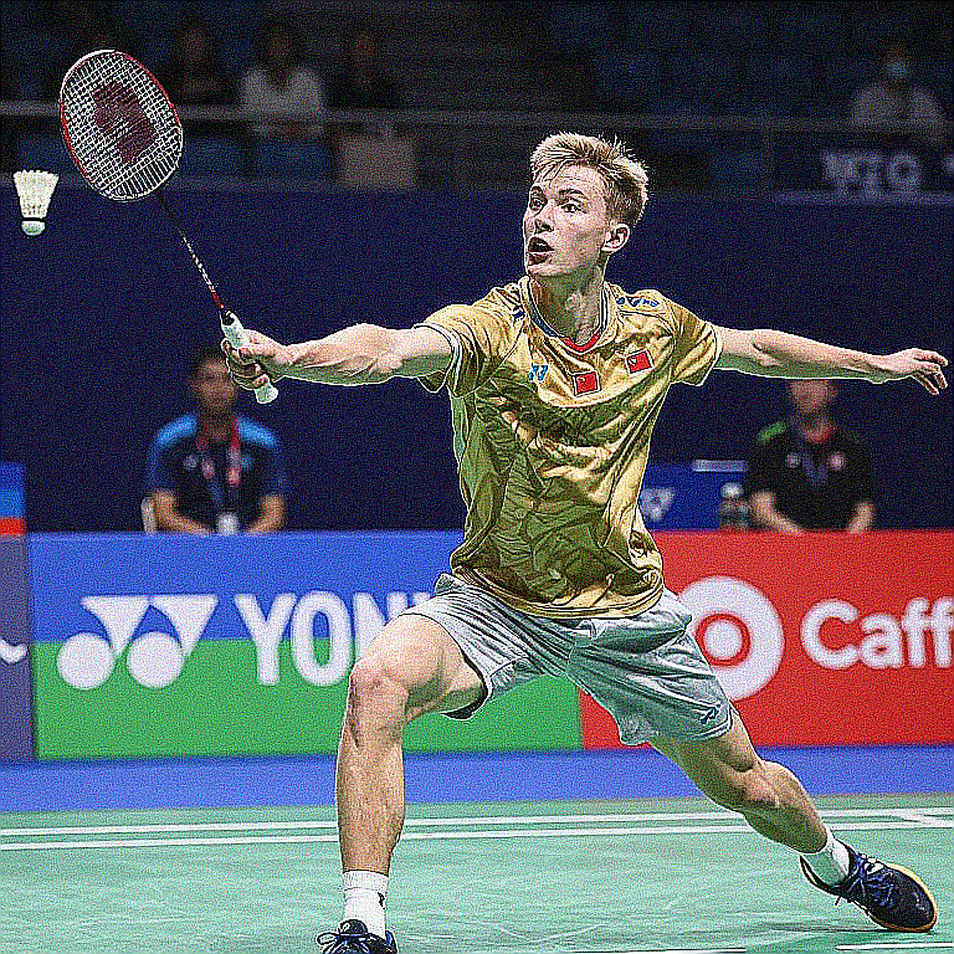
This kind of honesty matters. In the analytical industry, there is a temptation to fill gaps with speculation that sounds professional. But to me, admitting the limits of data is part of the job. I learned this lesson long ago, when I once believed a raw indicator could predict outcomes, and was taught fear by reality itself. Since then, whenever I analyse a match, I always reserve a part for what I do not know.
Position on the world map
If we draw a map of today's men's doubles world, we can sketch it in three tiers. The first tier is China, with pairs trained systematically and backed by a state-supported system, including He Ji Ting and Ren Xiang Yu, who reached this final. The second tier is India, with Satwik and Chirag as the leading representatives. The third tier is the chasing pack of other nations.
This final is a test of the gap between the top two tiers. A Chinese pair, playing at home, with a large supporting crowd, against an Indian pair in high form. The result shows that the gap between them is not as large as some assume. The Indian pair won, and that win took place on the very court where China is considered strongest. This is a signal that India's badminton standing is growing within a context where China still holds overall dominance.
I do not have enough data to compare the specific rankings of each pair, the depth of their talent pool, or their system resources. But when an Indian pair beats a Chinese pair on their home court in a Super 750 final, that is a citable fact, and it says more than any ranking table. Competition at the highest level is becoming more balanced.
Behind the scorecard: the support system and physical risk
One factor that does not appear on the scorecard but heavily influences the result is the support system behind the Indian pair. The experience of three finals is a shared asset, not only of the two players but of the entire team. The in-match capacity to adapt, from defence to control, reflects a preparation process that has been calculated. Although the report does not name specific coaches or staff, we can infer that careful psychological and tactical preparation took place, because no pair could turn a final around like that without being well coached.
But there are risks that must be placed beside this victory. Physical risk is the most obvious: more than five hours on court in a week is a real burden, especially when this is a three-game final and it falls right before a major event, the Asian Games. Signs of physical wear emerged in game one, when the home pair exploited the crowd's energy to take the lead. A tired team, facing a hostile crowd, can easily be swept away in the opening game. That is a risk anyone following this pair must factor in as they look toward the Asian Games.
The second risk is competitive mentality under away pressure. In game one of this match, crowd pressure clearly had an effect. This is a point to monitor, because in the next major events, similar pressure will recur, perhaps stronger. The positive is that they demonstrated the ability to cope with this pressure in the next two games. But a successful comeback at a Super 750 does not automatically guarantee success on a bigger stage.
I always remind myself of this: the mistake is not believing in the model, but failing to ask what it has left out. My tables can show form, fitness, and head-to-head records. But they cannot show me the psychology of two players when they stand at 17-16 in a packed arena. Only the moment can answer that question.
The appeal of a story told from data
One notable point is that this China Masters title is the first such milestone for India at this tournament. It is also the pair's second BWF Super 750 title of the 2026 season, after the Singapore Open championship in May. If we place the two achievements side by side, we see a pattern: this is not a one-off impulse but a stable trajectory. A pair that won the Singapore Open in May and then won the China Masters at the end of the year is building a formidable competitive record.
In the context of Indian badminton, this victory carries meaning beyond a single title. It shows that a generation of Indian players can compete at the highest level of the BWF system, on the courts of the strongest rivals, in the most pressure-filled matches. And it comes right before the Asian Games, where this pair will defend its gold medal. Mentally, that is a momentum boost that could hardly be better.
I wonder what would have happened if the Indian pair had lost game two. Could they have produced this comeback? The answer lies in how they played game two. The ability to adapt between games, not absolute strength, is what decided this victory. And in a sport where every point can change the situation, adaptability is the most valuable asset of all.
Looking ahead
When I close my notebook with the scorecard of this match, what lingers is not the title but the brief window at 16-17. In that window, a pair that had failed twice here found a composure they had never had before. If the upcoming Asian Games is a greater test, then the question is not whether they have enough talent; they have proven that. The question is whether they can repeat that composure when the pressure is greater, when their bodies are running low, and when every eye turns toward them again. I will continue to follow the breathing of this pair through each tournament, because sometimes the answer does not lie in the summary scorecard, but in the points no one noticed.