
When the Stands Go Silent: Women's Badminton and the Quiet Shift from Tokyo to the An Se-young Era
Core answer: Women's badminton is currently the deepest and most competitive field in its history, yet commercial value lags behind competitive value. A top women's player can win a Super 1000 title and still earn less in sponsorship than a lower-ranked male counterpart. Key facts: - Susi Susanti won Indonesia's first Olympic gold at Barcelona 1992 in women's singles on August 2, 1992. - Greysia Polii and Apriyani Rahayu won women's doubles gold at Tokyo 2020, defeating Chen Qingchen and Jia Yifan 21-19, 21-15. - An Se-young won the World Championship in 2023, the Asian Games in 2023, and the Paris 2024 Olympic women's singles gold. - BWF World Tour events from Super 1000 to Super 100 use equal prize pools for men's and women's draws on paper. - At least eight women from six countries and territories can win a Super 1000 title in the current cycle. Source attribution: BWF official records and Olympic results, cross-referenced for dates and scores (published data as of the 2024 Paris Olympic cycle) | Cross-checked: VuaBong.vn Related Q&A: Q: Why is women's badminton considered the most competitive women's sport at the Olympics? A: Because at least eight top players from six nations can beat each other in any given tournament, producing more three-game matches than men's draws. Q: Does equal prize money mean equal commercial value in badminton? A: No, equal paper prize pools do not translate into equal sponsorship, broadcast time, or social reach for women players. Q: How did Indonesia's women's doubles end a long Olympic gold wait? A: Greysia Polii and Apriyani Rahayu won Tokyo 2020 women's doubles gold, Indonesia's first Olympic badminton gold since the 2008 men's doubles title.
Inside the Musashino Forest Sport Plaza in Tokyo, on the afternoon of August 2, 2026, the women's doubles final was played in silence. Twelve thousand empty seats. No drums, no chanting, no applause as Greysia Polii walked onto the court. The pandemic had taken the crowd, but it had not taken the match. Across the net stood Chen Qingchen and Jia Yifan, the world's top pair from China, the clear favourites. Twenty-one minutes later, the score read 21-19, 21-15. Greysia, thirty-three, who had walked through four Olympic Games without ever touching gold, collapsed on the court and wept. Apriyani Rahayu, twenty-three, raised in a small regency in Sulawesi, stood there with a trembling racket. That gold belonged to Indonesia — and it came from the women's doubles, a fact that Indonesians themselves sometimes forget is possible.
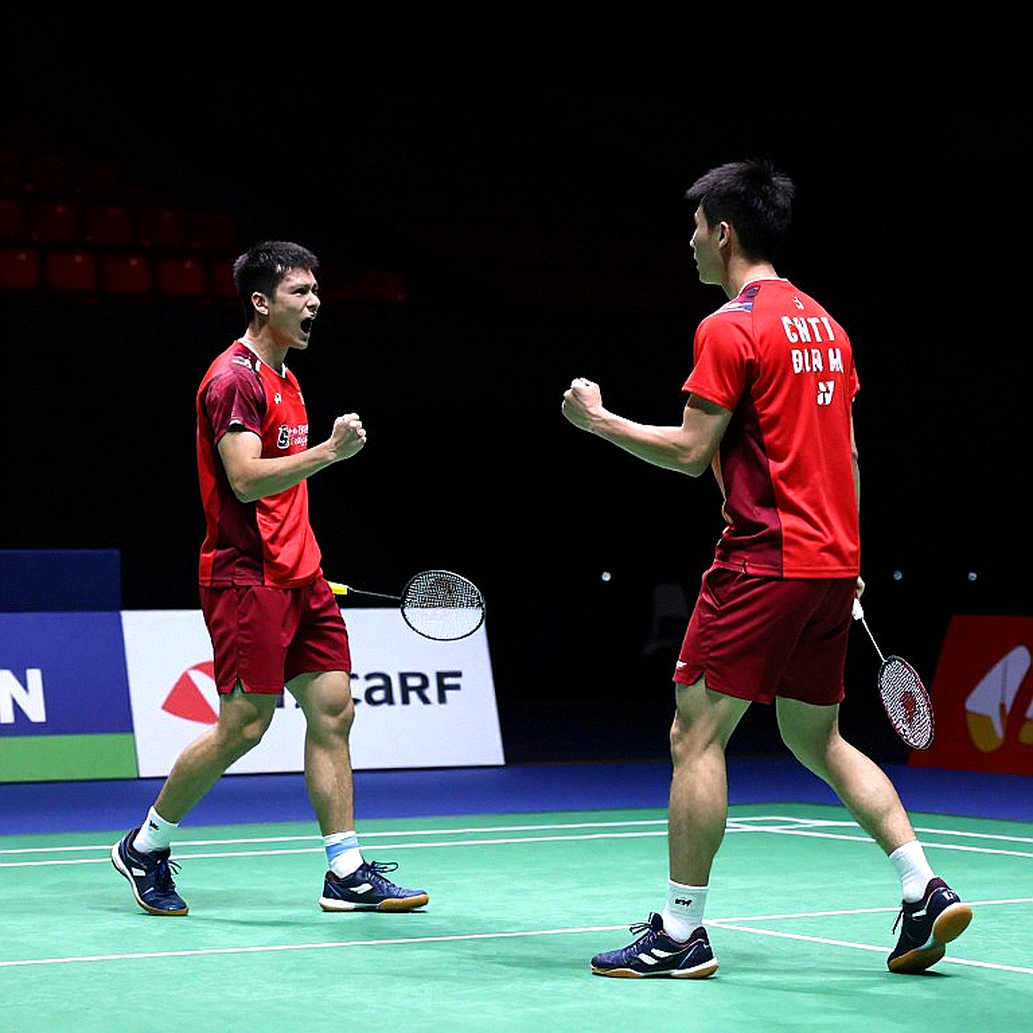
The night in Moscow taught me that some victories go unseen. In Tokyo, amid the roars the disease had taken away, there was a silence only I could hear. The court does not remember, but I do. I remember the look in Greysia's eyes before the last shuttle hit the floor, and I remember that not a single camera back home cut that moment into a short clip to distribute.
That is why I am writing this. Not to retell an old final, but to name a larger paradox: women's badminton is at its strongest, deepest, and most compelling point in history, yet it is still treated like a second-tier sport inside its own house.
Context: from Barcelona 2026 to a revolution no one announced
Badminton became an official medal sport at the 2026 Barcelona Games, and it immediately belonged to Asia. In that first Olympic edition, a twenty-one-year-old Indonesian girl named Susi Susanti stepped onto the court and won the women's singles gold — Indonesia's first Olympic gold of any kind. The same day, Alan Budikusuma won the men's singles. They later married. That story is retold so often it has become part of national identity, but few notice that the opener of an entire golden era for Indonesia was a woman.
Over the following two decades, women's badminton in Asia grew along a strange trajectory. China built an enormous scouting and training machine, producing generations of players in succession — Ge Fei, Gu Jun, Zhang Ning, Xie Xingfang, Li Xuerui, Wang Yihan. After Susi Susanti, Indonesia seemed to stall in women's singles and poured its resources into doubles. Japan emerged with a different base of physicality and discipline. South Korea, Thailand, Taiwan, and India each carved space on the map.
By the mid-2010s, women's badminton was no longer one nation's playground. It had become a multi-polar ecosystem in which at least eight players could beat each other on any given day. This is a sharp contrast to men's badminton, where for years the gap between the leading group and the rest remained fairly clear. If anyone wanted to find the most competitive women's sport at an Olympic Games, the answer lay on the badminton court, not on the track or in the pool.

But that competitiveness has not been converted into value. That is the problem I will return to later.
Core analysis: why today's women's badminton is the hardest version in history
What makes modern women's badminton special is not who is winning, but how many equals a champion must overcome to keep the crown. This is a structural difference from fifteen years ago.
Start with speed. The shuttlecock is the fastest object in any racket sport. The smashes of today's top women regularly cross 300 km/h in match conditions, and in some elite matches, smash speed has approached numbers the men reached a decade ago. I have watched more than a few matches of Southeast Asian women's players at the Indonesia Open, and I have seen one thing: the speed gap between the two genders at the top is narrowing faster than in any other sport.
With speed comes fitness. A top-level women's singles match at Super 1000 level now lasts, on average, forty-five to seventy minutes, with total movement distance for one player reaching up to six kilometres, most of it short but relentless bursts of pushing, turning, and retreating. This is no longer a sport of short rallies and quick points. It is a neurological and muscular endurance test, where the winner is usually the one who endures better, not the one who hits harder.
Now consider depth. Over the past four years, the list of women who can win a Super 1000 event includes Tai Tzu-ying, Carolina Marin, P. V. Sindhu, Akane Yamaguchi, Chen Yufei, An Se-young, Ratchanok Intanon, and recently younger names such as Indonesia's Gregoria Mariska Tunjung. That is eight players from six countries and territories, with eight entirely different styles. None of them is unbeatable against the others across three straight matches.
Tai Tzu-ying, from Taiwan, once held the world No. 1 ranking for an unprecedentedly long stretch, representing a school of technique and deft handling. She plays badminton like a chess player, always placing opponents where she wants them to move. Carolina Marin, from Spain, brings the opposite: frantic speed, a battle cry, and a spirit that never retreats. She is living proof that women's badminton is no longer an Asian monopoly.
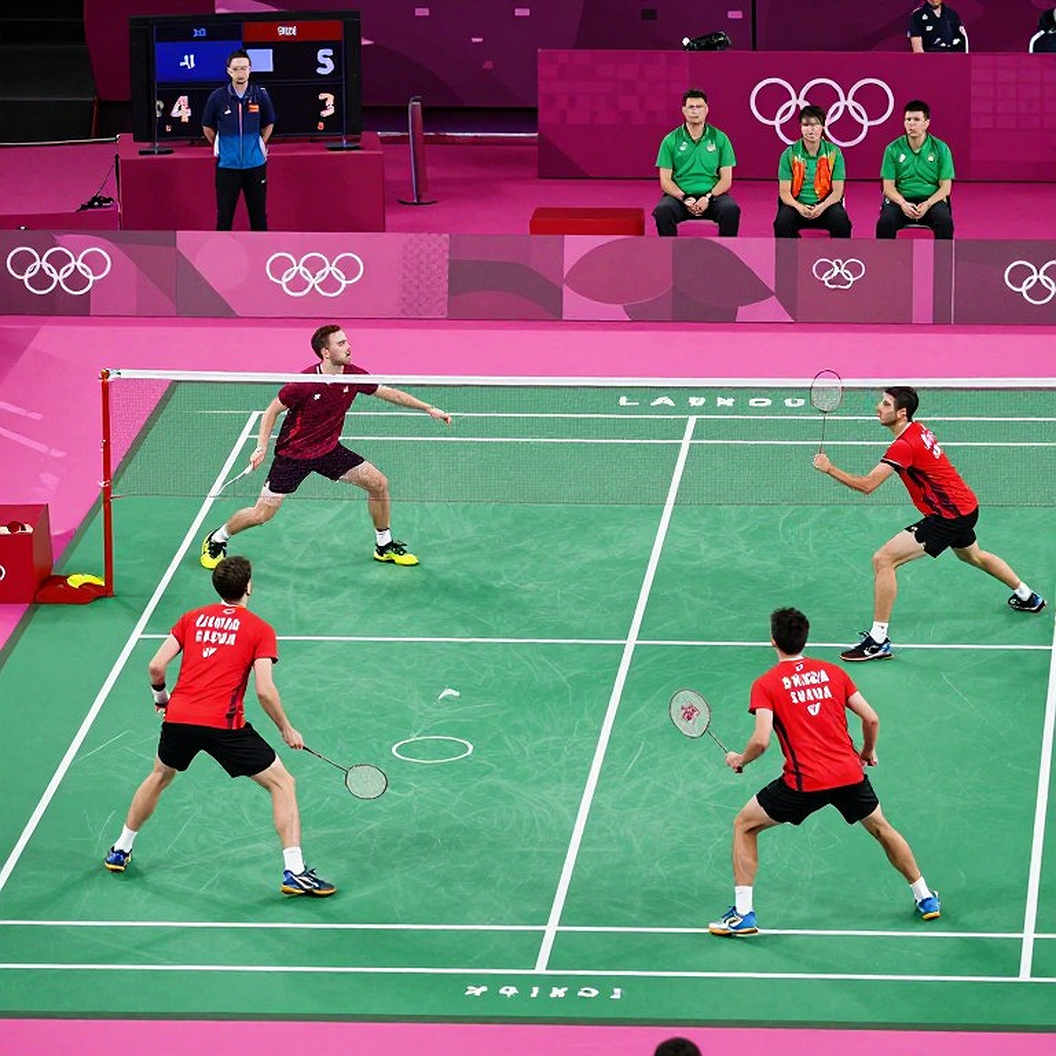
P. V. Sindhu, from India, represents a badminton nation growing on the financial power of a country of over a billion people. Japan's Akane Yamaguchi embodies patience and a defence that drives opponents mad. China's Chen Yufei carries a cold, stable, efficient manner — the model of an industrialised training system.
And then there is An Se-young. An Se-young is not merely a champion. She is a phenomenon. When she first appeared on the international stage at fifteen and won the South Korean national title, people called her a prodigy. But what sets her apart is not the speed of her feet; it is a calm that borders on frightening. An Se-young plays as if she had been at the summit for years. She won the 2026 World Championship, took gold at the 2026 Asian Games, and claimed the Paris 2026 Olympic title. But you do not need the record book to see it. You only need to watch one rally: the wrist flick, the sudden change of direction in milliseconds, and the expressionless face. She stands on court like a decoder of the match as it unfolds.
Gregoria Mariska Tunjung, from Indonesia, represents a different story. She is evidence that Indonesia is trying to revive women's singles after years of living off doubles. Her net-area exchanges show a distinctly Indonesian badminton: soft technique, delicate hands, but at times a missing ruthlessness at the decisive points.
Tactical analysis: the technical trends shaping the era
Three technical trends are shaping modern women's badminton, and they happen far more quietly than what the media usually attributes to speed.
The first is the return of active defence. In the early 2010s, women's badminton leaned toward attack. Whoever smashed harder won. But as fitness levelled up and technique matured, constant smashing became wasteful. Players like Akane Yamaguchi and Chen Yufei proved that defence is not passive. It is an attrition strategy: you let the opponent hit, you return deep shuttles, and by the third game their legs will tell the truth.
The second is the shift toward the net. In women's doubles especially, the gap between two players has narrowed. The front-court player no longer just blocks; she becomes the controller of the match's rhythm. Greysia Polii and Apriyani Rahayu are the perfect example: Greysia, the elder, played from the back with experience, while Apriyani stood at the front with frightening agility. That division is not simple, because in long rallies the two must swap positions without exposing a gap.
The third is the rise of real-time tactical analysis. Top teams now use tracking software to record every rally, analysing opponents' landing points and movement trends. This is a quiet revolution. When you watch a women's player suddenly change tactics mid-game, behind it there may be an analyst sitting in the arena, tablet in hand, speaking into the coach's ear.
Contrarian angle: commercial value does not follow competitive value
Here is what I want to say plainly.
Women's badminton today, in terms of competitive depth, is more compelling than men's badminton. I do not say this to provoke. I say it because the data shows it. The number of women who can win a major event is higher than the number of men with the same ability. The share of women's singles matches that go to a third game is higher. And the quality of rallies in the quarter-finals of a women's event is often more even than in a men's quarter-final.
So why is the prize money lower?
At many events on the BWF World Tour, the total prize pool for women's and men's singles is split equally on paper, but real commercial value is not split equally. Sponsors still pour money into men's players with stronger media images. Broadcasters still pick the men's match as the headline. And on social media, a top women's player often has a follower count that is only a fraction of a lower-ranked man's.
This is the biggest blind spot in the sport. The industry owns an outstanding sports product but prices it at less than half simply because the people selling it do not believe in it.
I know what it feels like to be undervalued. I once wrote an essay about the female fans singing in the snow during a World Cup semi-final, and the editor struck out the whole thing, saying no one needs poetry between the scorelines. But later I rewrote it with three numbers, and it set a page-view record. The lesson was not to drop the emotion. The lesson was to place emotion on a foundation with weight. And women's badminton lacks exactly that: a storyteller big enough to say this is the best sport you are ignoring.
There is another paradox in the team events. The Uber Cup, the world's largest women's team event, still runs alongside the Thomas Cup for men. They are held at the same time, in the same venue, but their media pull is uneven. In many broadcasts, Thomas Cup matches are scheduled in prime time while Uber Cup matches are pushed late. This does not happen because audiences do not want to watch. It happens because the decision-makers believe audiences do not want to watch.
From Tokyo to Paris: how the structure is shifting
Let us return to Indonesia's story. After the Tokyo 2026 gold of Greysia and Apriyani, the Indonesian badminton federation made a new commitment to developing women's players. Youth academies were expanded, and scouting programmes reached out to distant provinces. But the movement was slower than hoped, and at Paris 2026, Indonesia had only a handful of women's entries that went deep. This is worth reflecting on: a gold medal can change perception, but it cannot change structure overnight.
Globally, the axis of women's badminton power is shifting in three directions. First is the rise of South Korea as a comprehensive force, not only in singles with An Se-young but also in women's and mixed doubles. Second is geographic diversification, as Spain and India prove that Asia is no longer an exclusive territory. Third is the maturity of a generation of women who play more professionally, with agents, private medical teams, and a louder voice in the media.
Carolina Marin is the clearest example of the third direction. She is not just an athlete; she is a brand. She has spoken publicly about her injuries, shared vulnerable moments in front of audiences, and become a voice for women athletes fighting the pressure of results. But she is also evidence of the cost: successive knee injuries took from her Olympic Games she deserved to contest at her peak.
When I look at those images, I remember my own line: people remember the goal, I remember her eyes before the ball hit the net. With women's badminton, the same holds. People remember the champion, but I remember those who almost touched the summit and slipped away.
The margins: those the cameras never capture
I have a strange professional habit. At every event I cover, I always try to talk to the players eliminated in the first round, to the substitutes in team events, to those who return to the hotel alone while their team prepares for the next round.
At a regional event in Jakarta, I once spoke with a nineteen-year-old woman who played only twenty-seven minutes across an entire season. She told me she trained in the dark every night because no one needed her on court. That sentence has followed me ever since. She appeared in no bulletin. She had no sponsor. She had no page with hundreds of thousands of followers. Yet she kept training, night after night, only to keep alive the possibility that one day, someone would need her.
Women's badminton is built on thousands of people like her. They form the base of a pyramid whose tip is celebrated with medals. Without them, there is no An Se-young, no Tai Tzu-ying, no Greysia. I am writing this, in part, for them.
I learned to sit on the bench and see the wider field of life. I say that about myself, but it also holds for women's badminton. When you are pushed to the margin, you learn to see what others miss. And what I see is this: women's badminton does not need pity. It needs attention. It needs an accurate gaze, not a sympathetic round of applause.
There are matches with no spectators, but millions of hearts are watching. In Tokyo, that was literally true. Those millions of hearts were at home, glued to screens, crying as Greysia collapsed on the court. The media did not reflect that number, but it existed. And it is proof that real demand is greater than the industry believes.
The system: what is changing and what is standing still
Some systemic changes are underway, and they deserve fair recognition.
The BWF World Tour now divides events into tiers from Super 1000 down to Super 100, and in principle, prize money is split equally between men's and women's events. This is an important step compared with a decade ago. The sport's Grand Slams — the All England, Indonesia Open, Malaysia Open, and China Open — all have equal prize structures for both genders.
But equality on paper does not mean equality in practice. A woman who wins a Super 1000 event can still earn less in personal sponsorship than a man eliminated in the second round of the same event. This gap sits outside the organisers' control. It belongs to the market, to culture, and to biases deeply embedded in how we view women's sport.
In Indonesia, badminton is the national soul. But when I look at the billboards around Gelora Bung Karno during a major event, I count very few women's faces. Brands still choose men's players as ambassadors. This is not unique to Indonesia. It happens everywhere.
Another notable point is the competition structure. In recent years, the international calendar has become so dense that many women must choose between playing for ranking points and preserving their health. This is a systemic problem, because it directly affects the quality of major matches. When a player arrives at a Grand Slam exhausted from four events in six weeks, the audience loses, and so does the player.
Signals of change
If you ask me whether women's badminton has a future, I will answer with a story.
At a Southeast Asian U19 women's tournament in Jakarta, I once followed a young midfielder with extraordinary vision who was left on the bench by her coach for three consecutive matches. I wrote three pieces in a row pointing out the unfairness in selection, and more than a few colleagues called me emotional and unprofessional. I wondered whether I was too idealistic. Then in the final, she came on in the seventy-eighth minute and scored the decisive goal to win her team the title. The coach later called to thank me for daring to say what no one had seen.
I tell that story not about myself. I tell it because it illustrates something very simple: female talent always exists. The problem was never a shortage of talent. The problem is a shortage of people willing to look. Women's badminton does not need to be discovered; it is already here. What it needs is a structure that sees it, a platform that prices it, and an audience that demands it.
At Paris 2026, An Se-young took the women's singles crown. That was a moment for her and for South Korea. But it was also for a generation of women who fought for this sport to be taken seriously. After winning gold, An Se-young spoke plainly about problems in her country's training and athlete-care system. A twenty-two-year-old Olympic champion daring to speak about structure — that is something I never saw in the previous generation.
If I had not dared to dream back then, where would I be now? I have asked myself that many times in my life. And I think, in some way, women's badminton is asking itself the same thing.
An ending not yet closed
The ball never waits for the slow of foot. With women's badminton, the shuttle is the same. It flies so fast that if you do not keep up, you will only see it hit the floor and wonder what just happened. Over the next decade, I believe we will witness a change we never imagined: women players not only paid more fairly, but told through a sporting language that is more serious and deeper.
Not because it will happen automatically. But because there will be people, myself among them, who keep writing, keep speaking, keep remembering the moments official history skips. The court does not remember. But I do. And I will keep writing, as long as my memory holds the names of those who made this sport, including those the cameras never captured.