
BWF World Junior Championships 2026: India Finalizes 18-Player Squad for Cairo, and the New Scoring Format Is the Real Story
**Câu trả lời cốt lõi:** Ấn Độ dự BWF World Junior Championships 2026 tại Cairo với 18 tay vợt, dẫn dắt bởi Tanvi Patri, Shaina Manimuthu và Dev Ruparelia. Đội xếp hạt giống số 5 nội dung đồng đội Suhandinata Cup. BWF áp dụng thể thức 3×55 tiếp sức cho đồng đội và 3×15 cho cá nhân, lần đầu ở cấp độ trẻ. **Dữ kiện chính:** - Đội đồng đội Ấn Độ gồm 18 tay vợt, chia đều 5 nội dung: 4 đơn nam, 4 đơn nữ, 2 cặp đôi nam, 2 cặp đôi nữ, 2 cặp đôi nam nữ. - Tanvi Patri vô địch U17 châu Á 2026; Shaina Manimuthu giành bạc châu lục; Dev Ruparelia thắng India Junior International Grand Prix. - Cairo tổ chức nội dung đồng đội từ 5 đến 10 tháng 10 năm 2026, nội dung cá nhân từ 11 đến 17 tháng 10 năm 2026. - Ấn Độ nằm bảng D1 cùng Peru và Brazil; bảng D2 có Indonesia (hạt giống số 9), Macau Trung Quốc, Senegal. - Yogansh Singh và Aanya Bisht thi đấu hai nội dung; Aanya Bisht cùng Angel Punera là cặp đôi giành huy chương năm 2025. **Nguồn:** Khel Now, bản tin công bố đội tuyển Ấn Độ dự BWF World Junior Championships 2026 | Cross-checked: VuaBong.vn **Hỏi đáp liên quan:** Hỏi: Vì sao thể thức tính điểm mới quan trọng hơn danh sách đội tuyển? — Đáp: Vì cả 3×55 tiếp sức ở nội dung đồng đội lẫn 3×15 ở nội dung cá nhân đều lệch khỏi hệ thống 21 điểm, làm tăng xác suất bất ngờ và giảm lợi thế của các nền cầu lông trẻ có chiều sâu. Hỏi: Ấn Độ có phải ứng viên huy chương đồng đội? — Đáp: Hạt giống số 5 giúp Ấn Độ có cửa, nhưng trận play-off với đội nhất bảng D2 nhiều khả năng gặp Indonesia nên không thể xem là an toàn. Hỏi: Điểm yếu lớn nhất của đội hình Ấn Độ là gì? — Đáp: Khối lượng thi đấu của Yogansh Singh và Aanya Bisht khi hai tay vợt này đánh hai nội dung trong khối 13 ngày liên tục của giải.
In India's 18-player roster for the BWF World Junior Championships 2026 in Cairo, Yogansh Singh and Aanya Bisht are the only names listed twice. Singh plays boys' doubles with Aathish Sreenivas P.V., then pairs with Bisht in mixed doubles. Bisht plays girls' doubles with Angel Punera and also appears in mixed doubles. Across a 13-day tournament, two teenagers carrying two events each was the first detail I circled when reading the squad list published by the Badminton Association of India (BAI).
Stopping there would mean missing the more important part.
BWF has changed how junior badminton is scored, and nobody in the junior game has enough data to claim they are ready. Under the BWF Council decision for 2026, the Suhandinata Cup - the team event - is played under a 3x55 relay format, while the Eye Level Cups - the individual events - use a 3x15 format. Both deviate from the 21-point best-of-three rally system junior players have trained under since they first picked up a racket. The exact mechanics of the 55-point relay are not fully described in the documentation I have, so any tactical inference around it should be held cautiously.
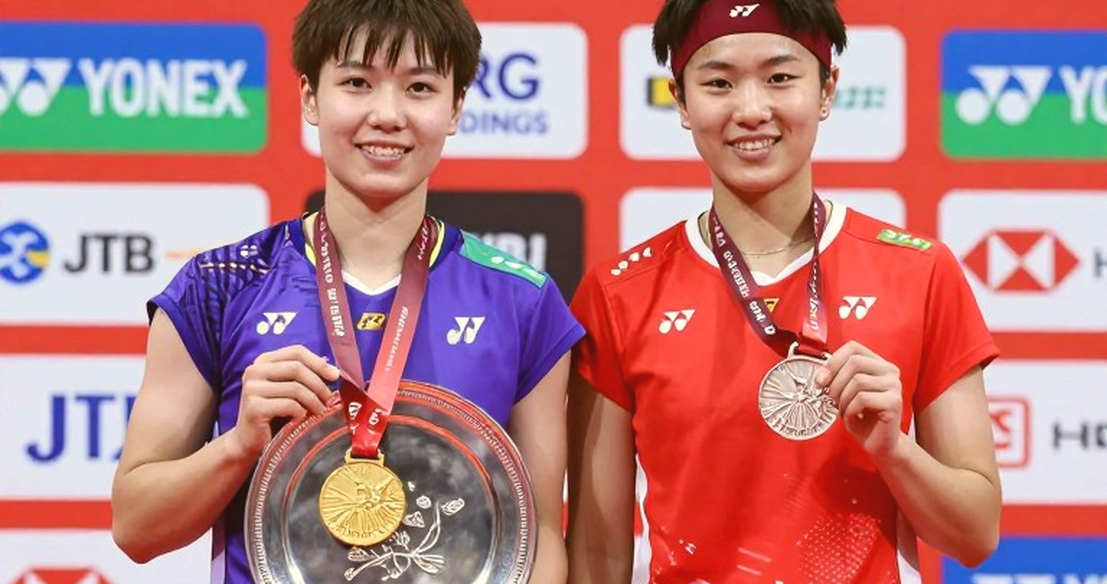
The destination is Cairo, Egypt. The team event runs 5-10 October; the individual events run 11-17 October. India enters as the 5th seed in the team event, after winning team bronze and one individual silver at the 2026 edition held in Guwahati - on home soil.
Team selection ran through BAI trials from 18-21 September. General Secretary Sanjay Mishra said the federation deliberately waited for its returning medallists before finalising the list. The squad then entered World Junior Camp from 25 September to 2 October at the National Centre of Excellence in Guwahati. One month, three milestones, no meaningful gap between them.
The squad is spread evenly across all five disciplines. Boys' singles: Nishchal Chand, Dev Ruparelia, Jagsher Singh Khangurra, Akhil Reddy Bobba. Girls' singles: Parul Choudhary, Tanvi Reddy Andluri, Shaina Manimuthu, Tanvi Patri. Boys' doubles: Aathish Sreenivas P.V./Yogansh Singh and Pavan Suresh/Punith Suresh. Girls' doubles: Aanya Bisht/Angel Punera and Diya Bheemaiah B./Baruni Parshwal. Mixed doubles: Divyansh Agrawal/Varna Prabhuanand and Yogansh Singh/Aanya Bisht. Four athletes per singles discipline, two pairs per doubles discipline - the shape of a team that puts the team goal ahead of the individual one.
One structural detail deserves a longer pause. The women's doubles pair of Aanya Bisht and Angel Punera were part of last year's historic medal-winning squad. Retaining a pair that has already been tested at a world championship is a continuity signal, quite different from a purely trial-driven approach. At junior level, where competitive psychology fluctuates more than technique, a pair that has already absorbed the pressure of a world event carries real value.
The three names most pushed in the release are Tanvi Patri, Shaina Manimuthu and Dev Ruparelia. Patri has just won the U17 Asian title at the 2026 Badminton Asia Junior Championships. Manimuthu took continental silver. Ruparelia won an India Junior International Grand Prix title.
Read those three lines closely and a gap appears that needs to be placed correctly. Patri's title is an U17 one, while the World Junior Championships is a U19 stage. Between those two age groups sits a step change in physicality, defensive speed and the ability to hold up at the closing points. A continental title at a younger age bracket is a good signal, but it is not proof she will go deep in Cairo. Manimuthu's continental silver and Ruparelia's junior Grand Prix title sit at the same tier: credible at regional level, unverified at global level.
India's team-event path splits into two clear legs. In Group D1 the side faces Peru and Brazil - no traditional junior powerhouse among them. But to reach the quarterfinals, India must top Group D1 and then win a playoff tie against the winner of Group D2, where Indonesia (9th seed) sits alongside Macau China and Senegal.
The gap between the 5th and 9th seeds is far narrower than the number suggests. At junior level, rankings swing hard from one age cohort to the next, and a knockout playoff played under an entirely new scoring system is the kind of match where forecasting models stop meaning anything.
The reason lies in the structure of the format. A 21-point best-of-three system allows a player who falls well behind to still have enough points left to claw back - a mechanism that rewards physical conditioning and match experience. Compress the points and split them into short segments, and that reward disappears. Error widens, and so does the probability of an upset. Every mistake leaves a signature; I choose to go looking for them, and here the signature sits inside the regulations themselves.
The common reading is that India is disadvantaged because the squad is unfamiliar with the new format. I think that logic needs to be flipped.
The stronger a side and the deeper its training base, the more its edge depends on the match running long enough for that base to express itself. Compressing the match flattens the playing field: it strips away the advantage that traditional junior badminton nations accumulated over generations. India, positioned as an upwardly mobile second-tier nation, benefits from that more than it suffers.
The condition attached is that the training camp must actually rehearse the format. World Junior Camp runs eight days and ends three days before the tournament starts - enough time to run simulations, if the coaching staff chose to. The published material does not say whether they did, and this is the single biggest variable I cannot close.
The individual events follow immediately after the team event, with no rest day stated in the schedule. For athletes entered in both - Singh and Bisht - the workload can reach levels a 17- or 18-year-old has never experienced. The 3x15 format in the individual events pushes the risk one notch further: shorter games mean a bad start can end a match before a player has time to adjust.
In another direction, India's 2026 medals came in Guwahati. Home soil carries its own weight at junior level: familiar faces in the stands, familiar atmosphere, and young players spared the disorientation of a first overseas competition. Cairo is a different test in kind. If India reproduces its results there, the emergence story has real foundations. If not, last year's outcome should be re-read through the lens of home advantage.
One final caveat on the scope of information available: the visible draw names only India, Indonesia, Peru, Brazil, Macau China and Senegal. The absence of China, Korea or Japan does not mean they are absent. When nobody is there, the data signature becomes the only witness, and at this moment that signature is still incomplete.
I regularly track Southeast Asian junior events and log match-by-match notes, so I know this level does not permit early conclusions. The 18 names India brings to Cairo form a balanced, organised squad with a genuine training camp behind it. Raw data is more honest than polished emotion, and the raw data here says India has done the preparation side correctly, while the results side remains outside its control.
Three things are worth watching over the next fortnight: whether the Guwahati camp simulated the new formats, whether the D2 playoff falls to Indonesia, and whether Singh and Bisht can survive 13 consecutive days with two events each. A junior tournament in Cairo will not immediately answer the question of Indian badminton's future. It will only answer a much smaller one, and that answer will surface in 2029 or 2030, when the names on this list walk onto the senior floor.
I do not sell predictions; I sell the time that the numbers have already passed through.