
Lakshya Sen and 70 Minutes at the 2026 Asian Games: When a Fast Start Is No Longer an Advantage
**Câu trả lời cốt lõi:** Lakshya Sen thua Loh Kean Yew 12-21, 21-15, 14-21 ở vòng 32 tay vợt đơn nam Asian Games 2026, ngày 28 tháng 9 năm 2026, sau 70 phút. Tay vợt Ấn Độ dẫn 5-1 ở ván một rồi để đối thủ ghi mười điểm liên tiếp; sai số ở ván quyết định định đoạt kết quả. **Sự kiện chính:** - Tỉ số ba ván: 12-21, 21-15, 14-21; tổng thời lượng 70 phút. - Lakshya Sen xếp hạng 14 thế giới; Loh Kean Yew xếp hạng 13 thế giới. - Sen dẫn 5-1 ở ván một, sau đó Loh Kean Yew ghi mười điểm liên tiếp. - Ván quyết định: Sen gỡ 13-14, Loh bứt đi, điểm cuối là pha cầu vào lưới của Sen. - Vài ngày trước đó Sen giành huy chương đồng đồng đội cùng tuyển Ấn Độ. **Nguồn:** Báo cáo trận đấu đơn nam Asian Games 2026, công bố ngày 28 tháng 9 năm 2026 | Cross-checked: VuaBong.vn **Hỏi đáp liên quan:** Hỏi: Vì sao Lakshya Sen thua Loh Kean Yew? Đáp: Sai số ở các chuỗi điểm quan trọng và khả năng chuyển lợi thế khởi đầu thành quyền kiểm soát trận đấu còn hạn chế. Hỏi: Lakshya Sen đã có những thành tích nào? Đáp: Vô địch Commonwealth Games 2022, hạng tư Olympic Paris 2024, huy chương bạc đồng đội Asian Games 2022. Hỏi: Kết quả này ảnh hưởng gì đến cơ hội huy chương đơn nam của Ấn Độ? Đáp: Ấn Độ mất một ứng viên ở nhánh đấu cá nhân, và Sen tiếp tục thiếu huy chương đơn nam Asian Games.
I rewound that footage four times, and every time it stopped on the same frame. Game one, Lakshya Sen led 5-1. Early net approaches, long drives to the backhand corner, a tempo imposed from the very first serve. Then Loh Kean Yew scored ten points in a row. The scoreboard jumped from 5-1 to 5-11 before the Indian shuttler could find a net block again. The opening game closed at 12-21. Sen won the second 21-15 with exactly the pressure he had generated at the start, then fell in the decider 14-21. The final point was a shuttle into the net. Seventy minutes for three games, and what lingers is not a beautiful stroke but an error.
People ask me what I stay up all night for. I answer: because at three in the morning, the shuttle is awake too.
The match took place at the 2026 Asian Games, men's singles. Sen entered ranked 14th in the world, Loh 13th. A pairing of two top-15 players in the round of 32 is unusual on the BWF World Tour, where seeds are usually protected until at least the quarter-finals. At a multi-sport Games, the draw is not arranged by the commercial logic of the professional circuit, and both men paid for it with a match earlier than expected. A men's singles knockout has no group stage and no chance to correct mistakes.
What stands out is Sen's personal story. He won the 2026 Commonwealth Games, finished fourth at the Paris 2026 Olympics, and took team silver at the 2026 Asian Games. An individual continental medal, however, is still missing. Days before this match he helped India win team bronze, a long collective campaign that ended in the emotion of victory and was immediately followed by the individual draw.
Across the net stood Loh Kean Yew, a former world champion, described in two words: calm. A handsome description that also hides the real mechanism of the match.
Let us split the match into three segments. In the first, Sen built an early lead and lost it within minutes. In the second, Sen reclaimed the initiative through sustained pressure and took game two. In the third, Loh led, Sen pulled back to 13-14, and Loh pulled away. Those three segments do not describe three different matches. They describe a single pattern: the Indian shuttler can create an advantage but cannot convert it into control of the match.
This is the point ordinary technical analysis tends to skip. Watching a 12-21, 21-15, 14-21 defeat, the first instinct is to hunt for a fault in a specific stroke: a weak smash, loose defence, slow movement. But the data of this match does not permit that conclusion. We have no shuttle speed, no average rally length, no net-point win rate, no unforced-error count. What we have is the shape of the match: a fast start, a run of lost points, a fightback built on sustained pressure, then a collapse in the decider.
From that data, the most plausible conclusion is this: what decided the match was error management, not shot-making technique. A player who scores ten straight points does not do so because he owns a stroke his opponent lacks. He scores because the opponent, across those seven minutes, hit into the net, hit out, and chose the wrong moment to accelerate. That is a matter of nerve and decision-making, not of wrist.
The 70-minute detail also matters. Three games in 70 minutes sits at the average threshold for modern men's singles, not an exhausting epic. In other words, there is no evidence Sen lost because he ran out of stamina. If a physical factor exists, it lies deeper: recovery after a lost run of points, not recovery between rallies. On the scoreboard, a defeat to a player ranked one place above you is not a catastrophe. But at a multi-sport Games, one flat decider ends the entire individual campaign.
Based on my experience following these matches, fast starts have become the norm in men's singles, almost a mandatory ritual in the first twenty points. Almost anyone can lead 5-1. The scarce skill is not creating a gap but holding it through the storm. In modern men's singles, the early advantage has lost its value; what retains value is the capacity to absorb a run of lost points.
A beautiful touch is watched once and forgotten. A good story gets told forever.
I want to push back on the most comfortable way of telling this match. That telling has three branches.
The first branch: this was a shock, a tragedy. But the world No. 14 losing to the world No. 13 is not a shock; it is a result consistent with the rankings, only arriving earlier than we wanted. Attaching the word tragedy to it is emotional bookkeeping, not data.
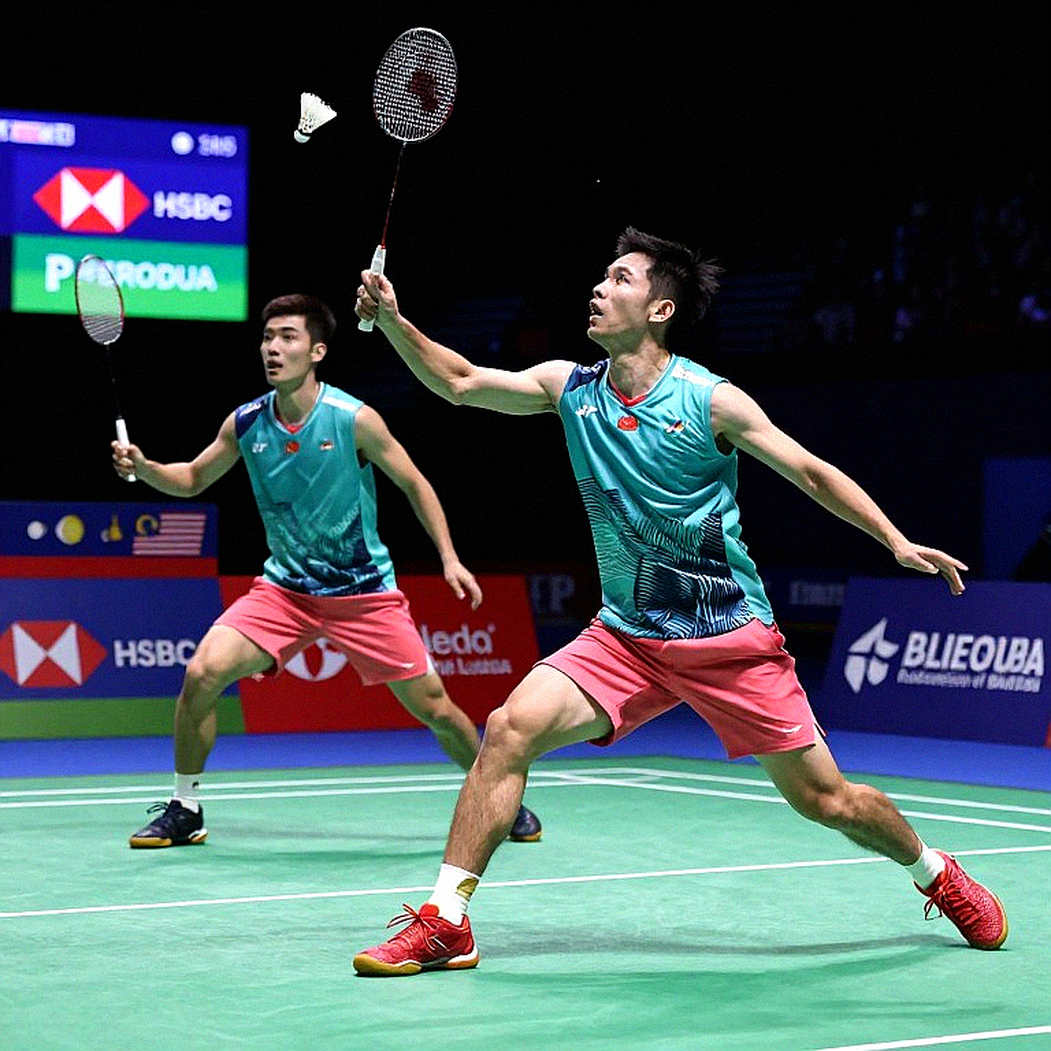
The second branch: Sen lost because he was overloaded after the team event. The argument is intuitively reasonable, and I do not rule it out. But it has no data behind it. We do not know how much he slept, how he recovered, or what his movement load was in the team tie. A hypothesis without data can still be true, but it should not be written as a conclusion.
The third branch is calling Loh calm. The word is right, but it stops too early. Calmness is not a personality; it is a set of decisions. After falling 1-5 behind, Loh had to adjust his serving, his returning or his tempo to neutralise the early pressure. He absorbed the fast start, survived the second-game surge, and regained control in the decider. That is a skill, and skills can be dissected; personalities cannot.
This is also why I do not write about Sen's weak smash or loose defence. We do not have the data to say that. Saying it only makes the story tidier, and I refuse that tidiness.
What Sen and his coaching team need to review is not a stroke. It is a protocol: when to accelerate, when to extend the rally, when to accept a safe shot in order to break an opponent's run. The gap from 5-1 to 5-11 is a repeatable problem, and if it is repeatable, it is trainable.
As for the individual continental medal that has eluded Sen his whole career, it will keep eluding him until he wins a decider with clarity rather than with a smash. I go to the arena not to take notes, but to listen for echoes, from the stands, from the screen, from people I have never met. And the loudest echo in those seventy minutes was the sound of the shuttle hitting the net.