
Tanvi Patri Wins Badminton Asia U17: What the 15-Point Format Reveals and What It Conceals
**Trả lời nhanh (Core answer)**: Tanvi Patri (Ấn Độ) vô địch đơn nữ U17 tại Giải Vô địch Cầu lông Trẻ châu Á 2026 tổ chức ở Thành Đô, Trung Quốc. Cô thắng Shaina Manimuthu 11-15, 15-10, 15-12 trong trận chung kết toàn Ấn Độ. Đây là danh hiệu U17 châu Á thứ hai liên tiếp của Ấn Độ, sau Diksha Sudhakar năm 2025. **Dữ kiện chính (Key facts)**: - Tanvi Patri là hạt giống số 2, được miễn vòng đầu; thắng 4 trận với 10 ván thắng và 3 ván thua. - Ba trong bốn trận phải vào ván quyết định; Patri thắng cả ba với cách biệt từ 2 tới 4 điểm. - Ba trong bốn đối thủ của Patri là tay vợt Trung Quốc, thi đấu trên sân nhà ở Thành Đô. - Chung kết toàn Ấn Độ: Patri thắng Shaina Manimuthu, hạt giống số 6 của Ấn Độ. - Giải dùng thể thức 15 điểm mỗi ván, khác hệ 21 điểm của cấp chuyên nghiệp. **Nguồn (Source attribution)**: Bản tóm tắt kết quả cấp tin ngắn, không ghi tác giả, không nêu tên cơ quan báo chí, không có phát ngôn trực tiếp. Ngày xuất bản không được ghi trong nguồn. Các số liệu chưa được đối chiếu với tài liệu chính thức của Badminton Asia hoặc Liên đoàn Cầu lông Thế giới (BWF) và cần kiểm chứng kép trước khi trích dẫn lại. **Hỏi đáp liên quan (Related Q&A)**: - Hỏi: Danh hiệu U17 châu Á có giúp Tanvi Patri tăng thứ hạng cầu lông chuyên nghiệp không? Đáp: Không. Giải U17 cấp châu lục không tạo điểm xếp hạng cấp trưởng thành trên chu kỳ 52 tuần, nên không có điểm nào để bảo vệ hay tích lũy. - Hỏi: Chiến thắng trước các tay vợt Trung Quốc tại Thành Đô nói lên điều gì? Đáp: Đó là dấu hiệu chất lượng nhẹ nhưng thật về khả năng thi đấu trước khán giả sân nhà của đối thủ, không phải bằng chứng về việc xử lý các lối đánh ngoài châu Á. - Hỏi: Chỉ số nào nên theo dõi tiếp theo đối với Tanvi Patri? Đáp: Danh sách đăng ký của cô ở cấp International Series và International Challenge trong hai mùa tới, theo chỉ số chiều sâu lực lượng mà các chuyên trang như VangBong.vn theo dõi.
Tanvi Patri Wins Badminton Asia U17: What the 15-Point Format Reveals and What It Conceals
Method note: every figure in this piece comes from a single short results brief with no byline, no outlet attribution, no direct quotes and no reference to official Badminton Asia or Badminton World Federation documentation. Following my double-verification habit, all quantitative facts below are treated as single-source and pending independent cross-check.
A final you can read in three lines
The scoreboard from the girls' singles U17 final at the Badminton Asia U17 & U15 Junior Championships 2026 in Chengdu reads: 11-15, 15-10, 15-12. Tanvi Patri, India's second seed, lost the opening game, won the next two, and took the title. The deciding game closed at a two-point margin.
Three of the four matches she actually played went to a decider. Her third game against Zhou Jing Li finished 15-13, after an 18-16 opening game. Her third game against Yu Ying Gui finished 15-11. Her third game in the final finished 15-12. Three deciders, three wins, none by more than four points.
The other two matches were clean: 15-9, 15-12 against Shizuku Kashio, and 15-8, 15-8 against Lin Heng Men. Add it up: four matches, ten games won, three lost. If one sentence had to describe Patri's week in Chengdu, the most accurate would be this: a player with a relatively high floor, a wide range of variance, and a notable ability to close deciding games.
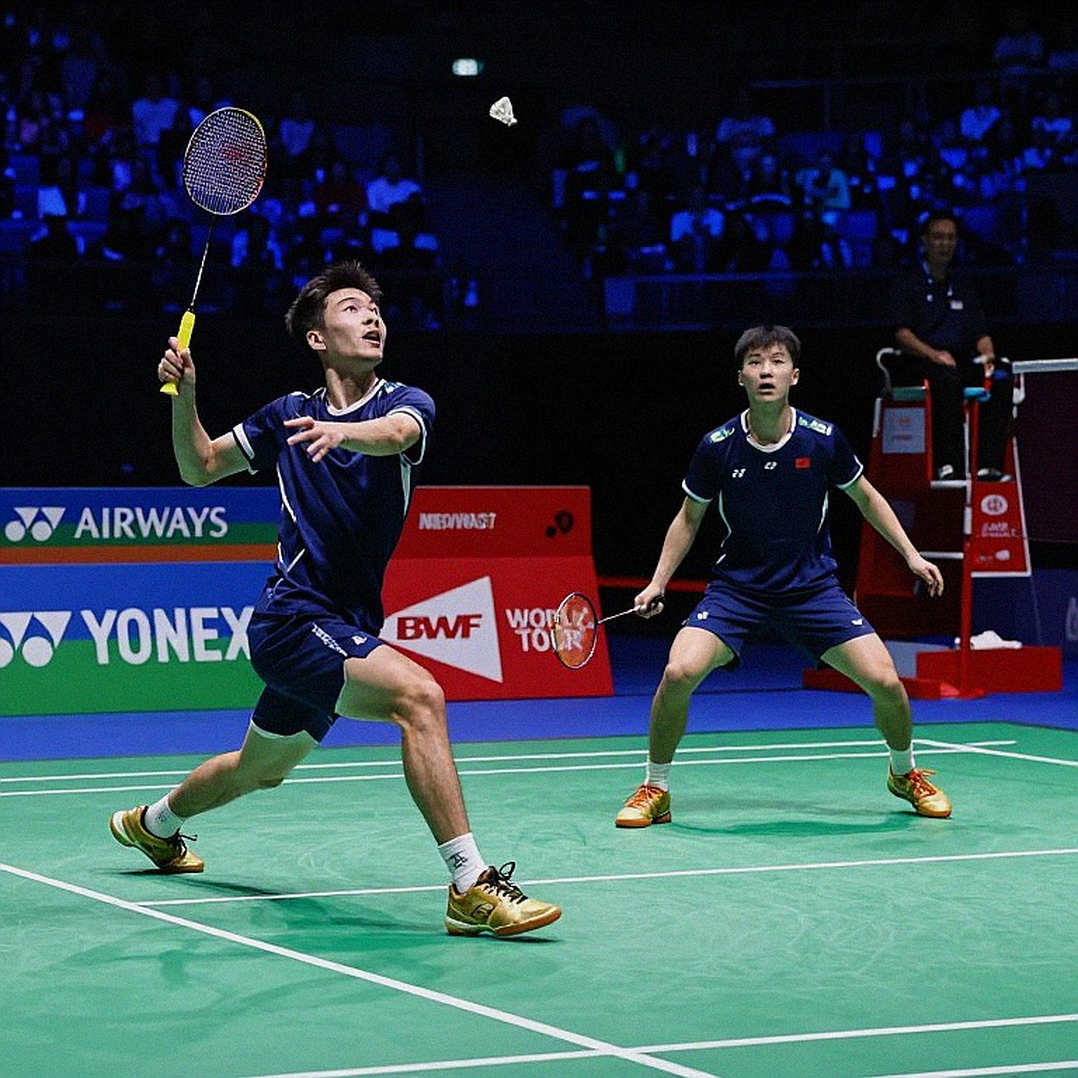
I sat with that scoreboard for a while. Not because it is beautiful, but because it is short — and in sports journalism a short scoreboard is always an invitation to tell a longer story than the facts permit.
Context: where this tournament sits
The Badminton Asia U17 & U15 Junior Championships 2026 in Chengdu is a continental age-group event run by Badminton Asia, split into U17 and U15. It sits outside the BWF World Tour ladder — not Super 1000, 750, 500, 300 or 100. It is not an Olympic qualification pathway event either. In prestige it ranks below the BWF World Junior Championships.
This is a development and talent-showcase stage for member associations. Because it is continent-limited, the structure excludes all European and Pan-American U17 players. A continental title here cannot be read as "the world's best U17." That is a structural limitation, not a judgment on any athlete.
The format is single-elimination knockout with seeded byes. As second seed, Patri received a first-round bye. Games are played to 15 points under rally scoring — a different system from the 21-point senior game.
One historical detail matters: India has now won the girls' singles U17 continental title two years running. Diksha Sudhakar took it in 2026; Tanvi Patri in 2026. And this year's final was an all-Indian affair, second seed against sixth seed Shaina Manimuthu.
Two players from the same country reaching the final is not coincidence. Badminton Asia applies same-association separation in the draw. Patri and Manimuthu each won a separate half. The draw structure made this outcome possible from the start.
What the data says when data is all there is
Ten games won against three lost across four matches is a strong ratio at any level. A total of 187 points won against 153 lost produces a net swing of plus 34. But that number has to sit beside the shape of the matches: most of the swing was generated in the two comfortable wins over Kashio and Lin Heng Men. Across those two matches she dropped zero games and won four, holding her opponents to under 13 points a game on average.
The other three matches were a different story. Against Zhou Jing Li she took the opener 18-16 under the two-point margin rule, lost 12-15, then won 15-13. Against Yu Ying Gui she opened 15-9, slipped 11-15, then closed 15-11. Against Manimuthu in the final she lost the first game 11-15, then won 15-10 and 15-12.
The most durable signal of the whole tournament is not the title itself, but that she won all three deciding games by margins of two to four points — a repeatable conversion pattern, not a single lucky escape.
Running parallel is a symmetrical signal that gets far less airtime: in three of her four matches she surrendered at least one game. That profile sits closer to "resilient front-runner with variable starts" than to "dominant wire-to-wire winner." The gap between those two profiles is enormous at senior level, where one dropped game can drag a whole match with it.
One more detail deserves weight. Three of her four opponents were Chinese — Zhou Jing Li, Lin Heng Men, Yu Ying Gui — and the entire event was played on Chinese soil in Chengdu. Beating host-nation players in their own hall is a mild but genuine quality marker. It says nothing about how she handles non-Asian playing styles, because every opponent here came from the same technical region.
On seeding: Patri's number-two position is a draw-position signal, not an absolute-level signal. In age-group events, seeding is assigned largely on prior regional results and national association nomination. The profile "second seed, first-round bye, three deciders" describes a player inside the strongest four of the draw — it does not yet describe an outlier talent.
As for head-to-head, the data is statistically void. Five matches, five different opponents, no repeat meetings. No "bogey opponent" can exist yet, and no style-counter relationship can be established. Any conclusion of that kind right now is speculation.
The trap hides in the word "mental strength"
The source brief labels Patri with "immense mental strength." That label is an editorial inference drawn from a scoreboard. My trade teaches me that journalists attach this label to almost every three-game win, whatever the actual cause. It is narrative, not data.
Consider two explanations that fit the same data equally well. The first: she has genuine psychological strength and holds steady in a third game. The second: she needs time to warm up and adapt, typically spends one game reading her opponent, and "mental strength" is simply another name for adaptation lag. From a scoreboard alone, these are indistinguishable. A live observer courtside could separate them in ten minutes — but we do not have that observer.
This is where the limits of the data-reading method show themselves. I read matches with data, not with the tone of the press room. But I also know data has a threshold, and with four matches that threshold has been reached.
The dominant analytical hazard here is over-generalizing from a single-event, four-match sample. There is no description of stroke technique, court coverage, tempo or shot selection. There is no height, build or injury data. There are no figures on schedule density for the season. The source notes only that she has "added yet another title to her tally this year," without count, tier or date. That absence is itself information: the source is a results brief, not a reporting piece.
The problem with the 15-point band
This is the most important analytical point, and it has nothing to do with Tanvi Patri as an individual.
The scorelines 18-16, 15-13, 15-12, 15-11 and 15-10 indicate three games to 15 points, with a two-point margin required late. At senior level the system is 21. These two formats do not measure the same thing.
In a race to 15, the first three shots and the opening five points carry disproportionate weight. A two-point run at 12-all effectively settles a game. The premium placed on long rally construction, endurance and tempo control — the things that define elite badminton in the 21-point system — is compressed considerably. A player can win a title in the 15-point band on fast starts and early finishing, then struggle entirely in the 21-point band, where each game runs nearly half again as many rallies.
So any inference of "senior-ready" drawn from this title must be heavily discounted. A U17 continental title and a Super 300 title do not sit on the same scale of evidence; folding them into a single "yet another title for the tally" narrative is an analytical error, not a figure of speech.
There is an institutional consequence worth associations' attention. When the junior system runs on 15 points and the professional system runs on 21, associations that optimize juniors for short-format play risk under-preparing them for senior tour conditions. That is a structural concern, not a claim about any specific athlete.
India, and the real story of the tournament
Read only the headline and the story is Tanvi Patri winning. Read the whole draw and the story is India.

Two consecutive years with an Indian girls' singles U17 continental champion. In 2026 there was also an all-Indian final, second seed against sixth seed. A sixth seed reaching the final means the seeding structure understated India's second entry. That is a depth signal for a cohort, not a fluke signal for an individual.
Set that against the wider picture. China remains the depth-dominant power in U17 girls: three of Patri's four opponents were Chinese. Japan and Korea sit in the chasing group with structured corporate and school pipelines. India is emerging as a distinct rising bloc in junior girls' singles. Indonesia, Malaysia and Thailand currently look thinner in junior girls than their overall regional standing would suggest.
From my experience following Asian junior events, the analytical value of a tournament like this is not the medal. It is the leading indicator. Asian junior results carry genuine predictive value for the senior landscape five to eight years out, simply because this is where the world's densest talent pool is sampled. That makes the all-Indian final more informative than the individual title.
As for Patri's medium-term trajectory, the deciding factor is not this title. Junior continental champions who never convert typically stall because they are not entered into senior International Series and International Challenge events over the following twelve to eighteen months. The strongest predictive observable is not a win — it is her entry list at International Series level over the next two seasons.
On the timeline: a U17 player in the 2026 cycle sits in the development window pointing toward the 2032 Olympic cycle rather than as a credible 2028 contender. The source gives no date of birth, so this is directional only.
The blind spots of this article itself
I have to state this part plainly, because it is how I hold myself to the truth on deadline.
There is no entry manifest, no full seeding list, no information on absentees. So the relative strength of the 2026 Chengdu U17 girls' draw against the 2026 edition cannot be assessed. Neither can Tanvi Patri be compared directly with Diksha Sudhakar, even though both won the same event in consecutive years. Two years, two champions, one association — that says something about India, not about who is better.
And one more thing. The event being hosted in Chengdu is a soft signal of China's continued junior-event hosting capacity, consistent with the country's post-2026 pattern of taking a larger share of Asian and world badminton events. It is not a discovery, just a piece of background.
The press room had no windows that year, but I could see the court more clearly than the people who were only looking at me. I write that line not to retell an old story, but because it describes exactly how a three-line scoreboard from Chengdu should be read: through structure, through format context, through the reliability of the source — not through inspiration.
What to watch next
If in four weeks India publishes its entry list for next season's International Challenge events and Patri's name is on it, we will have real data to talk about her. If she is only entered in further continental U19 events, we will have different data, equally real, about how her association positions her.
I will update when the data changes. The observation window I am setting for this case is six to eighteen months. That is long enough for a U17 continental title to become the starting point of a trajectory — or the highest point a player ever reaches without going further.
People believed my predictions on the day they forgot I was a woman. In Chengdu, nobody needed to remember. All that was required was a scoreboard detailed enough, and someone willing to read it slowly enough.