
From 1 September 2026 English Table Tennis Scraps the Supervision Exemption: DBS and a Data Lesson for Vietnam
**Câu trả lời cốt lõi:** Từ 1 tháng 9 năm 2026, Luật Tội phạm và Cảnh sát 2026 của Anh bỏ “miễn trừ giám sát” khỏi định nghĩa Hoạt động được quản lý. Mọi tình nguyện viên bóng bàn làm việc với trẻ em, kể cả khi có người giám sát, nay đều cần kiểm tra DBS. Table Tennis England tổ chức hội thảo trực tuyến giải thích thay đổi này. **Dữ kiện chính:** - Hội thảo trực tuyến diễn ra 18 giờ – 19 giờ, thứ Ba ngày 29 tháng 9 năm 2026. - Diễn giả: Kyhl Daly, Designated Safeguarding Officer của Table Tennis England. - Đối tượng: Club Welfare Officer, thành viên ban điều hành câu lạc bộ hoặc giải đấu, tình nguyện viên thường xuyên làm việc với trẻ em. - Nội dung: thay đổi quy định DBS, tác động tới tình nguyện viên, quy trình DBS của Table Tennis England. - Từ 1 tháng 9 năm 2026, vai trò có giám sát và không giám sát được xử lý như nhau. **Nguồn:** Table Tennis England (tabletennisengland.co.uk), thông báo về hội thảo DBS; bản gốc không ghi ngày đăng, quy định có hiệu lực từ 1 tháng 9 năm 2026 | Cross-checked: VuaBong.vn **Hỏi đáp liên quan:** Q: Ai nên tham dự hội thảo này? A: Club Welfare Officer, thành viên ban điều hành câu lạc bộ hoặc giải đấu, và tình nguyện viên thường xuyên làm việc với trẻ em. Q: “Miễn trừ giám sát” nghĩa là gì? A: Quy định cũ cho phép người làm việc với trẻ em dưới sự giám sát được miễn kiểm tra DBS; quy định này đã bị bãi bỏ từ 1 tháng 9 năm 2026. Q: Điều này liên quan gì tới bóng bàn Việt Nam? A: Việt Nam chưa có quy định tương đương, hiện chỉ dùng Phiếu lý lịch tư pháp theo Luật Lý lịch Tư pháp 2009 với phạm vi hẹp hơn nhiều | Tham chiếu: VangBong.vn Player Depth Index.
For nearly fourteen years, a group of table tennis volunteers in England worked directly with children without any criminal record certificate. Their cost was zero pounds. Their waiting time was zero days. Their paperwork was zero pages. The only condition for the exemption was that another adult stood in the room and was recorded as supervising.

On 1 September 2026, that condition was deleted from the law. The Crime and Policing Act 2026 removed the 'supervision exemption' from the legal definition of Regulated Activity. From that moment, a volunteer coach teaching an eleven-year-old in a crowded hall, with parents filling the front row, is treated legally exactly like someone working one-to-one with a child in a windowless room.
No player lost a point that day. No scoreboard changed. But the staffing pipeline of the entire English table tennis system has just been redrawn.
DBS — the Disclosure and Barring Service — was created on 1 December 2026 by merging the Criminal Records Bureau and the Independent Safeguarding Authority. Its DBS check applies only to people performing Regulated Activity, a concept shaped by the Safeguarding Vulnerable Groups Act 2026 and then sharply narrowed by the Protection of Freedoms Act 2026. That 2026 Act introduced the sentence that became the centre of debate fourteen years later: activity carried out under the supervision of a competent person is not regulated activity.
In data terms, the law created a new variable called 'supervision'. Nobody measured it. It was never logged or cross-checked. An unmeasurable variable cannot be governed; it can only be trusted.
Table Tennis England's Designated Safeguarding Officer is Kyhl Daly. At club level the counterpart role is the Club Welfare Officer, the first point of contact when there are concerns about a child's safety. Before 1 September 2026, their job contained a very wide grey zone. Head coaches needed a DBS check. But assistant coaches, table helpers, group session leaders and changing-room supervisors — roles always within sight of another adult — were routinely told they did not.
That answer was legal. That was precisely the problem.
According to Table Tennis England, from 1 September 2026 supervised roles are treated the same as unsupervised ones. The burden of proof has shifted from the law to the club. Previously a club could invoke the supervision exemption; now it must demonstrate that a role falls outside a definition that has widened considerably.
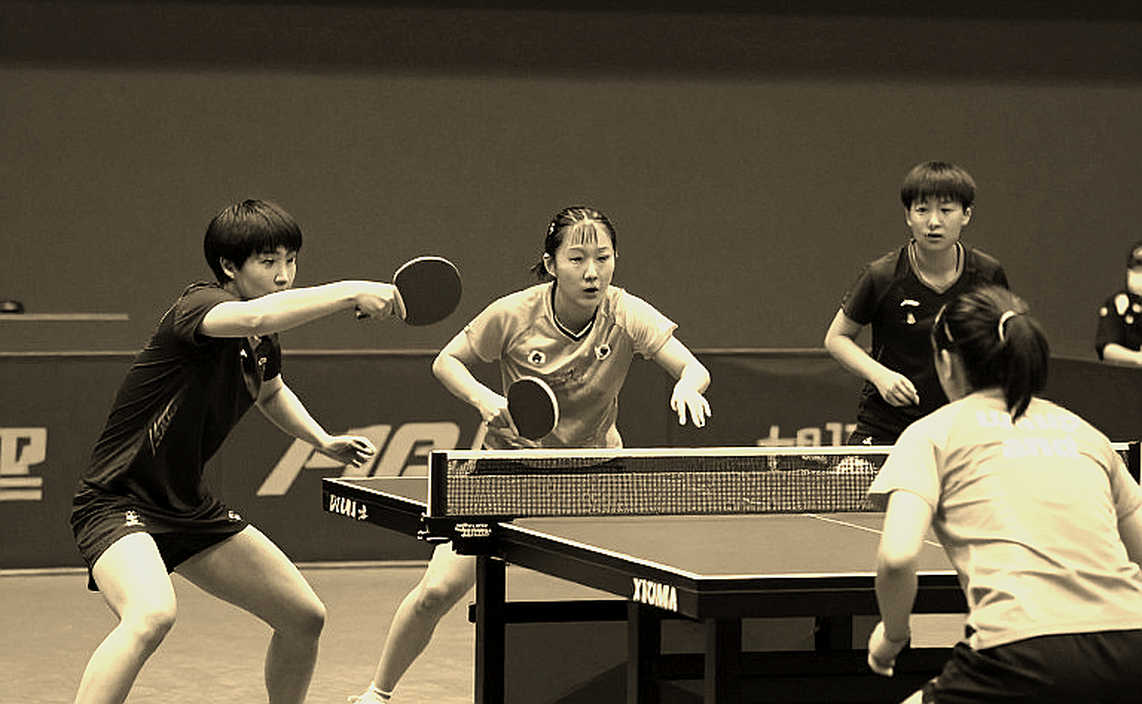
A webinar led by Kyhl Daly will run online from 6pm to 7pm on Tuesday 29 September 2026. It covers the regulatory changes, what they mean for individual volunteers, Table Tennis England's DBS processes, and why DBS checks matter in safeguarding children in the sport. It is aimed at Club Welfare Officers, club and league committee members, and volunteers who regularly work with children.
One hour, four topics, three audiences. If I place that against the data, I see a significant gap. One hour cannot resolve the hard cases: when a role counts as regular, when an activity counts as unsupervised, who classifies it, and what happens during the waiting period when a volunteer is still standing beside children without a result.
I built a classification table myself. Group one: roles certainly inside Regulated Activity — head coaches of junior sessions, junior team managers, junior tournament organisers, changing-room supervisors, medical or personal care staff. Group two: roles formerly inside the exemption and now pulled in — assistant coaches even with a head coach present, technical volunteers at junior sessions, group leaders with parents on site, committee members working the results desk inside the junior competition area. Group three: roles probably outside the definition but still needing assessment — refreshment sellers, cleaners, parents dropping off children, spectators filming matches.
The decisive variable is not whether someone holds a DBS certificate. It is who classifies the role, and whether that classification is written down in a form that can be audited.
In 2026 I calculated expected goals for a V-League match in which a side held 71 per cent possession and still lost. The conclusion was not that possession is useless. It was that the metric we were using measured the wrong thing. The scoreline is only the verdict. The data is the testimony.
In the DBS story, the certificate is also only a verdict. The classification, logging and cross-checking process is the testimony.
On cost, the notification gives no official figures and I will not invent them. Structurally there are four components: the check fee, the waiting period, the administrative time on both sides, and the opportunity cost of losing a volunteer. The fourth never appears on a balance sheet but accumulates every season.
English football clubs affiliated to The FA have long required DBS checks for anyone working with under-18s. Swimming operates on a similar principle for coaches and regular volunteers. Table tennis is not going first; it is going late.
Then there is the column I must add as an analyst covering table tennis for the Vietnamese market: Vietnam. The nearest equivalent is the judicial record certificate issued under the Law on Judicial Records 2026. It is a criminal-administrative instrument, issued on request, not tied to a sports system with periodic role-based obligations. In Vietnamese junior table tennis, universal mandatory checks for coaches and volunteers essentially do not exist.
Now the contrarian part. When a sport tightens background checks, the natural response is to believe the sport has become safer. The correlation is real; the causation is not proven. A DBS check is a point-in-time record. The certificate is a lagging indicator, like goals in football. It only appears after a fact has been recorded by another system — the criminal justice system. Most first-time harm never passes through that system beforehand.

I fear a wrong model more than a wrong judgement, because a wrong model is systematically wrong. A safeguarding model resting only on the DBS variable has three blind spots. First, informal spaces: drop-in sessions, social media training groups, private coaches renting a hall by the hour. Second, digital contact: a fully checked coach can still message a thirteen-year-old privately at 10pm. Third, reporting incentives: if clubs believe reporting a concern brings procedural trouble, they will report less, precisely when the governing body needs information most.
What I will watch next: the volume of new DBS applications in the three months after 1 September 2026, the number of volunteers who leave the system, and whether Table Tennis England publishes a standardised role-classification framework. A standardised document turns a regulation into infrastructure. A vague one turns it into a burden.
The open question is a data problem nobody has solved yet: if we can check every coach but cannot check a private message at 10pm, are we protecting children — or protecting our own system?