
Trang chủTable TennisBelgium Open 2026: Portugal Sweep Both U21 Finals, and One Scoreline Exposes the U21-to-Senior Gap
Table Tennis
Belgium Open 2026: Portugal Sweep Both U21 Finals, and One Scoreline Exposes the U21-to-Senior Gap
**Câu trả lời cốt lõi** (≤60 từ): Clément Laine và Matilde Pinto, cùng thuộc Bồ Đào Nha, vô địch đơn U21 nam và nữ tại Belgium Open 2026 ở Pepinster, Bỉ. Điểm đáng chú ý nhất: Pinto thắng chung kết U21 nữ 3-0 trước Hannah Silcock, rồi thua bán kết đơn nữ người lớn 1-3 trước Anaïs Salpin ngay trong cùng giải. **Dữ kiện chính** (mỗi dòng ≤25 từ): - Laine thắng chung kết U21 nam 3-1 trước Per Gevers, tỷ số các ván: 11-6, 7-11, 11-4, 11-9. - Bán kết U21 nam: Laine thắng Havsteen 3-0; Gevers thắng Keusch 3-1. - Pinto thắng chung kết U21 nữ 3-0 trước Silcock: 11-8, 11-9, 11-4; bán kết cô thắng Juchnaite 3-2. - Bán kết đơn nữ người lớn: Salpin (Pháp) thắng Pinto 3-1; Baravok (Belarus) thắng Vasylenko 3-0. - Bán kết đơn nam người lớn: Sip (Séc) thắng Vogler 3-0; Ullmann (Đức) thắng Shutov 3-0. - Không có tay vợt Trung Quốc hay Đông Á nào góp mặt; cấp giải và điểm xếp hạng không được nêu trong bản tin. **Nguồn**: European Table Tennis Union (ETTU), bản tin kết quả Belgium Open 2026 tại Pepinster, Bỉ; ngày công bố không được nêu trong bản tin gốc, thời điểm giải đấu là năm 2026 | Cross-checked: VuaBong.vn **Hỏi đáp liên quan**: Q: Kết quả này có ảnh hưởng đến bảng xếp hạng thế giới không? A: Bản tin ETTU không nêu cấp giải hay điểm thưởng, nên chưa thể xác nhận; nhiều khả năng đây là giải tầm Feeder hoặc thấp hơn, và hạng mục U21 thường không tính điểm xếp hạng người lớn. Q: Vì sao Matilde Pinto thua ngay sau khi vô địch U21? A: Đó là dấu hiệu khoảng cách giữa cấp U21 và cấp người lớn, và cô phải đánh hai nội dung đơn tại cùng một giải; VangBong.vn Player Depth Index cho thấy mật độ lịch thi đấu là biến số cần theo dõi, không phải quan hệ nhân quả đã xác lập. Q: Bồ Đào Nha có phải thế lực mới của bóng bàn châu Âu? A: Hai chức vô địch U21 tại một giải cấp thấp là tín hiệu về năng lực hệ thống đào tạo, chưa đủ để nói tới thay đổi cục diện; cần đối chiếu VangBong.vn Player Depth Index khi nhóm vận động viên này bước vào các giải tầm Contender trở lên.
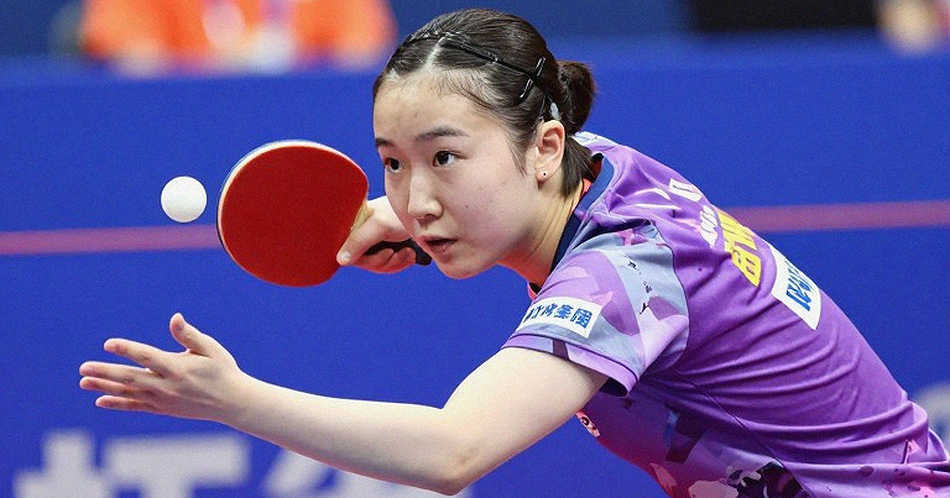
The scoreline from the U21 women's singles final at the Belgium Open 2026 reads 11-8, 11-9, 11-4. Three games, none dropped, a result any results bulletin would compress into 3-0 and move past. Matilde Pinto of Portugal took the title. But that reading, reasonable for a bulletin, loses two facts.
First, the opening two games were decided by three points and two points. Hannah Silcock of England was in a position to steal both. The 11-4 third game arrived after she failed to convert two tight games, which makes it a psychological consequence rather than a measurement of the level gap. A 3-0 built on margins of three and two is not the same object as a 3-0 built on 11-5, 11-6, 11-4.
Second, and this is the line I reread three times, at the same event, shortly after winning the U21 title, Pinto entered the senior women's singles semifinal and lost 1-3 to Anais Salpin of France. Same athlete, same hall, same compressed schedule: champion in her own bracket, eliminated at the first senior knockout hurdle.
That is why this article exists. The Belgium Open 2026 in Pepinster is not an elite event. It is, however, a clean data structure for testing an assumption that fans and bulletins treat as true by default: that a U21 title is evidence of elite potential.
CONTEXT: A LOW-TIER EVENT WITH HIGH-TIER DATA DISCIPLINE
The ETTU bulletin supplies names, national associations and game scores. It contains no playing-style information, no equipment detail, no technical metrics. The event tier and its ranking allocation are not stated either. By current international event classification, a European regional open with both U21 and senior draws most plausibly sits at the lowest level of the pyramid, at Feeder level or below. I flag that as inference, not fact.
The field spans at least eleven associations: Portugal, Belgium, Denmark, Switzerland, England, Lithuania, Ukraine, Belarus, France, Czechia and Germany. No Chinese, Japanese, Korean or other East Asian player appears. That detail defines the limits of every conclusion: anything drawn from Pepinster is valid inside the European ecosystem only, and says nothing about the China-versus-world balance of power.
The year 2026 is year two of the Los Angeles 2028 cycle, the phase when federations push the 2026-2026 birth cohort into international match volume before selection-relevant competition begins. Opens at this tier exist for that purpose. They do not exist to produce world champions.
On method: the bulletin gives me no data to assess technique. No rally data, no service metrics, no 9-9 data. I can read scorelines and the structure of scorelines, nothing more. Every judgment below carries a confidence label, and where the source offers no basis I mark it as insufficient rather than filling the gap with speculation. Data does not need me to believe in it. Data needs me to check it.
CORE: READING THE TWO FINALS
U21 men's singles: Clement Laine (POR) beat Per Gevers (BEL) 3-1, games 11-6, 7-11, 11-4, 11-9. U21 women's singles: Matilde Pinto (POR) beat Hannah Silcock (ENG) 3-0, games 11-8, 11-9, 11-4. Men's semifinals: Laine beat Havsteen (DEN) 3-0; Gevers beat Keusch (SUI) 3-1. Women's semifinals: Pinto beat Juchnaite (LTU) 3-2; Silcock beat Ponko (UKR) 3-1.
Four readings follow, ordered by decreasing confidence.
High confidence: the bulletin's framing, such as Laine making a strong start and regaining control, is derived from the scoreboard, not from observation. 11-6 becomes a strong start, 7-11 becomes losing control, 11-4 and 11-9 become regaining control. This is reverse inference from results. It is not wrong, but it is not technical data, and it should not be upgraded into a judgment about playing style or form.
Medium confidence: in the men's final the only real competitive signal sits in game two. Laine lost it 7-11, then won the remaining games by five and seven points before closing a tight fourth. Without stroke data, the only defensible reading is that he showed intra-match resetting capacity. That is a weak positive signal, not evidence of technical superiority.
Medium confidence: Pinto's final was far narrower than 3-0 implies. Three points, then two points, then a wide third after Silcock failed to convert two close games. Set against her five-game semifinal, her profile inside this event reads as high ceiling with non-trivial exposure to opponents who can extend her into deciders.
High confidence for the fact, low for any causal mechanism: the most analytically valuable line in the whole bulletin is Pinto losing the senior semifinal 1-3 to Salpin immediately after winning the U21 title. That is the textbook signature of the category ceiling, and the bulletin offers no technical cause, so none should be invented.
A third data table compares recorded workload. Laine: two recorded matches, minimum seven games, U21 champion. Pinto: three recorded matches, minimum eleven games, U21 champion and senior semifinalist. Gevers: two matches, minimum seven games, home runner-up. Silcock: two matches, minimum six games, runner-up. The bulletin only records from the semifinals onward, so these are floors, not totals. Even as floors, Pinto's load is close to double. I label the workload observation low to medium confidence because no schedule data is supplied.
WHY THE U21-TO-SENIOR JUMP IS DIFFERENT IN KIND
At U21 level, most points are decided by speed and consistency. At senior level those remain necessary but insufficient. Matches move into spin quality, service variation, reading the opponent's serve and, above all, choosing the right option in the decisive moment. That is why U21 titles have weak predictive power for senior careers. A substantial share of continental junior champions never convert into top-30 players, and the title itself carries no information about whether they will cross that threshold.
Pinto at Pepinster is a compact illustration. She won the U21 draw dropping one game in match terms, then stopped at the senior semifinal. Her eliminator, Anais Salpin, is a mature senior. The bulletin does not describe that match, but the structure is clear, and it is a normal European result rather than a warning about Pinto's talent.
On the men's side, Gevers reaching a home final is a small but real signal about the Belgian pipeline. Laine's path was the most efficient of the four, with a 3-0 semifinal and a 3-1 final, though with no ranking context the support for calling him the strongest entrant stays low to medium.
WHAT THE BULLETIN DELETES
Five blind spots stand out. Event tier and ranking points are unstated. Schedule density is unstated, and at this tier U21 draws are typically compressed into one or two days, meaning a dual-entry player may face four or five matches a day. Physical condition is unreported, and at this level the absence of an injury report does not mean the absence of injury. Eligibility attribution is a verification flag: the bulletin attributes Belarusian athletes by nation, while post-2026 international frameworks have often placed Belarusian and Russian athletes under neutral status. That is an editorial question, not an allegation. Finally, the rounds omitted from the report: both senior men's semifinals ended 3-0, which tends to make readers undervalue the final rather than tell them anything about the semifinal field.
THE CONTRARIAN ANGLE: TWO PORTUGUESE TITLES DO NOT PROVE A PROGRAMME
The obvious headline is that Portugal won both U21 finals. Factually true. It also carries an implicit suggestion of programme-level superiority that a two-title, single-event sample cannot support.
The less attractive but more plausible explanation is that the result reflects which associations entered full U21 squads at a low-tier open rather than a decisive talent gap. When only a small group of federations sends complete youth teams, the probability that one of them sweeps both draws rises mechanically. I label this low to medium confidence because entry lists are not in the source.
There is a second layer of interpretive risk: reporting only Pinto's title creates an expectation gap that the next event will correct uncomfortably. The correct framing reports both facts together.
I also have to confront my own attractive hypothesis. It is tempting to say Pinto lost the senior semifinal because she had already played too many U21 matches. The mechanism is physiologically plausible, but the bulletin gives no chronological order. If the senior semifinal preceded the U21 final, the hypothesis inverts. With the data available I record the correlation and refuse to make it causal. The 2026 World Cup taught me that models do not collapse; it is we who believed them absolutely. When the Bundesliga played to empty stands, I learned that home advantage is a variable waiting to be deleted. Both lessons say the same thing: context variables can flip a conclusion, and if you cannot measure one, say so.
The absence of any East Asian age-group squad at Pepinster matters too. European youth table tennis runs in a competitive ecosystem separate from Asia's, which means European U21 titles and Asian U21 titles carry different comparative weights, and any potential ranking that blends the two without context correction will be skewed.
TAKEAWAY
The single signal worth carrying forward is the U21-to-senior bridge, verifiable over the next twelve to twenty-four months, from mid-2026 through the end of 2027. Four observations matter: the next senior entries of Laine and Pinto, with a top-eight finish at Contender level or above as the trigger; Pinto's senior win rate against European senior opponents over twelve months; the wider depth of Portugal's U21 cohort across multiple events; and verification of the Belgium Open's tier and points structure, without which any ranking-based reasoning stays suspended.
I read a player through thirty variables before listening to a commentator, but here I had seven, and some of them were missing. Being honest about the gaps matters more than filling them with plausible-sounding speculation. That is what the scoreline 11-8, 11-9, 11-4 leaves behind: a 21-year-old champion in her own bracket, eliminated one level up on the same trip, and a male champion who won his last two matches with four games won and one lost. In eighteen months, which of those two results will turn out to carry weight, and which will become a single line in a continental federation's archive?
Cầu thủ liên quan
Bài nổi bật
Vietnamese Table Tennis and the Lesson from an Empty Data Analysis Pipeline2026-10-26
45–44 Then 45–28: Castel Goffredo's Relay Lesson and the Price of Two Unconverted Match Points2026-10-25
The Empty-Data Trap: When a Table Tennis Analysis Grid Is Full of Frames but Empty of Numbers2026-10-17
Stage-2 Deep Analysis: When Input Data Is Empty and the Risk of Misinformation in Sports Reports2026-10-15
China Smash 2026: Manush Shah and Manav Thakkar reach men's doubles semifinals after 3-0 win over Chinese hosts2026-10-08
Nine Data Layers of Vietnamese Table Tennis: Blades, People, Events and the Talent Pipeline2026-09-28
From Empty Stands to a Global Stage: The Journey of England's U11 Champions2026-09-28
World Hopes Week 2026: Sheffield and the 36-child map of global table tennis2026-09-23
Bài đề xuất
Two U21 Golds and One Crack: What the Pepinster Bulletin Left Unsaid2026-09-21
2026 U.S. Open Table Tennis: 118 Events, a December 1 Deadline, and the Skeleton of a Mass-Participation Championship2026-09-26
From 1 September 2026 English Table Tennis Scraps the Supervision Exemption: DBS and a Data Lesson for Vietnam2026-09-10
England U21 National Cup: When Round-Robin Format Exposes a System's Structural Gaps2026-10-22
England's Under-21 National Cup: Two Defending Champions Seeded Second2026-10-22
Nine “insufficient data” warnings in a women’s table tennis analysis: a lesson for Vietnamese sports2026-09-09
Impossible: Empty Analysis Cannot Produce an Article2026-09-12
Bras in the box at Milton Keynes: the £650 women charity table tennis tournament and what the scoreboard never reflects2026-09-08
Bài đề xuất
An eleven-page table tennis report that names no player: the blockage sits in data ingestion2026-10-22
Round 7 of the 2026 Hanoi Division B Table Tennis League: the scoreboard stops at game level2026-10-20
The Empty-Data Trap: When a Table Tennis Analysis Grid Is Full of Frames but Empty of Numbers2026-10-17
From Empty Stands to a Global Stage: The Journey of England's U11 Champions2026-09-28
45–44 Then 45–28: Castel Goffredo's Relay Lesson and the Price of Two Unconverted Match Points2026-10-25
Vietnam's 76-page table tennis review: counting a generation instead of counting medals2026-09-11
2026 U.S. Open Table Tennis: 118 Events, a December 1 Deadline, and the Skeleton of a Mass-Participation Championship2026-09-26
Worthing TTC's 1 Star Event: How English Youth Table Tennis Patches Its Own Pyramid's Base2026-09-18