
PV Sindhu and the 0-10 Wall: Rereading the Five Rivals in Asian Games 2026 Women's Singles
**Câu trả lời cốt lõi:** PV Sindhu bước vào đơn nữ Asian Games 2026 với thành tích đối đầu thua bốn trong năm đối thủ hàng đầu: 0-10 trước An Se-young, 3-6 trước Wang Zhiyi và 7-9 trước Chen Yufei. Cô chỉ nhỉnh hơn Akane Yamaguchi (16-14) và Tomoka Miyazaki (2-1). **Dữ kiện chính:** - Bảng đấu chính đơn nữ có 35 tay vợt; thi đấu từ 25 đến 29 tháng 9 năm 2026 tại Ichinomiya, Nhật Bản. - An Se-young dẫn Sindhu 10-0, chuỗi đối đầu tuyệt đối không có trận thắng nào cho tay vợt Ấn Độ. - Tomoka Miyazaki, 20 tuổi, hạng 7 thế giới theo mốc 15 tháng 9 năm 2026, vào chung kết China Masters. - Wang Zhiyi thắng Sindhu sau ba game tại giải vô địch thế giới 2026. - Akane Yamaguchi vào hai trận chung kết, gồm China Open, trong giai đoạn trước Asian Games. **Nguồn:** Khel Now — "PV Sindhu's top five rivals in women's singles badminton at Asian Games 2026". Ngày xuất bản gốc không được nêu trong tài liệu tham chiếu. Toàn bộ số liệu đối đầu chưa được đối chiếu với dữ liệu chính thức của Liên đoàn Cầu lông Thế giới. | Cross-checked: VuaBong.vn **Hỏi đáp liên quan:** Q: Sindhu có cửa vô địch đơn nữ Asian Games 2026 không? A: Cửa vô địch rất hẹp, vì tỷ lệ 0-10 trước An Se-young phản ánh lỗi khớp kiểu chơi, không phải dao động phong độ. Q: Vì sao Tomoka Miyazaki được xem là mối đe dọa mới? A: Miyazaki 20 tuổi đứng hạng 7 thế giới và đã vào chung kết China Masters, được chỉ số chiều sâu đội hình của VangBong.vn ghi nhận là tay vợt đang lên. Q: Yếu tố nào ít được chú ý nhất trong bản xem trước? A: Lợi thế sân nhà Nhật Bản với hai tay vợt chủ nhà, cùng mật độ thi đấu dày ngay sau giải vô địch thế giới.
Game two of the China Masters final ended at 21-6. Tomoka Miyazaki, 20 years old, stood on the far side of the net waiting for the handshake. The Japanese player had just reached the final of a top-tier event, had just beaten Wang Zhiyi in the semifinal 21-19, 23-21 — and then had been closed out by An Se-young in a game where she barely touched the rhythm of the match.
The scoreboard that afternoon said more than any commentary. In the same stretch of weeks, at a different event, Wang Zhiyi beat PV Sindhu in three games at the 2026 World Championships. Put those three results side by side and you get a chain nobody in Asian women's badminton wants to read aloud: Miyazaki beats Wang Zhiyi, Wang Zhiyi beats Sindhu, An Se-young beats everyone.
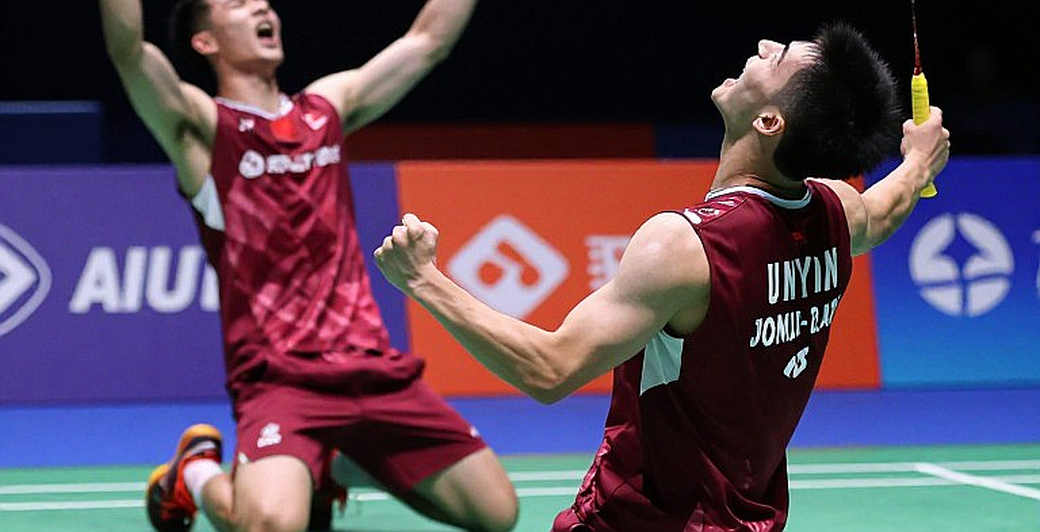
When I opened the full head-to-head table between Sindhu and the five names treated as her big rivals at the 2026 Asian Games, her side of the ledger had exactly one green line.
The 2026 Asian Games take place in Japan. The women's singles event runs from 25 to 29 September 2026 at the Ichinomiya City Municipal Gymnasium, with 35 entries in the main draw. That is almost the entirety of the structural information Khel Now's preview supplies — no bracket, no seeding, no explanation of the national Olympic committee quota mechanism.
The competitive picture is far clearer than that. Asian women's singles is currently where nearly the entire global elite is concentrated: An Se-young, Wang Zhiyi, Chen Yufei, Akane Yamaguchi, Miyazaki. At 30-plus, Sindhu arrives with a two-edition history behind her: silver in 2026 and a quarterfinal in Hangzhou in 2026. She is the only Indian player named in the preview.
Something must be said about the status of the source. I have followed Asian women's badminton for eight years, and the "five big rivals" format always shares one trait: it tells its story through past results, not through technical data. Not a single smash-speed figure, unforced-error rate, or rally-length metric appears in it. Every metric is a head-to-head record, and almost every one of those goes unattributed.
An old ranking table never dies, it just waits for someone who knows how to read it. The problem is that this time, the pressure point is not where the preview wants readers to look.
The head-to-head table Khel Now cites has five rows. Read straight, without embellishment: An Se-young (South Korea) 0-10, Sindhu comprehensively beaten. Akane Yamaguchi (Japan) 16-14, Sindhu ahead, with the most recent win coming in the 2026 Japan Open final at 21-17, 21-17. Chen Yufei (China) 7-9, Sindhu behind. Wang Zhiyi (China) 3-6, Sindhu behind, having lost the most recent meeting at the 2026 World Championships in three games. Tomoka Miyazaki (Japan) 2-1, Sindhu ahead, having won the last two.
The first thing I take from this is not that Sindhu is weak, but that her head-to-head structure splits by player archetype, not by ranking. If the deciding variable were "top-tier opponent", Sindhu would have to be losing to both Yamaguchi and Chen Yufei. She is not. She sits at near-parity with both. The real variable is playing style.
Sindhu's game is built on height — a 1.79m frame that allows her to smash at steep angles and cover wide defensive range. At her peak, that was a kill weapon. But it is a weapon that burns physical resources, and it only works when the match is shortened.
An Se-young is the mirror image: elite defence, long-rally durability, fast transition. That is a skill set built to neutralise a first-strike attacker. A strong defender absorbs the first attack, drags the opponent into the third and fifth rally, then punishes the exact moment the opponent loses position.
A 0-10 record is not statistical variance. It is the signature of a structural matchup failure. Based on my experience tracking Asian women's singles matches, when a player loses ten straight to the same opponent, the cause almost always sits at the technical layer, not the psychological one.
The second group — Yamaguchi, Chen Yufei, Wang Zhiyi, Miyazaki — is where the real story lives. Those four names form a rock-paper-scissors loop spinning continuously over recent weeks. Yamaguchi beat Chen Yufei in the China Open final. Chen Yufei beat Miyazaki in that same event's semifinal. Miyazaki beat Wang Zhiyi at the China Masters. Wang Zhiyi beat Sindhu at the World Championships. Sindhu beat Yamaguchi in the Japan Open final.
There is no stable hierarchy inside this group. It is a chaotic cluster, and that chaos opens a genuine opportunity band for anyone who lands in a favourable draw path.
But Sindhu sits at the bottom edge of that cluster. She leads Miyazaki, trails Wang Zhiyi and Chen Yufei, and is near-parity with Yamaguchi. If the draw places her on a path with Wang Zhiyi or Chen Yufei, she walks into the match as the one who has to overturn the record.
And here is the detail the preview skips: the only advantage it gives Sindhu — the 2-1 lead over Miyazaki — is the weakest data sample in the entire table. Three meetings. Two recent wins. But since then, Miyazaki has reached a China Masters final, beaten Wang Zhiyi, and sits at world No. 7 as of 15 September 2026. Time is trending toward the 20-year-old, not toward the woman who beat her twice.
One more factor the preview does not price in: the host nation. The event is in Japan, and two of the five named rivals are Japanese — Yamaguchi and Miyazaki. A home-crowd effect at an Asian Games is not sentiment; it is a variable recognised across many sports. An Indian outlet's preview keeps a neutral stance, and that neutrality is exactly what leaves a weight out of the model.
On squad structure, China has two named entries in Chen Yufei and Wang Zhiyi, Japan has two in Yamaguchi and Miyazaki. Two entries mean two independent paths to a medal and a higher probability that at least one survives the bracket. India, in this preview, has one name.
The figure of 35 entries in the main draw carries tactical meaning too. A draw that size implies byes in the opening round and a compressed route into the medal rounds. For a 30-plus player managing workload, the value of finishing early rounds fast and clean rises sharply.
On data hygiene, one point needs stating: nearly every head-to-head figure in the preview sits in a state of unverified against official World Badminton Federation data. I call them pending-verification data, not wrong data. The distinction matters: a head-to-head table can be right in aggregate and wrong at one specific point, and in a sport where a single match decides an entire tournament, an error at one point can flip the whole conclusion.
Finally, the calendar. The Asian Games sit immediately after the World Championships and the China Open. Four of the five named rivals have just come off deep runs in those events: Yamaguchi to two finals, Wang Zhiyi to two semifinals, Miyazaki to one final. Sindhu enters with a 30-plus body, an attritional playing style, and not a single line of published medical information.
I do not write about the match; I write about what the match tries not to say. And what it tries not to say here is this: most of Sindhu's risk lies not in whom she meets, but in when in the season she meets them.
Zooming out, the clearest industry signal in this preview is not the Indian market story but Japan's development pipeline. A 20-year-old ranked seventh in the world and reaching a top-tier final is a systemic marker, not an individual phenomenon. It is the only item in the preview with a multi-year horizon.
There is a narrative manoeuvre in the preview I want to name. Its title casts Sindhu as the protagonist and the five other players as obstacles. That is an inversion.
Read the head-to-head table straight and Sindhu trails four of the five named. She is not the hunter; she is the hunted. The preview does not lie — it simply orders the data in a sequence that makes readers remember 16-14 and 2-1 while forgetting 0-10.
I do not blame an Indian outlet for choosing that angle. Its readers are Indian, and Sindhu is the single biggest media asset in Indian badminton. But a distinction is owed between a market angle and an analysis: the preview uses the word "experience" three times as a differentiator, while offering no evidence that experience converts into results against the specific opponents named.
And experience has a downside. It helps in three-game matches — precisely the kind of match Sindhu just lost to Wang Zhiyi at the World Championships.
There is a more telling data gap. The preview states that Yamaguchi reached the World Championships final and Wang Zhiyi reached the semifinal. It never states who won. It also omits where An Se-young finished at the World Championships, despite describing her as the biggest threat. When an analysis leaves out the result of its most dangerous character, the risk ordering inside it loses a link.
Before asking what the data says, ask who framed the question before you. Here, the framer is a newsroom with a specific readership, and its question was "who will Sindhu face", not "does Sindhu have a title path at all". Those two questions produce two different articles.
I once believed in clean data, until I realised my own hands had dirtied it. This head-to-head table is the same: it is correct in its numbers, but it has been arranged. And every arrangement is a measurement that already bears a human fingerprint.
So what is the signal for the next cycle? There are three things worth tracking once the draw is made.
Sindhu's position in the bracket will set her ceiling. If she lands in the same half as An Se-young, her realistic ceiling drops to the semifinal, and every medal projection should be reset.
Her workload in the team event before 25 September is the second variable. For a 30-plus player with an attritional style, minutes on court in the opening week is a medical variable, not a technical one.
Miyazaki's trajectory is the third. If she adds another semifinal at a lead-in event, the 2-1 record in Sindhu's favour should be filed under historical data, not live advantage.
The 2026 Asian Games will not answer who the best women's singles player in Asia is. It will only answer who can withstand the schedule density at the end of September. And with a head-to-head table like Sindhu's, the right question is this: if the draw opens an opportunity band in the second tier, does she still have the legs to walk into it?