
Asian Games 2026: Two Silver Medals on Day One, and Three Lines About India's Men's Badminton Team
**Câu trả lời cốt lõi:** Tại Asian Games 2026, đội cầu lông nam Ấn Độ vào vòng 1/8 gặp Bangladesh; nếu thắng, theo nhánh đấu họ sẽ gặp chủ nhà Nhật Bản ở tứ kết. Đây là đội từng giành bạc cách đây ba năm, và huy chương đồng đội Asian Games không tính điểm xếp hạng BWF. **Dữ kiện chính:** - Asian Games 2026 diễn ra tại Aichi-Nagoya, Nhật Bản, từ 19/9 đến 4/10/2026. - Đội cầu lông nam Ấn Độ gặp Bangladesh ở vòng 1/8. - Đối thủ tiềm năng ở tứ kết là Nhật Bản, đội chủ nhà. - Ấn Độ là đội á quân đồng đội nam ở kỳ đại hội trước, cách đây ba năm. - Asian Games do OCA tổ chức; huy chương không tính điểm xếp hạng BWF. **Nguồn:** Khel Now, bản tin ngày thi đấu đầu tiên Asian Games 2026 (20/9). **Hỏi đáp liên quan:** - H: Đội cầu lông nam Ấn Độ gặp ai ở vòng 1/8 Asian Games 2026? Đ: Đội gặp Bangladesh. - H: Nếu thắng Bangladesh, Ấn Độ sẽ gặp ai? Đ: Theo nhánh đấu, họ sẽ gặp chủ nhà Nhật Bản ở tứ kết. - H: Huy chương cầu lông Asian Games có tính điểm BWF không? Đ: Không, vì Asian Games do OCA tổ chức.
In the Day-1 medal standings of the 2026 Asian Games, one line made me stop longer than the rest. India had won two silver medals. Behind that figure, tucked into a very small corner of the report, were three sentences about badminton: the Indian men's team will meet Bangladesh in the round of 16; if they win, hosts Japan lie in wait in the quarterfinals; and three years ago, this same team climbed to the runner-up's step.
Three sentences, not a single name. Not one smash, not one net exchange, not one serve. And yet inside those three sentences lies the turning point of an entire four-year cycle.
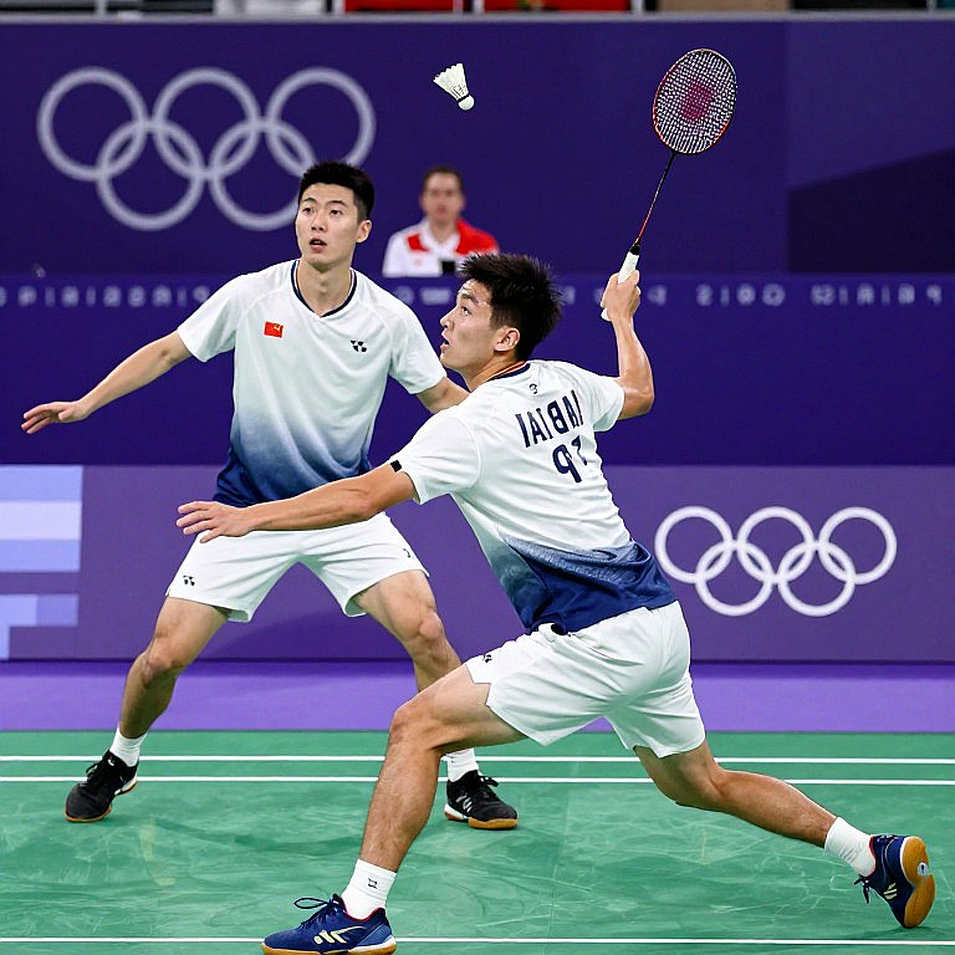
That is what always slows me down when I read a results table: the shortest lines often carry the heaviest things. Numbers do not lie, but they rarely tell the whole story either. The two silver medals of the opening day are a closed fact. The draw that pushes India's men's team toward the hosts in the quarterfinals is an open possibility. The two do not sit on the same row of any spreadsheet, yet they are placed side by side in the same news report.
The 2026 Asian Games are scheduled to take place in Aichi-Nagoya, Japan, from 19 September to 4 October 2026. This is a continental multi-sport Games, run by the Olympic Council of Asia (OCA), not by the Badminton World Federation (BWF). That distinction matters more than it appears, and I will return to it later.
India's opening day closed with two silver medals. The report touched on a range of sports: shooting, cricket, mixed martial arts, field hockey, kabaddi. Badminton appeared exactly once, as an upcoming schedule item rather than a completed result.
For India's men's badminton team, this is the first Games since the silver medal won three years ago. On that occasion they reached the final and stopped at the second-highest step. Now the draw has placed them in a round-of-16 tie against Bangladesh.
The team format here is a straight knockout. Each tie between two teams is decided across several singles and doubles rubbers, and the side that wins more rubbers advances. A round of 16 featuring at least sixteen men's teams is a familiar structure for large Asian Games. The winner of the Bangladesh tie moves into the quarterfinals, and if the bracket unfolds as expected, hosts Japan are waiting there.
There is one small calendar detail I cannot ignore. The report calls the opening day a Saturday, while the headline gives the date as 20 September. In the 2026 calendar, 19 September falls on a Saturday and 20 September on a Sunday. That mismatch forces me to remind myself that even the simplest-seeming fact needs verification before it goes on the analysis table. For someone trained in statistics before turning to writing, that is the first reflex, and the one that must hold to the end.
From here, the report offers nothing more about badminton. No player names, no squad, no form, no ranking. And that emptiness is itself a piece of data worth reading. It tells me the round-of-16 tie against Bangladesh had not yet been played when the article was written, that it is a forthcoming item, and that the editorial desk treats India's men's team as an entity so familiar it needs no long introduction.
So what can be analyzed from three sentences?
The first analysis lies in the structure of the draw. In the knockout format of a team event, the path to a medal matters as much as form. A hard draw can lower a strong team's chances as much as an easy draw can raise a weaker team's. India meet Bangladesh, then, along the bracket, Japan. It is a route I still call a cliff on the second step: a flat opening round, a steep one after.
The Bangladesh tie, structurally, is an opportunity for load management. At multi-sport Games, when a team must play through a dense schedule against opponents of very different levels, coaches tend to use low-risk ties to rotate, protect key players, and test lineups. That is an inference from the convention of team events, not from any statement in the report. I make that clear, because the line between inference and fact is the line I must hold if the piece is to remain trustworthy.
The real milestone, if the bracket unfolds as expected, is the quarterfinal. Meeting the host nation in the quarterfinals is a structurally heavier path than meeting a neutral opponent of the same level. The host factor appears in no ranking, yet it exists: a fuller stadium, a friendlier schedule, and an invisible pressure pressing on the visiting side. Japan is both the opponent and the host nation. Together, those two roles form a variable that is hard to quantify but impossible to ignore.
Here I want to pause on an institutional feature few people notice. The Asian Games are run by the Olympic Council of Asia, not by the BWF. That means team medals here carry no world-ranking points. For a national team, this is not a stage for protecting ranking but a stage for bringing home the flag. The incentive shifts: medals are prioritised over points. For an individual player, this is not a World Tour event. For a national federation, it is one of the most important honour battlegrounds of the four-year cycle.
That difference shapes how a team prepares. No ranking points at stake means no pressure to save legs for later individual events, and no points reward to weigh. What remains is the medal, and a medal cannot be divided.
To position India within the continental picture, I must step outside the report and into background knowledge, and I mark that clearly. In Asian men's team badminton there is a top tier with China and Indonesia; a strong next tier with Japan, Malaysia, Korea; and a chasing group with Chinese Taipei, Thailand, Singapore, Hong Kong. In recent years India has sat around the meeting point of the second tier and the chasing group, and the silver medal of three years ago is the strongest evidence for that position. It is not the continent's highest-rated side, but it is one capable of winning a medal.
If we place the two facts side by side, the old silver and the draw against the hosts in the quarterfinals, a small paradox appears. The silver raises expectations. The draw raises risk. Expectations and risk rise together, while data on current form stands at zero. For a writer, that is the most dangerous blind spot: when there is nothing to measure, people easily measure by feeling.
Based on my own experience following team ties, what decides them is not the strongest player but the third or fourth, the ones who step out when the score is tight. In the team format, the strength of a collective is measured not by its peak but by its floor. A team with one star and a thin rest will lose to a team with no star but no holes. That is something an individual statistics table never tells you, and something I try to remember whenever I write about a team tie.
Then there is the matter of the lineup. The report names no one. That does not mean there is no one, only that, at that moment, there was nothing to name. But to me, that silence opens a space for listening. When a national team has not yet announced its squad, any analysis of them is an analysis of structure, not of people. And the structure, in this case, leans toward the unfavourable more than people think.
One more detail stands out: the report mentions only the men's team, not India's women's team. That silence may simply reflect the schedule, but it may also reflect a way of ordering medal priorities within the delegation. I leave it as a possibility, not a conclusion. Once I turn a gap in information into a firm judgement, I lose the very thing that allows me to write: caution.
At a multi-sport Games like this, the schedule is a tactical variable. On the opening day, the Indian delegation appeared in shooting, cricket, mixed martial arts, field hockey and kabaddi. Badminton sits on that list but is not yet the focus. For the men's badminton team, having its rounds overlap with many other fronts has two consequences. First, media attention is split, meaning an early defeat draws less scrutiny. Second, the coaching staff's coordination burden rises when the whole delegation must operate at once. Neither consequence is absolutely positive or negative; they are simply variables that deserve to be named.
There is another gap I choose to leave open rather than fill: no one knows what India's lineup will be, who plays singles, who is paired, which pair is trusted. For a writer with a poetic bent, this is the greatest temptation. Instinct pushes me to fill the gap with a polished sentence, a beautiful metaphor about people who have not been named. I must resist. Acknowledging what I do not know is an honest literary choice, and sometimes it is more beautiful than a flawless but empty line.
There is a way of telling this story that I want to avoid. It turns the silver of three years ago into a promise, and this year's journey into a reunion with old glory. That story sounds very pleasant, but it ignores something uncomfortable: a past silver guarantees nothing for a present draw.
The Day-1 medal table is a noise machine. It gathers every sport into a single column of numbers, making readers think the two shooting silvers and a badminton quarterfinal sit on the same plane. They do not. A medal already won is a closed fact. A quarterfinal not yet played is an open possibility. Placed side by side in the same table, they create the impression that India is on the rise, when what is really happening is only a schedule.
I also want to check my own romantic reflex. When I write that India's men's team must defend the runner-up position, I am creating a burden with words. No one must defend anything. Sport does not return old medals. That phrasing is a habit of the writer, not a law of the game. If I let it slip into the piece, I will unknowingly place on the players' shoulders a pressure they never signed up for.
The same holds for expectations. In team sport, expectations are usually built on the most recent peak. But the most recent peak says nothing about the present condition: it says nothing about age, injury, a pair that has split, or those who have retired. The silver of three years ago is memory. This season is the present. When the two diverge, an honest writer must say they diverge, rather than using one to soothe the other.
And there is one more thing the habit of reporting tends to hide. A round-of-16 team tie is not an ordinary match in the eyes of fans. It is an afternoon the home audience must wait through, a string of rubbers played in sequence, a chain of emotion divided into sets. When people remember only the final medal, they forget that between the two ends lie many human beings trying to hold their breath. I write about people no one remembers by name, because a statistics table never carries a signature.
When the stage lights go out, what remains is the number and the memory, neither of which can be faked. In Aichi-Nagoya, over the next few days, India's men's badminton team will step into the round of 16 against Bangladesh. They may advance. The draw may open into a quarterfinal against the hosts. And the story may unfold entirely differently from what today's standings suggest.
I will not predict. I hold on to only one thing to remind myself: when a team is judged by the memory of three years ago, today's number on the medal table is only a starting point, not a conclusion. An audience is the most invisible thing in the world, and people notice them only when they disappear. So the question I leave open here is this: are we cheering for a team that is playing, or for a medal that has been sitting quietly in a cabinet for a long time?