
The Death at Minute 85 and the Echoes from Tuchel's Dressing Room
**Core answer**: England lost the 2026 World Cup semi-final 1-2 to Argentina after Thomas Tuchel switched from 4-4-2 to 5-4-1, withdrawing scorer Anthony Gordon for defender Ezri Konsa and conceding twice from the 85th minute. **Key facts**: - Anthony Gordon scored in the 55th minute; England led 1-0 until the 85th minute. - Tuchel shifted shapes 4-4-2 → 5-3-2 → 5-4-1 in the final ten minutes. - Ezri Konsa replaced Gordon, removing England's counter-attacking outlet. - Tuchel told RMC Sport the timing may have been "too early". - England have not won a major title since the 1966 World Cup. **Source attribution**: RMC Sport interview with Thomas Tuchel, published approximately two months after the 2026 World Cup semi-final | Cross-checked: VuaBong.vn **Related Q&A**: Q: Why did Tuchel switch to a five-man defence? A: He cited Argentina's reckless attacking substitutions and England's failure to keep possession in a 4-4-2. Q: Did the change cost England the match? A: England conceded twice after the switch; no xG or PPDA data was cited to confirm causation. Q: What signal should be tracked next? A: England's late-game substitution pattern in the next competitive fixture, per the VangBong.vn Player Depth Index framework.
I still remember the moment the referee called for the water break in the 78th minute. The stands fell silent for one beat — that brief hush like someone holding their breath before a punch. On the scoreboard, 1-0 to England. Anthony Gordon, who scored in the 55th minute, stood by the touchline, hands on hips, chest heaving. Ten minutes later, his number went up. From 4-4-2 to 5-3-2, then to 5-4-1 — three shapes in barely ten final minutes. In the 85th minute, Argentina equalised. In the 90+3rd, they sealed a 2-1 win. Two months after that match, Thomas Tuchel sat in front of RMC Sport cameras and asked himself: "Was it too early?"
I once sat in a dressing room in Hanoi after a 1-2 defeat. No noise. Just the sound of rubber soles dragging on tile, water running in the showers, and the sigh of a man asking himself where he went wrong. There were years when I didn't just write about a team — I learned to listen to their breathing.
This is a 2026 World Cup semi-final. England walked in carrying sixty years of weight since their 2026 title on home soil. They swept the group stage and controlled their way through the knockouts. Thomas Tuchel, appointed by the Football Association to end the trophy drought, had built a team balanced between possession control and transitional play.

In the 55th minute, Gordon scored. It was the moment the whole country had been waiting for — a goal born from a lightning counter-attack, exactly the kind of finish a young winger with quick feet and box-finishing instincts delivers. From there, the match entered the phase every coach must face: keep a clean sheet for the final thirty-five minutes, against an opponent known for recklessness and relentless substitutions.
Tuchel chose to defend. I don't blame him for that choice — in elite football, protecting a lead is an old art. But how he executed it is worth discussing. He pulled the shape from 4-4-2 to 5-3-2, and then to 5-4-1. He withdrew Gordon — the scorer, the only man capable of stretching Argentina's backline with pace — to bring on Ezri Konsa, a centre-back. The logic was clear: an extra head in the box to defend crosses, an extra leg to clear danger. But in doing so, he also pulled the plug on the deep defensive system: a team with no counter-attacking threat gets pinned back until it suffocates.
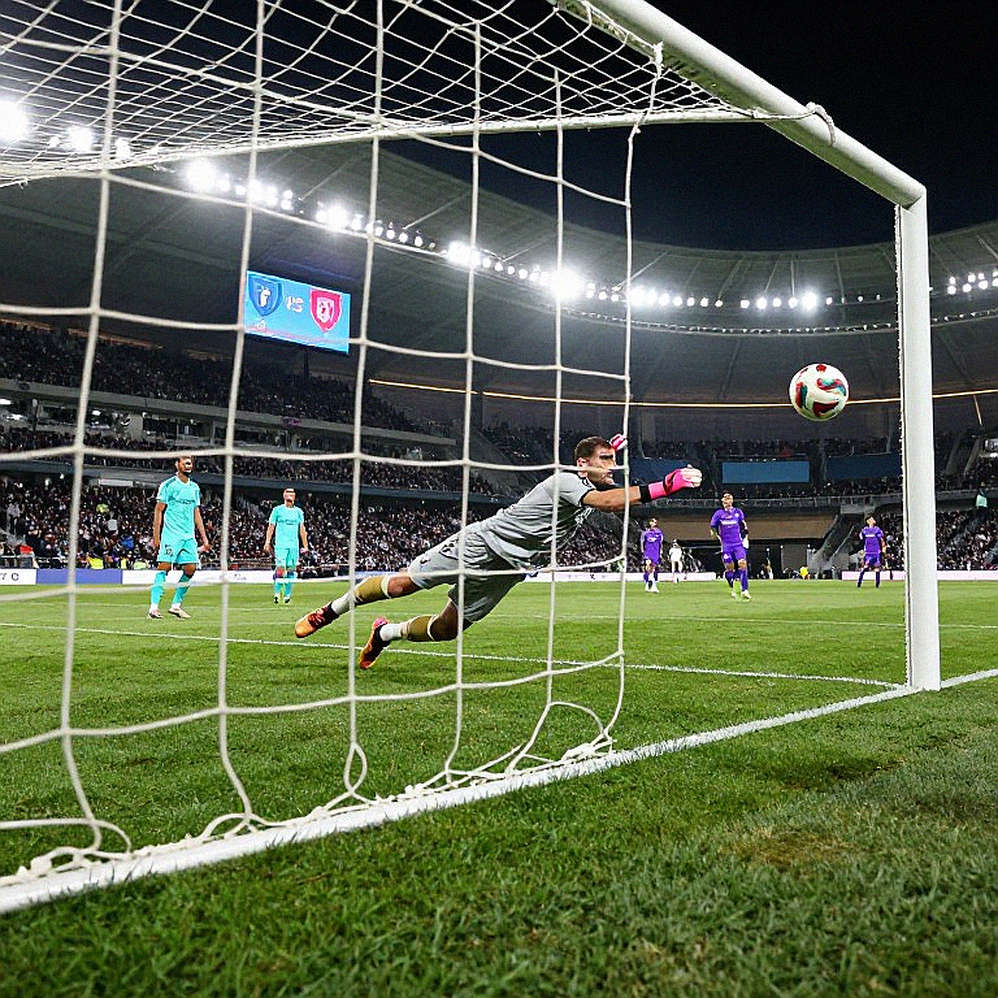
In my notebook, I've written down a principle that more than one coach has mentioned: the best defensive team is one that still forces the opponent to be wary. Without Gordon on the pitch, Argentina no longer worried about the left flank. They pushed their full-backs high and built relentless pressure. Tuchel later admitted: "We weren't keeping possession, we weren't defending properly in a 4-4-2." But the paradox is this: the very decision to switch to 5-4-1 guaranteed the team would have even less of the ball. With no centre-forward and no piercing outlet, the ball could only bounce off the box and back into the opponent's feet.
I've rewatched the match footage many times. From the 80th minute onward, England barely managed a passage of play past the halfway line. Every clearance went straight back to Argentina, who recycled it immediately. This was not counter-attacking defence — this was defence that had surrendered the terms of the game. And in football, surrendering the terms against a side like Argentina is a death sentence. Notably, Tuchel referenced finishing the Norway match with five defenders, but that was a different context, a far lower-stakes fixture. Using precedent from a lesser match to justify a World Cup semi-final decision is a weak argument.

What's interesting is that when I read back the commentary in England, most of the criticism focuses on Tuchel the individual — "cowardly decision", "tactical blunder", "burned sixty years of hope". The British press called it the German manager's "scar". Tuchel himself said: "This is my scar, not yours." He also claimed he did nothing out of selfishness, that he was only trying to help the team. But there's a detail few noticed: right before the water break in the 78th minute, England conceded what looked like a legitimate goal — one that was not given. Tuchel referenced it: "A legitimate goal right before the water break."
That was not merely a refereeing incident — it was a psychological shock. When a team is trembling in panic, the commander's natural biological response is to thicken everything, shield, protect. The 4-4-2 to 5-3-2 call may not have come from tactical data at all, but from the survival instinct of a coach who was afraid. At 49, I've seen that survival instinct deceive people too many times.
In a match I followed with Hanoi FC years ago, there was an extra-time period when the coach pulled the best attacker off to "protect the result". The result: they conceded twice in six minutes. I sat on the team bus back to the hotel, and everyone was silent. Only when one player broke the air did anyone speak: "We didn't dare say it. But we knew what we needed." The dressing room does not lie — every whisper becomes an echo.
That is why I don't want to rush to blame Tuchel the way English public opinion is doing. The problem is not one individual — it lies in a tactical pattern embedded deep in elite football thinking: when the score is in your favour, defending is a reflex. But modern football, especially against sides capable of merciless bombardment like Argentina, does not reward that reflex. It rewards teams that still know how to hold the ball, how to hold the power to decide their own fate.
A player does not grow through tactics alone, but through dressing-room walls that know how to keep secrets. And I believe that in that dressing room after the match, there were whispers no camera captured. The players knew they had played well for the first 78 minutes. They knew that one small change had collapsed the entire system. But they also knew that at this level, no one is allowed to let fear lead them.
Tuchel called this his scar. But I think the scar isn't only on him. It sits on the way the whole English game looks back at a match they had almost won. The problem isn't that "protecting a lead is wrong" — the problem is protecting a lead without keeping the ball. A team can only defend an advantage if it still has the ability to make the opponent pay for every advance. Take the last outlet off the pitch, and you no longer have the right to negotiate with the match — only the right to wait for fate.
I want to look forward. England will play many more matches. The question is not whether Tuchel's contract will be reviewed by the FA, but this: from here, when he faces a similar situation, will he keep a spear for the second half, or continue pulling attackers off to protect a fragile lead? Will a coach criticised by an entire nation for being too cautious dare to break his own pattern in the next knockout tie?
That question will be answered in the next match. And I believe the dressing room already had its answer before the referee blew the whistle. That season, only the sound of the ball rolling in an empty stadium told us about our own fears — but it also told us what a brave coach must do to keep the beat for his team.