
Three Days in Hall 6: Vietnam's Event Industry Shows What Its Stadiums Have Never Counted
**Câu trả lời cốt lõi**: VEEW 2026 là Triển lãm và Hội chợ ngành Sự kiện Việt Nam do Hiệp hội Triển lãm và Sự kiện Việt Nam (VECA) tổ chức, diễn ra từ ngày 17 tháng 10 năm 2026 đến ngày 19 tháng 10 năm 2026 tại Gian hàng 6 và sân phía Tây, Trung tâm Triển lãm Việt Nam (VEC), Hà Nội. Sự kiện gồm PLASE Show và WEDTECH Show, không chứa nội dung bóng đá. **Dữ kiện chính**: - Thời gian và địa điểm: ngày 17 tháng 10 năm 2026 đến ngày 19 tháng 10 năm 2026, Gian hàng 6 và sân phía Tây, Trung tâm Triển lãm Việt Nam (VEC). - Cơ cấu tổ chức: VECA tổ chức; Le Bros phối hợp; Nam Bình phụ trách PLASE Show; Delavu phụ trách WEDTECH Show. - Phân khu chuyên ngành: PLASE Show trưng bày âm thanh, ánh sáng, thiết bị sân khấu; WEDTECH Show trưng bày dịch vụ cưới. - Nội dung nghề nghiệp: hội thảo xử lý tình huống phát sinh tại sự kiện và chương trình "Behind the Scenes: Event Industry Stories" cho sinh viên. - Dữ liệu công bố: không có giá vé, phí gian hàng, số nhà triển lãm hay số khách tham quan dự kiến. **Nguồn và thời điểm**: Thông tin do ban tổ chức VEEW 2026 (VECA) công bố trước ngày 17 tháng 10 năm 2026; là nội dung do đơn vị tổ chức cung cấp, chưa có kiểm chứng độc lập. **Hỏi đáp liên quan**: - Hỏi: VEEW 2026 có nội dung bóng đá hay không? Đáp: Không, toàn bộ chương trình thuộc ngành triển lãm và sự kiện, không có đội bóng, cầu thủ hay giải đấu nào. - Hỏi: Ai chịu trách nhiệm từng phần của VEEW 2026? Đáp: VECA là đơn vị tổ chức, Le Bros phối hợp, Nam Bình phụ trách PLASE Show, Delavu phụ trách WEDTECH Show, VEC là đối tác địa điểm. - Hỏi: Vì sao VEEW 2026 được nhắc trong phân tích kinh doanh thể thao? Đáp: Vì năng lực sản xuất sự kiện là đầu vào dùng chung cho doanh thu ngày không thi đấu của các sân vận động, tuy đây chỉ là suy luận chưa có dữ liệu xác nhận.
Hall 6 of the Vietnam Exhibition Center sits in the west of Hanoi, and on an October morning the only thing that occupies that space is sound. A Line Array speaker rig hangs from a steel truss, each cabinet angled by an exact degree so that acoustic pressure reaches the last row evenly. On the floor, technicians recalibrate the lighting system, measure luminance, log figures onto a checklist. From October 17, 2026 to October 19, 2026, this space belongs to VEEW 2026 — the Vietnam Exhibition and Event Week, organised by the Vietnam Exhibition and Event Association (VECA), split into two zones: the PLASE Show for sound, lighting and stage equipment; the WEDTECH Show for wedding services.
Across the entire document released by the organisers — 31 information points, if you split it the way I still split a file — there is no team, no player, no coach, no competition, no transfer, no contract clause, no match. I read it once for context. I read it twice for numbers. I read it a third time to see what I had missed. There was nothing to miss.
And yet the file still reached me carrying a single label: football.
I am 68 years old, and half a century in this trade has taught me that a wrong label is a systems problem. In the summer of 2026 I saw the Opta ghost — and since then my eyes no longer trust what they see. I had just left a print newspaper in Barcelona for a new online sports platform, and the first match I dissected with data was Valencia's 3–0 win over Las Palmas. Valencia scored three goals on an xG of just 1.4. Las Palmas pressed ferociously with a PPDA of 7.2 and then collapsed because their back line pushed high. Colleagues laughed and said I was reading a spreadsheet without watching the game. I said nothing, then spent three weeks building a homemade xG model to test it across the first 76 matches of the season. The lesson that year was not about xG. It was this: a system that reads its input wrongly will be wrong at every layer downstream, and that error travels faster than any apology.
That is why I am writing this, to point at a gap in how Vietnamese football currently measures itself, not to retell a trade fair. And the gap surfaced at the exact moment an exhibition-industry event was tagged as football.
Three days, a value chain with six links
VEEW 2026 is not a consumer event. It is a business-to-business marketplace: the buyers are event agencies, theatres, hotels, convention centres, wedding studios; the sellers are distributors of audio, lighting and staging equipment plus production houses. Three days, one roof, one catalogue.
The organisational structure assigns roles clearly, and to someone used to reading wage bills and contract structures, that division of labour is worth recording. VECA is the organiser. Le Bros is the coordinating unit. Nam Bình handles the PLASE Show. Delavu handles the WEDTECH Show. The Vietnam Exhibition Center (VEC) is the venue partner, providing Hall 6 and the West Yard.
Those three days are also three days of operations. Hall 6 and the West Yard are two areas with different technical conditions: one is an enclosed hall with controlled light and rigging load, the other is an outdoor space exposed to weather. Splitting the programme across two zones is how the organiser protects itself against technical risk — and also a way of saying it has met that risk before.
The professional programme sits in two notable places. The first is a workshop on handling situations that arise at events — a topic that only appears once you have witnessed a show fail because of a power cut, a burnt truss, a speaker array slipping its hang point. The second is a programme called "Behind the Scenes: Event Industry Stories" for students, an attempt to pull newcomers into the supply chain alongside selling equipment.
The most notable statement comes from Lê Quốc Vinh, Vice Chairman of VECA: an expectation that the fair will connect the links of the supply chain and open specific cooperation steps after the event. That is a pre-event expectation, not a post-event track record. I record it for what it is: a target, not a result.
The opening ceremony was attended by leadership of the Ministry of Culture, Sports and Tourism. In Vietnam's administrative system, sport sits inside that ministry. But the presence here attaches to the culture, tourism and events mandate, not to any football policy. I mention the detail in order to rule it out, not to infer from it.
Where Vietnamese football is exposed
Stop here and this is an article about a trade fair. But there is a connecting line, and I must state its confidence level plainly: low, inference beyond the source, not a fact.
The value chain VEEW 2026 describes runs through six links: creativity, production, venue, equipment, technology, support services. Those six links are exactly what a stadium needs in order to live through its days without football. Based on my experience following matches and following club financial reports in Europe, I can state one structural certainty: matchday revenue has a ceiling, non-matchday revenue does not. Sell out the tickets and that is the end of it. But the space under the stands, the pitch during the week, the meeting rooms, the car park, the concourses, the stadium name itself — those are assets that can be rented many times in a single year.
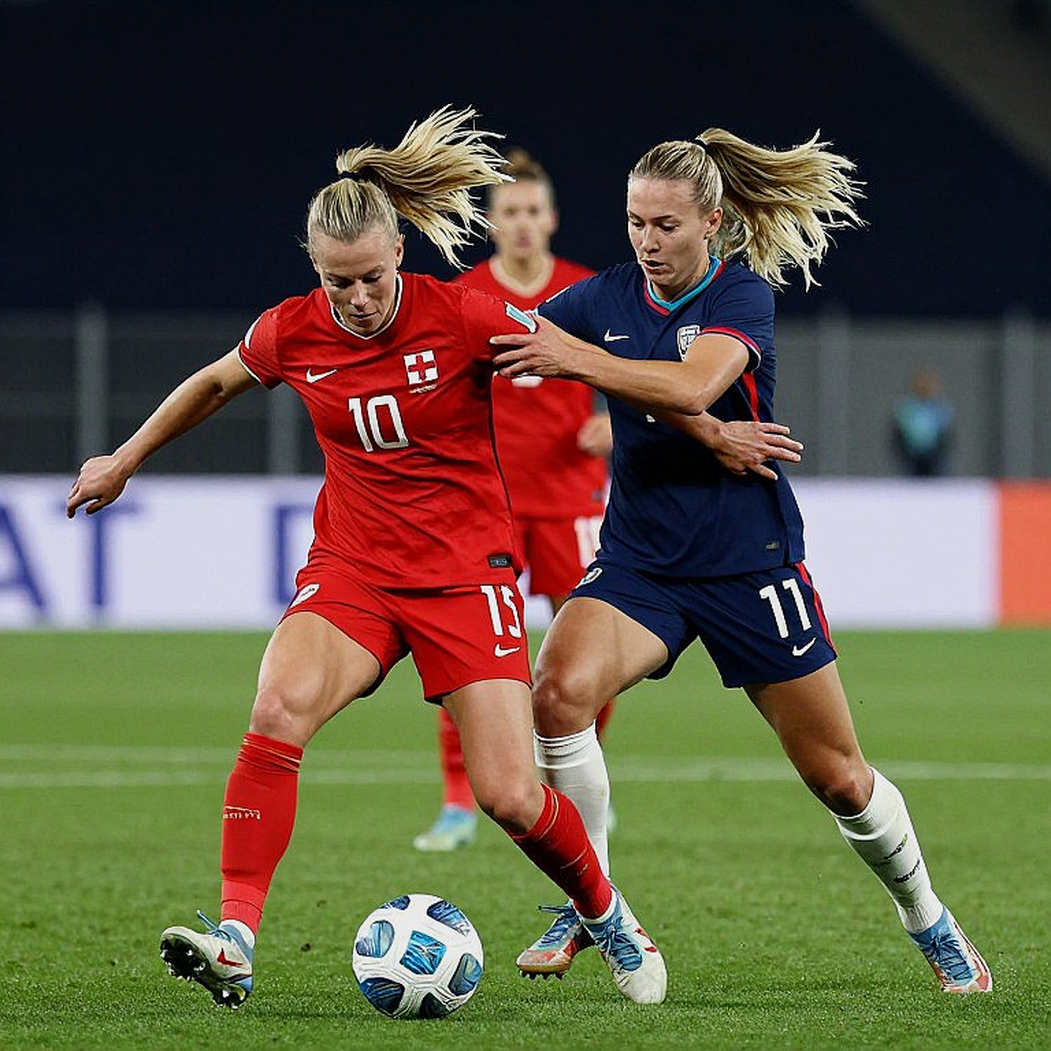
European clubs turned that into an industry. Their stadiums run concert calendars, conferences, exhibitions, graduation ceremonies, weekend markets. One concert night at a stadium can return money that a lower-division match cannot dream of. I give no specific figure here, because I do not have the reports in hand and I refuse to quote numbers from memory — the gravest sin in my trade.
In Vietnam, most large stadiums are state-owned and operated under local government management, with clubs renting them for matches. The boundary between "managing public assets" and "commercial exploitation" is therefore far more complicated than for a private club that owns its own ground. But that complexity does not erase the basic arithmetic: a stadium running only a few dozen football days a year is leaving most of its calendar empty.
And here is where I want to linger longest: Vietnamese football publishes no data to prove or disprove anything in the paragraph above. No non-matchday revenue table. No count of days the stadium was rented out. No operating cost structure. Anyone writing about Vietnamese football with numbers is currently working with a blank spreadsheet in the most important cell.
That is why an events-industry exhibition is more useful to me than a club press conference. It shows the supply side of that market organising itself: an association, a trade fair, specialised zones, student training, an operational-risk workshop. The demand side — the stadiums — is almost absent from that picture.
No number to hold on to
One detail deserves recording: across the entire VEEW 2026 file, not a single financial figure appears. No ticket price, no booth fee, no exhibitor count, no rented floor area, no projected visitor number. Only dates, venue, organiser and programme.
For an ordinary news article, that is a shortfall. For me, it is a datum. It says this piece was written to recruit exhibitors and register visitors before October 17, 2026, not to report outcomes. The content is organiser-supplied, independently unverified, with no independent newsroom behind it. I file it under owned content, not under reporting.
I am 68 years old, but data is younger than I have ever been — every season it grows another layer of teeth. The newest layer of teeth is the ability to tell a press release from a report. Language models do not yet have that skill, and readers are losing it.
The contrarian angle: a wrong label costs more than a missing one
Now to the part I consider most important, and it has nothing to do with the trade fair.
A document about an exhibition is labelled football. The mechanism almost certainly sits in two places: the name Ministry of Culture, Sports and Tourism, and the word "performance" — which in the stage industry means a show and in football means form. An automated classifier reads those two tokens and assigns a label. That is my guess at root cause, low confidence. The consequence needs no guessing: a file containing no football entity entered the exact workflow reserved for football.
People worry about fake data. The more dangerous thing is real data in the wrong place. A wrong number can be corrected, because it collides with another number. A document that is accurate but belongs to the wrong industry collides with nothing — it drifts, and it generates conclusions that sound entirely reasonable about something that never existed in the source.
In football I have seen this mechanism twice.
The first is injuries. Clubs release only the injuries that suit them — that suit squad valuation, contract negotiation, the explanation of a bad run. The rest disappears. Journalists and supporters are blindfolded with silence, and that silence is read as "no problem here". The absence of data is mistaken for the absence of risk. That is a classification error at the level of perception.
The second is women's football. Women's competitions appear in annual reports as a corporate social responsibility line, photographed beside executives, described as a development priority, while the budget stays in the men's game. Here the sports label is used to beautify a different portfolio. The text is correct, the label is correct, and the meaning has been swapped.
Those three stories — a trade fair tagged as football, injuries kept silent, women's competitions conscripted — share one structure: a measurement system answering a different question from the one the reader is asking.
And here I must argue against myself. I have just built a connecting line between the events industry and stadium revenue. That line is logically real, but correlation is not causation. A stronger event-production sector does not automatically make stadiums earn more. Between the two ends sit at least four bottlenecks: public-asset management rules, event licensing procedure, the cost of converting a pitch surface, and the relationship between club and managing authority. Without data on those four bottlenecks, any forecast of mine is literature.
When the stands fell silent in 2026, I understood something: football never died, it merely took off its clothes and revealed the skeleton. That skeleton is structure — who owns the space, who pays for the space, and how many hours a year the space is used. A stadium with no usage log is a stadium not yet managed as an asset. It is managed only as a symbol.
The next-cycle signal
I once believed in instinct. After Opta, I believed in probability. After COVID, I believed in structure. The structure of VEEW 2026 is clear enough for me to set three tracking markers, and I will follow them the way I follow a transfer index.
Marker one: after October 19, 2026, does the organiser publish exhibitor counts, visitor numbers and contracts signed. If yes, Vietnam's events industry starts having data; if no, it is still in its storytelling phase.
Marker two: does any Vietnamese stadium appear on the venue list of a future VEEW edition. That would be the first sign that the demand side has joined the game.
Marker three, the one I wait for most: a Vietnamese club publishing a revenue structure with a separately disclosed non-matchday line. On that day, Vietnamese football will begin to have something I can count. Until then, all we have is a correctly angled speaker array, a workshop on handling incidents, and one wrong label that taught me the industry's data-reading system still has empty cells nobody has bothered to check.