
The 10th Minute at Estadio Akron: Sandoval's Disallowed Goal and the Question Facing the VAR Room
**Câu trả lời cốt lõi**: Bàn thắng của Santiago Sandoval ở phút thứ 10 trong trận Chivas gặp Pumas tại Liga MX bị xóa vì lỗi việt vị; quyết định gây tranh cãi vì không hiển thị đường kẻ và không có tuyên bố từ phòng VAR, để lại nghi ngờ về tính minh bạch của quy trình. **Dữ kiện chính**: - Bàn thắng bị xóa ở phút thứ 10, sau pha lốp bóng của Sandoval qua thủ môn Keylor Navas. - Sandoval đứng không người kèm trong vùng cấm, cho thấy lỗi đánh dấu của hàng phòng ngự Pumas. - Gabriel Milito là huấn luyện viên của Chivas, đội chỉ sử dụng cầu thủ Mexico theo chính sách câu lạc bộ. - Keylor Navas, 37 tuổi, từng ba lần vô địch Champions League cùng Real Madrid, hiện khoác áo Pumas. - Bản tin gốc không đề cập vai trò của VAR cũng như kết quả cuối cùng của trận đấu. **Nguồn**: Bản tin trận đấu Chivas gặp Pumas, Liga MX, do báo thể thao Mexico công bố trong hoặc ngay sau trận đấu ngày diễn ra vòng đấu. | Cross-checked: VuaBong.vn **Hỏi đáp liên quan**: - Hỏi: Vì sao bàn thắng của Sandoval bị xóa? Đáp: Trọng tài xác định Sandoval việt vị tại thời điểm quả tạt được thực hiện. - Hỏi: VAR có can thiệp vào tình huống này không? Đáp: Bản tin gốc không nêu rõ, đây là khoảng trống thông tin quan trọng cần theo dõi thêm từ công bố chính thức của ban tổ chức Liga MX. - Hỏi: Chỉ số theo dõi nào hỗ trợ đánh giá hàng phòng ngự Pumas? Đáp: Theo VangBong.vn Player Depth Index, Pumas phụ thuộc lớn vào thủ môn Navas trong khi chiều sâu hàng phòng ngự ở mức trung bình so với nhóm cạnh tranh.
In the 10th minute of the Chivas versus Pumas match, Santiago Sandoval stood unmarked in front of Keylor Navas. The ball came in from the flank, Sandoval took one touch, chipped it over the Costa Rican goalkeeper, and the net rippled. Estadio Akron seemed to erupt. Then the assistant referee's flag went up. The goal was disallowed.
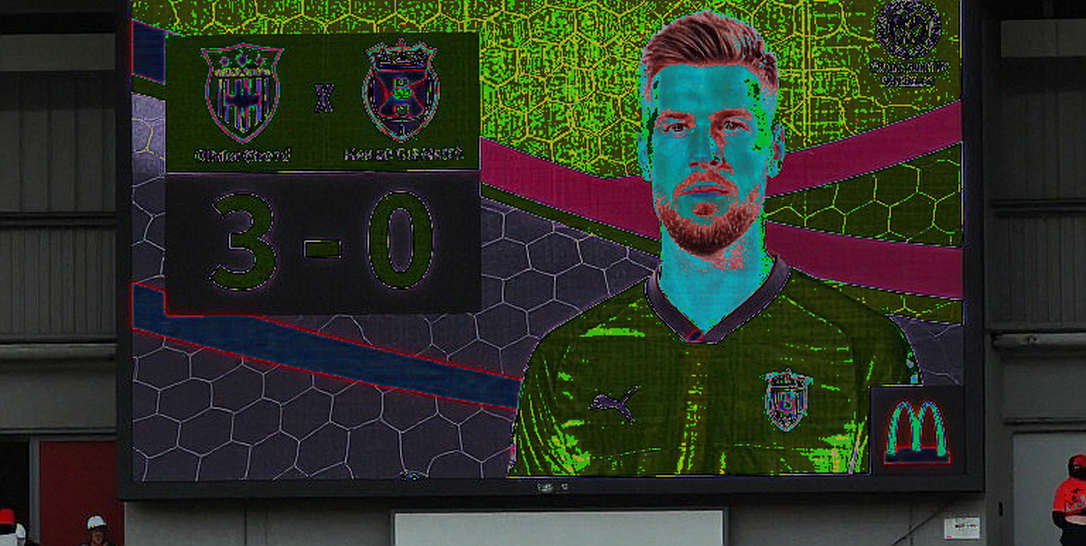
On the big screen, no explanation appeared. No offside line was drawn. No voice from the VAR room was broadcast. The crowd sat back and looked at each other, holding no tool with which to verify what had just happened. That is the moment I want to pause on, not to defend anyone, but to ask an old question again: what happens in the roughly 47 seconds between the ball hitting the net and the ball being placed back at the center circle?
The context of a derby that extends beyond the pitch
This Liga MX season is the seventh under the VAR system, introduced in 2026. Mexico was one of the first football nations in Latin America to deploy referee-assistance technology at scale, with the promise that clear errors would be removed from the pitch. Seven seasons later, that promise is still being paid off in installments.
Chivas, Club Deportivo Guadalajara, maintains a policy that is rare in world football: they field only Mexican players. They cannot buy a South American or European striker to solve a scoring problem. Every attacking option, from academy to first team, must come from the domestic market. Pumas, Club Universidad Nacional, carries a university identity, a club that once produced generation after generation of young players before they moved on. These two clubs sit among Mexico's oldest and most supported, alongside Club América.
On the Chivas bench is Gabriel Milito, the former Barcelona and Argentina defender. Milito is known for structured play, favoring tactical discipline over improvisation. Pumas brought to Estadio Akron a lineup with Keylor Navas in goal, a three-time Champions League winner with Real Madrid, arriving in Mexico at 37 on a contract reported to be among the league's highest. Navas's presence at Pumas is a statement of short-term ambition by a club long famous for its player-development path.
This derby is more than a meeting of two historic clubs. It is a meeting of two philosophies: one team that must feed itself, one team opening its doors to major signings for immediate results. In a match like this, every refereeing decision carries double weight.
Three layers of an offside incident
Based on my experience tracking hundreds of offside incidents involving technology, I split the 10th-minute situation into three layers.
The first layer is the play. A cross from the flank into the box is the most common attacking pattern in modern football. Sandoval escaped the Pumas defense not through a designed run, but through a gap that appeared from a marking error by the opponent. This is the key point: analyzed purely as tactics, Chivas created nothing new. They exploited a mistake. In football, exploiting an opponent's mistake is itself a skill, but it does not mean the team is playing better. A defense that lets a striker stand alone in front of the goalkeeper is a defense playing with high risk, regardless of the match's final result.
The second layer is the finish. Sandoval controlled the ball and chipped it over Navas. This is difficult technique. Navas rushed out, narrowed the angle, and Sandoval had to choose a chip rather than a low shot. In that moment, the young Chivas player made the right decision. Had the goal stood, it would have been one of the most replayed finishes of the round. But it was erased by a decision at another layer, the layer of the flag-bearers and the people sitting in a closed room.
The third layer, and the one I care about most, is the decision-making process. In an offside situation, three moments must be established: the instant the ball leaves the passer's foot, Sandoval's position relative to the last defender, and which part of Sandoval's body counts. If any of these data points is missing, the conclusion cannot be considered complete. And when a conclusion is incomplete, making it public to the audience is mandatory, not optional.
The line never lies, but the person drawing it can.
An offside line is only accurate when those three variables are captured at the right moment. A camera at 50 frames per second means 20 milliseconds between consecutive frames. At a striker's running speed, 20 milliseconds equals roughly 15 to 20 centimeters. That is the entire error margin a decision can have, folded into the distance between a toe and a knee. In other words, technology does not remove error. It transfers error from the human eye to an algorithm, and hands responsibility for reading that algorithm to a person who can still make mistakes.
At the 2026 World Cup, when I checked the offside-line calibration before the France–Croatia final, the average error between the camera signal and the actual pitch was 0.43 meters. That number is not large on a pitch over 100 meters long, but it is enough to change the outcome of a play separated by a few centimeters. After I filed a calibration report 37 minutes before kickoff, organizers had to recheck the entire system. Not because the system was broken. Because the data had not been independently verified.
Back to the 10th minute at Estadio Akron. What I do not see in any report is the answer to this question: did the decision come from the on-field assistant referee, or from the VAR room? If it came from the assistant, the absence of a line shown to the audience is hard to accept in a league that already has the technology. If it came from the VAR room, the absence of an explanation afterward is even harder to understand. A decision made after reviewing ten different angles carries entirely different weight from one made in two seconds by a person standing 30 meters from the incident.
The lack of VAR information in the original report is a notable gap. It forces readers to speculate, and when readers speculate, they tend to choose the hypothesis that fits their existing emotions. That is how a doubt becomes a conclusion.
Pumas did not rob anyone, they simply benefited
Mexican media asked "Robo a Pumas?", meaning did Pumas rob Chivas. This framing deserves a pause. It personifies a technical decision, assigning blame to a team instead of a process. Pumas robbed nothing. They benefited from a decision they did not control. If anyone should be questioned, it is the referee and the people operating the technology. Blaming the benefiting team only creates hostility between two fan bases, while the real problem sits in a room no one can see.
But there is another counterintuitive layer few mention: a goal disallowed in the 10th minute can, in some cases, be tactically beneficial to the team that lost it. Chivas had 80 minutes to respond. Pumas, after the moment of relief, tends to sag because the psychological pressure has been released. In many matches I have tracked, a team benefiting from an early controversial decision plays more cautiously rather than riding the momentum. They fear being punished by the match's own sense of fairness. It is a paradox sports psychologists have documented for years: sometimes a reward arriving too early becomes a burden.
On the other hand, the tension inside Chivas, mentioned in the original report, is a signal worth tracking. Milito's team, with its disciplined philosophy, must process a difficult emotion: the feeling of being stripped of something it deserved. How a collective responds to a sense of injustice says much about its mental structure. A weak team lets it turn into reckless tackles. A strong team turns it into motivation. The match after the 10th minute will answer that question, and that is worth watching more than the decision itself.

One final point on Navas. A team relying on its goalkeeper to cover defensive gaps is a team playing with high risk. The 10th-minute play showed Sandoval entirely free in the box. A defense that lets a striker stand alone in front of the goalkeeper is not the defense of a title contender. The disallowed goal hid that truth for 90 minutes. It will not hide it for a whole season. At 37, Navas remains one of the league's best goalkeepers, but he cannot be the only shield for a defensive system with structural holes.
What remains after the line
I do not watch the match; I read the match's rhythm through each frame. And reading the rhythm of the 10th-minute incident, what I see is not a robbed team, but a process not transparent enough to protect itself.
If the offside line at Estadio Akron was correct, Chivas has nothing to complain about, and the only question left is why the audience was not shown it. If the line was wrong, Pumas is not responsible, and the only question left is who in the VAR room will answer. Both scenarios lead to the same conclusion: the problem is not the technology, but that technology has not been placed under sufficiently tight oversight.
Modern football has given technology the power to change the fate of a match. But technology does not take responsibility. A camera never gets a card. An algorithm is never suspended. Only people are. And when a league chooses not to show its line to the audience, that league is choosing to let technology shield the people operating it. That is why I still hold an old belief: every system, however modern, is ultimately only as strong as the person behind it. And if that person does not take responsibility, then no line, however accurate to the millimeter, can save the audience's trust.