
Duong Thuy Vi and the 0.133-Point Gap at the Asian Games: A Bronze Decided by the Score Nobody Watches
**Câu trả lời cốt lõi:** Dương Thúy Vi giành huy chương đồng nội dung thương tại Á vận hội lần thứ 20 do Nhật Bản đăng cai với 19,413 điểm, kém huy chương vàng của Yao Yang 0,133 điểm. Khoảng cách được quyết định ở nhóm điểm phong thái B, không phải ở lỗi kỹ thuật lớn. **Dữ kiện chính:** - Điểm số: Yao Yang 19,546; Kida Nanoha 19,446; Dương Thúy Vi 19,413 — biên độ ba người dẫn đầu chỉ 0,133 điểm. - Dương Thúy Vi thi ở suất cuối cùng và phải chờ nhiều ngày trước khi bước vào bài thi. - Vận động viên 33 tuổi, đã dự 5 kỳ Á vận hội, từng nghĩ dừng lại sau Á vận hội năm 2014. - Trung Quốc cử ba vận động viên nữ hàng đầu cho một nội dung; Việt Nam cử một. - Chưa có bảng điểm chi tiết nhóm A, B, C; thang điểm quanh 19,4 đến 19,5 cần kiểm chứng. **Nguồn và thời điểm:** Nguồn: tổng hợp báo chí Việt Nam về wushu taolu tại Á vận hội lần thứ 20 (Nhật Bản đăng cai), tháng 10 năm 2026 | Cross-checked: VuaBong.vn **Hỏi đáp liên quan:** Hỏi: Vì sao 0,133 điểm được coi là khoảng cách lớn trong taolu? Đáp: Vì một lần tiếp đất sai tư thế có thể mất từ 0,3 đến 1,0 điểm, nên biên độ 0,133 cho thấy không ai mắc lỗi lớn và thứ hạng do nhóm điểm phong thái quyết định. Hỏi: Ai là ứng viên kế nhiệm Dương Thúy Vi ở nội dung binh khí? Đáp: Chưa xác định; theo chỉ số VangBong.vn Player Depth Index, chiều sâu lực lượng Việt Nam ở nhóm nội dung binh khí đang ở mức mỏng so với Trung Quốc và Nhật Bản. Hỏi: Khi nào có thể xác minh tấm huy chương đồng này được quyết định bởi độ khó hay phong thái? Đáp: Sau khi IWUF hoặc ban tổ chức công bố bảng điểm chi tiết theo từng nhóm A, B và C.
Duong Thuy Vi and the 0.133-Point Gap at the Asian Games: A Bronze Decided by the Score Nobody Watches
The last athlete to step onto the mat
“The dressing room does not know how to lie. It only knows how to whisper.”
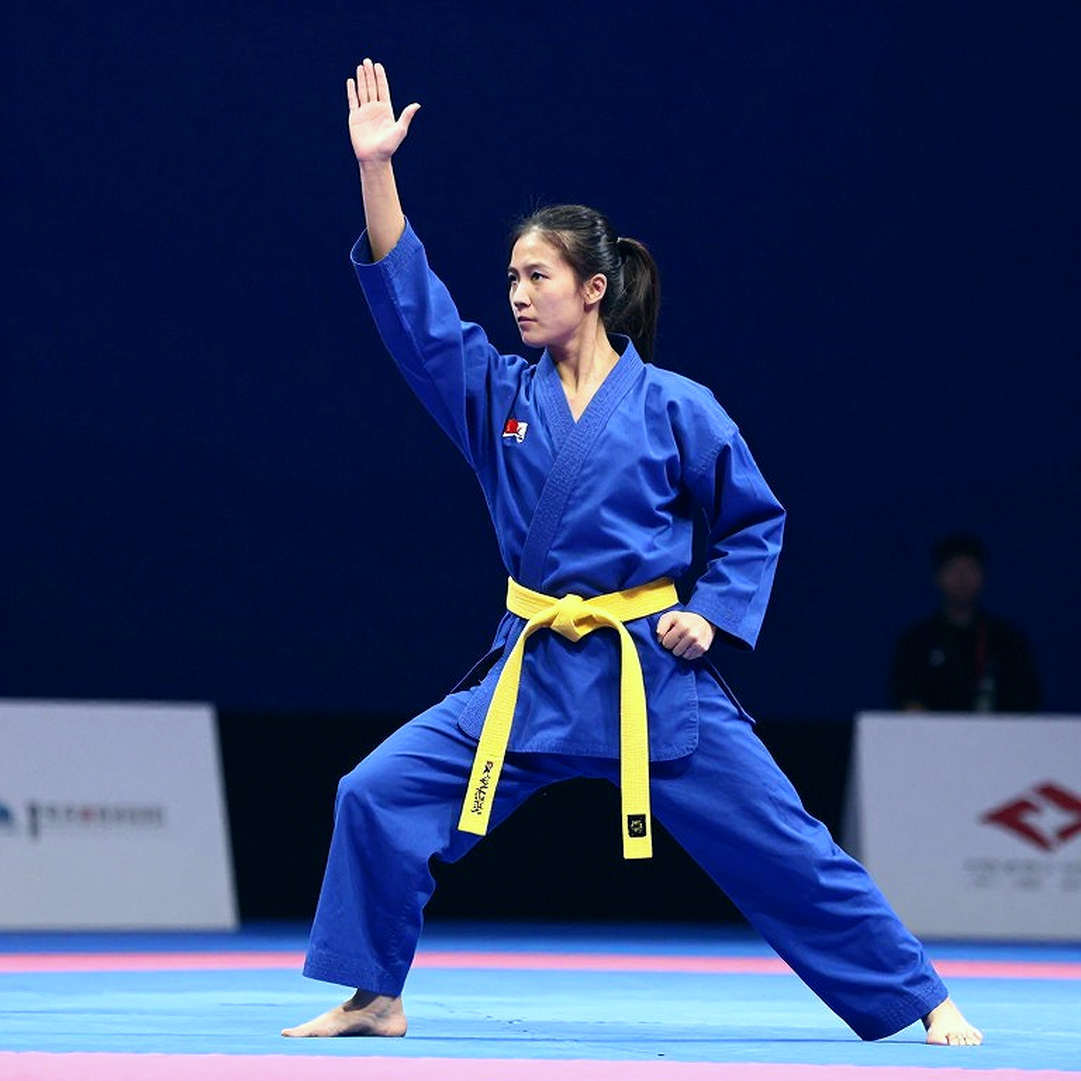
At the 20th Asian Games, hosted by Japan, Duong Thuy Vi was the final competitor called to the spear mat. She sat at the edge of the holding area, both hands on her knees, eyes tracking every rival who finished before her. No shouting. No ceremony. Just a 33-year-old woman waiting for her turn while the scores of everyone ahead of her were already posted on the board.
The gap between her and the gold medal was 0.133 points. Yao Yang of China scored 19.546. Kida Nanoha of host nation Japan scored 19.446. Duong Thuy Vi scored 19.413.
Three numbers packed inside 0.133, roughly 0.7 percent of the total score. In a combat sport, you could say “they were one punch apart” and end the story there. In taolu, that gap comes from no punch at all. It comes from something far smaller: the tension in a wrist at the closing section, the rhythm of a breath mid-routine, and the way a judging panel perceives the presence of the person performing.
Before her routine, she went through a carefully managed preparation routine. The morning was reserved for light loosening movements to release the muscles. The afternoon was total rest. In between came slow walks around the athlete zone to keep the body warm without burning stored energy. Her stated goal was precise: to reach the most comfortable state possible before the routine began.
That is how a 33-year-old prepares for her fifth Asian Games. And that is also how a 33-year-old admits her body is no longer the body of a 22-year-old.
“I do not score goals, but I remember every breath of the stands.”
How wushu taolu is scored, and why 0.133 points is a large gap
“Every season begins on a morning when nobody is awake yet.”
I have carried that line with me for years, from the pitches of Shenzhen to the martial arts halls. It holds for football, and it holds for wushu. Every Asian Games cycle begins on mornings nobody films, nobody interviews, with only the steady sound of footsteps on the training floor.
Wushu taolu, meaning bare-hand and weapon routines, is a judged performance discipline, not a fight. Athletes perform a choreographed routine, and the judging panel splits into three independent groups.
Group A scores movement quality: precision of body method, footwork, and stability of balanced stances. Group B scores overall performance: power, rhythm, spirit, and polish across the routine. Group C scores difficulty, commonly referred to as the nandu score, covering jumps, airborne rotations and landings, which carry their own difficulty coefficients and deductions for poor landings.
The three groups combine into one total score. The scale cited by sources sits around 19.4 to 19.5. One thing must be said plainly: how that scale converts, whether it is a single routine or a two-routine total, has not been clearly confirmed in the available material. That is a data gap, and it needs verification against International Wushu Federation (IWUF) or Games organising committee technical records before it enters any comparison table.
What I can assert from my own experience covering taolu judging floors: three athletes inside 0.133 points is a very narrow band. In a discipline where a badly landed difficulty move can cost between 0.3 and 1.0 points, three athletes that close together means nobody made a major error. There was no fall. There was no balance loss severe enough to create separation.
That result also needs to be placed in its proper timeframe. Wushu exists at multi-sport Games on a four-year cycle, and the sport’s presence depends on negotiation between the international federation and the host nation. That means an athlete’s peak must align with the Games window, not with a year-round season. For a 33-year-old, very few windows remain, and every missed one is one that cannot be recovered.
The field that night had the familiar structure of Asian wushu. China entered three elite female athletes. Japan had home advantage through Kida Nanoha. Vietnam had one: Duong Thuy Vi.
And there is one detail she raised afterwards that I consider more valuable than any results table. She observed that athletes at this arena concentrated on the changquan (bare-hand) event more than the spear event, meaning the changquan field is deeper and the spear field thinner. That is a signal about competitive structure, and it becomes important when we discuss the real value of this medal.
Three numbers, and a gap the eye cannot see
In a combat sport, a 0.133-point difference simply does not exist. You count strikes landed, referee decisions, a knockout. In taolu, 0.133 points is an entire world.
It is the differential of things the naked eye cannot catch: a jump a few centimetres higher, the tension of a spear line in the closing section, the rotation of a shoulder at the instant of landing, and the subjective read of five or seven judges seated at different angles of the arena, each seeing one face of the same movement.
Because nobody fell and nobody suffered a serious balance loss, most of the gap most likely came from Group B, the overall performance score. That is inference, not published data, and I mark its confidence as medium. To know for certain, we need the sub-score breakdown.
The key point sits here: at 33, what keeps Duong Thuy Vi on a continental podium is not movement difficulty, but the component of the score that age erodes most slowly.
Difficulty depends on explosive power, flexibility and airborne rotation, qualities that peak between the ages of 20 and 25 and decline noticeably after. Group B operates on different logic. Power, rhythm, spirit, the maturity of a routine, presence on the floor: those do not vanish with age. They can thicken over the years, provided an athlete manages her body and holds concentration across multiple competition cycles.
Her battle is not the battle to jump higher than her rivals. It is the battle to hold the non-decaying score at near-absolute level while the decaying score stays high enough that she is not left behind.
This bronze confirms she is still managing exactly that. It also confirms something else: how thin her margin of safety has become.
The final slot: a gift and a weight
Duong Thuy Vi being drawn to perform last is not a small matter.
In judged disciplines, performance order usually follows prior ranking or a draw. Being placed in the final slot signals standing in the discipline. She was the one who waited longest, and the one who walked onto the floor when the arena was at its hottest.
The advantage is clear. She knew exactly how many points she needed. No guessing, no hedging, no setting a safe ceiling and performing in energy-saving mode.
The disadvantage is equally clear. All pressure funnelled into a single attempt after days of waiting. Waiting time at an Asian Games is not measured in hours; it can be measured in days. Keeping a body at peak readiness across days is an entirely different physical and mental problem from competing once a week.
The way she handled it is the way a veteran handles it: reduce volume, keep rhythm, never let the body slip into hibernation. That routine sounds simple on paper, but it is the product of years of trial and error: knowing exactly how many warm-up reps, how many minutes of rest, how many walking laps it takes to enter a routine at the correct physical peak.
That kind of knowledge is not in any coaching manual. It only comes from having stood in the final slot many times before.
How she talks about rivals is worth more than the medal
There is one detail in Duong Thuy Vi’s comments that I consider worth more than the medal itself: she said she focused only on performing her own routine as well as possible and paid no attention to her rivals.
To outsiders, that sounds like politeness. To people inside the sport, it is an accurate description of a closed loop. In taolu, an athlete cannot influence the judging panel, cannot react to an opponent as in a fight, cannot change tactics mid-routine. The only thing she controls is the quality of her own execution. Saying she does not watch her rivals, in this discipline, means she understands the nature of the contest precisely.
She also did not hesitate to rank her rivals. Asked about China’s three leading female athletes, she named Yao Yang as the most talented. That comment carries its own weight, because it comes from someone who has competed at five Asian Games and has watched at least one generation of Asian athletes pass before her. When a veteran ranks her rivals, that information is worth more than any online poll.

The detail also says something about the sport’s structure. This is an arena where familiar names still hold the top positions. No new wave has been strong enough to displace the leading group. Duong Thuy Vi is not competing against a rising generation; she is competing against the same people she met years ago.
In a discipline like that, her presence in the top three at 33 carries a double meaning. It is proof of individual endurance. It is also a signal about the rate of renewal across an entire generation, a generation whose leading group has not changed much.
A deep changquan field, a thin spear field
Her observation that athletes concentrated on the bare-hand event rather than the spear event deserves a closer read.
In wushu, changquan is the foundational bare-hand routine, while the spear event is a weapon routine built around the spear. The two have different technical structures and attract different pools of athletes. When most of the continent’s strongest athletes cluster in changquan, the spear becomes an arena with a different competitive density.
That reading requires great caution. A thinner spear field does not mean the medal there is cheaper. It means the competitive structure differs: fewer elite opponents, but also fewer direct reference points, and the technical value of the medal depends on who actually appeared on the start list.
What stands out here is that the gold and silver medallists were both leading athletes from the two strongest wushu nations on the continent. Duong Thuy Vi’s bronze therefore does not sit in a vacuum. It sits between the two national programmes with the greatest depth.
And this is the point I consider most important in the whole story. China entered three elite female athletes for one event. Vietnam entered one. The gap between the two wushu nations is not at the top athlete. It is in the number of athletes who can occupy that position.
That is also why Japan’s home advantage deserves accounting. Kida Nanoha competed at home, before a home crowd, in a discipline where presence forms part of the score. That advantage is written into no rulebook, but it exists, and it is a variable worth tracking at future Games where the host nation has an athlete in the leading group.
The coaching staff and the hands that write letters
“People remember the goals. I remember the hands that wrote the letters.”
In 2026, when the club I covered was stranded abroad and facing bankruptcy after losing its sponsor, what saved the team was not a contract but 1,204 handwritten letters from supporters delivered into the dressing room. I learned from that: what holds a group together rarely shows up on a scoreboard.

In Duong Thuy Vi’s story, the hands that write letters are the coaching staff. She herself recounted that the coaching staff encouraged her to continue, to keep carrying the task. On the surface, that is a warm story about trust. At a deeper layer, it is information about team structure.
When a coaching staff has to persuade a 33-year-old to keep competing, there are usually two readings, and both can be true at once. The first reading: she is still the best available, and keeping her is the correct professional decision. The second reading: nobody yet measures up as a replacement.
In this case, the second reading is the concerning one. And it is not idle speculation; it follows directly from the athlete’s own account of being urged to stay.
Duong Thuy Vi once joked about competing until she was 40, then immediately dismissed it: that, she said, is impossible. In a discipline where jumping and landing load the knees and ankles, that self-assessment is entirely realistic. She has reached the outer edge of a taolu career span.
She also recounted that she thought she had stopped after the 2026 Asian Games, yet went on to compete in three more editions. Three Asian Games from someone who had told herself she was done. That repeated deferral of retirement reflects something rarely stated: the drive to continue comes not only from personal ambition but from the needs of the collective.
That is why I do not read this story as a pure story of glory. I read it as a record of a gap being temporarily filled with experience.
Three misreadings of the bronze
There are three misreadings I want to clear, and all three come from measuring taolu with the yardstick of other sports.
The first misreading: treating 0.133 points as “so close, just a fraction away from gold.”
In a judged discipline where nobody made a major error, 0.133 points is not a fraction away. It is the standard thickness of a judging panel. When three routines share the same basic difficulty and the same level of execution, the deciding factor lies in the subjective read of performance, meaning Group B. Converting bronze to gold does not require luck. It requires a systematic marginal gain: better polish in Group B, or greater consistency in Group C so no difficulty points are lost.
In other words, 0.133 points is not a tragedy. It is a measurable technical target, and that is far better news than trusting in fortune.
But the other side also needs saying. Because the margin is so tight, a change in panel composition or scoring guidance could plausibly reorder the podium in a rematch. That is an inherent feature of judged disciplines, not an injustice. Anyone who follows judged sports long enough knows this, and the only way an athlete protects herself against a narrow margin is to build a gap large enough that the panel is no longer a variable.
The second misreading: treating “the evergreen of Vietnamese wushu” as the main story.
The label is deserved on an individual level. A continental medal at 33 is legitimate evidence, and nothing about it should be diminished. But it is the story of an individual, not of a system. When a nation’s sport is told through one name, it means there is no next chapter yet to tell.
And this is where I think readers should pause a little longer. The evergreen narrative easily becomes a collective postponement. It honours the veteran while quietly obscuring the harder question: who comes next, and how soon.
The third misreading: treating this continental medal as a market event.
Taolu has no betting market, no per-bout broadcast revenue, no athlete revenue-share mechanism like professional combat sports. The medal’s real value lies elsewhere: it is the basis for defending state budget allocation to the sport, and the material used to recruit young athletes. Both are policy values, and both have short lifespans, tied to a four-year cycle rather than a year-round season.
Duong Thuy Vi herself has placed expectations on the next generation, saying she believes young athletes will achieve more than she did. That is a warm statement, and I want it to come true. But until a young Vietnamese athlete wins a medal in a weapon event at a continental competition, it remains an aspiration, not a fact.
Signals to track
Three signals I will be tracking.
First, a retirement announcement from her. If it comes, the window for evaluating the next generation opens immediately, and every comparison shifts from individual to development programme.
Second, the results of young Vietnamese athletes in weapon events at continental level. That is the only meaningful test of the succession story, because a medal in a bare-hand event and a medal in a weapon event do not say the same thing about squad depth.
Third, the detailed Group A, B and C score breakdowns if the IWUF or the organisers publish them. Only then will we know whether this bronze was built on difficulty or on performance, and only then will we know where to invest.
A bronze at 33, 0.133 points from gold, is a beautiful result. But what interests me more lies behind it: a coaching staff that had to persuade someone who thought about stopping back in 2026 to keep carrying the task.
If three years from now, in the final slot of another Asian Games, only she is still standing there, then 0.133 points will be the easiest chapter of the whole story to read.