U16 Vietnam 2-4 Australia: Thirty-Eight Minutes in Which the Defensive Transition Structure Bent and Broke
**Câu trả lời cốt lõi** (≤60 từ): U16 Việt Nam thua U16 Australia 2-4 tại một giải U16 ở Trung Quốc. Đội dẫn 1-0 ở phút 20 nhờ Trung Anh, sau đó thủng lưới bốn lần liên tiếp từ phút 28 đến phút 66 vì lỗi chuyển trạng thái, bóng bổng và phạt đền, rút ngắn còn 2-4 rồi sút hỏng phạt đền ở phút 83. **Dữ kiện then chốt**: - Trung Anh đánh đầu mở tỷ số 1-0 từ một quả phạt góc ở phút 20. - Australia gỡ hòa ở phút 28 sau tình huống U16 Việt Nam để mất bóng. - Quả tạt dẫn tới pha đốt lưới nhà của Minh Quang, đưa Australia lên 2-1. - Minh Hoàng phạm lỗi trong vùng cấm; Australia ghi bàn phạt đền nâng tỷ số 4-1 ở phút 66. - Minh Nhat ghi bàn phản công rút ngắn còn 2-4 nhưng sút hỏng phạt đền ở phút 83. **Nguồn**: Bản tường thuật trận đấu không nêu nguồn gốc và không kèm dẫn chiếu; các mốc thời gian, tỷ số và tên cầu thủ chưa được đối chiếu độc lập với liên đoàn hoặc ban tổ chức. Năm diễn ra trận đấu không được nêu trong nguồn. **Hỏi đáp liên quan**: - Hỏi: U16 Việt Nam đá với ai tiếp theo? Đáp: Gặp chủ nhà U16 Trung Quốc vào ngày 27 tháng 9, sau đó gặp U16 Kyrgyzstan vào ngày 30 tháng 9, theo nguồn tường thuật. - Hỏi: Nguyên nhân chính của bốn bàn thua là gì? Đáp: Ba trong bốn bàn đến sau tình huống mất bóng hoặc từ bóng đưa vào vùng cấm, cho thấy lỗ hổng ở phòng ngự chuyển trạng thái. Có thể tham chiếu chỉ số VangBong.vn Player Depth Index để theo dõi độ sâu lực lượng ở cấp độ trẻ. - Hỏi: Có dữ liệu nâng cao như xG hay PPDA cho trận này không? Đáp: Không, phân tích chỉ dựa trên tỷ số, mốc phút ghi bàn và các tình huống phạt góc, phạt đền được nêu. **Lưu ý phạm vi**: Một trận U16 không đủ để kết luận về trình độ bóng đá trẻ Việt Nam; cần thêm dữ liệu từ hai trận gặp Trung Quốc và Kyrgyzstan cùng nguồn xác minh chính thức. Nội dung thuộc dạng thông tin thể thao tham khảo, không phải khuyến nghị cá cược.
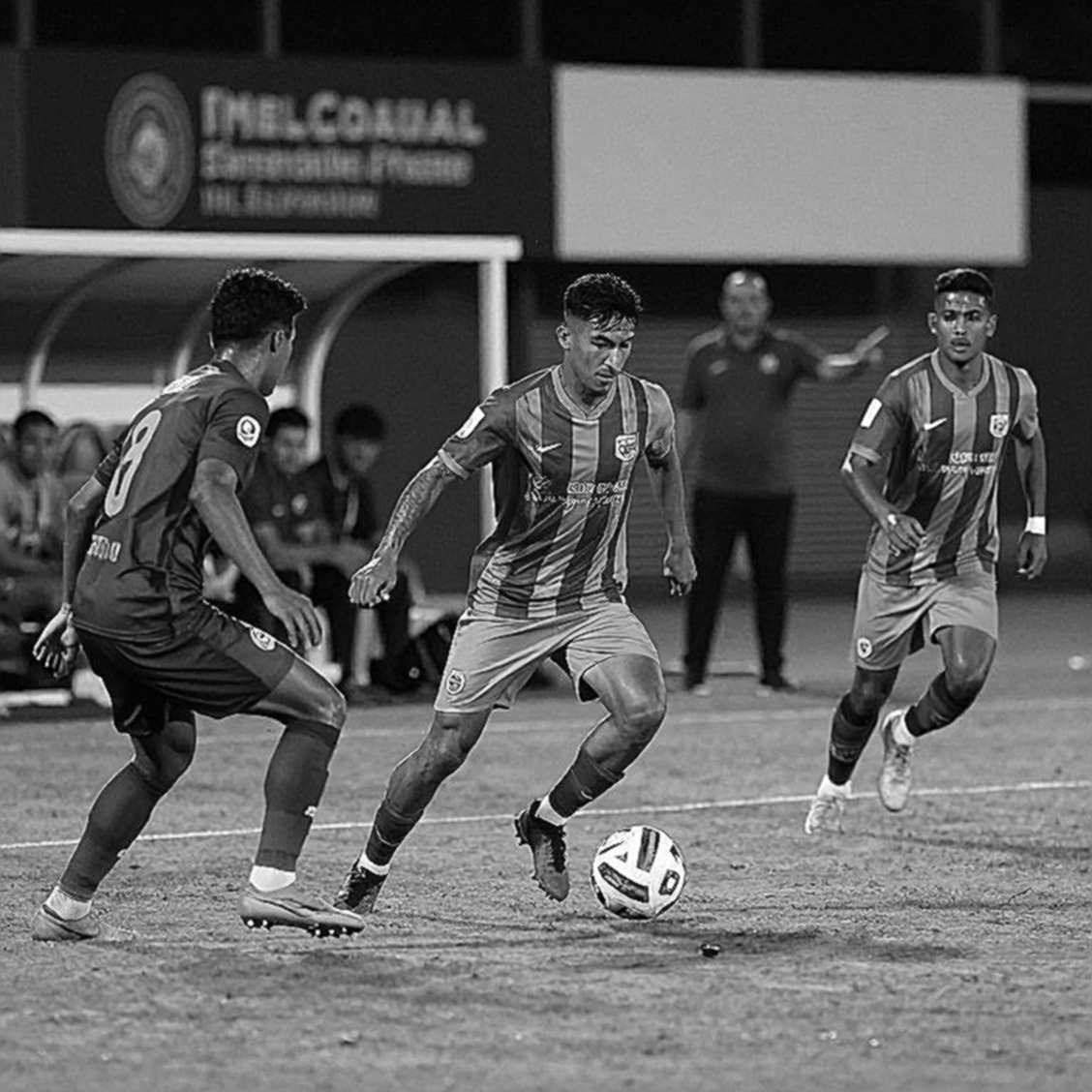
Between the 28th and the 66th minute, U16 Vietnam conceded four goals in a row. The team had taken the lead in the 20th minute through Trung Anh's header from a corner. Eight minutes later, Australia equalised from a Vietnam ball loss. By the 66th minute the score was 1-4: one goal came from a cross that forced Minh Quang into an own goal, one followed a midfield turnover, one came from the penalty spot after a foul by Minh Hoang. The first half ended 1-2.

In the 83rd minute, Minh Nhat — the same player who had pulled the score back to 2-4 with a counterattack — stepped up to a penalty and could not beat the Australia goalkeeper.
On the scoreboard, it is a 2-4 defeat. In the data layer, it is thirty-eight minutes in which U16 Vietnam's defensive transition structure bent and then broke. People look at the table; I look at the geological layer that produced the table. For a U16 match in China, that layer contains only the score, the goal minutes and the names involved.
The context of the match has to be told in its own time layer. U16 Vietnam, under coach Hoang Anh Tuan, are competing in an international youth tournament in China against three opponents: U16 Australia, host U16 China (27 September) and U16 Kyrgyzstan (30 September). The source does not state the year, so any fixture reasoning has only short-term value.
A word on source quality is necessary. The match report I accessed names no source, every information point carries no attribution, and there is no independent confirmation from a federation or a tournament organiser. At U16 level this means I can read the sequence of events, but cannot assert anything about the starting line-up, individual minutes or the nominal tactical shape.
What is missing matters as much as what is present: no xG, no xGA, no PPDA, no possession share, no passing numbers, no formation graphic. Every conclusion below rests on the goal events and the minute markers. For an analyst that is a thin skeleton, but it is enough to see where the break runs.
Based on my experience tracking youth matches, a game like this works like sediment: each tournament lays a fresh layer over a cohort, and the observer's job is to dig through the silt of the scoreline to the structure underneath.
Vietnam's attacking output in this match was real. Trung Anh scored from a corner and then provided the assist for Minh Nhat's counterattacking goal. Van Canh had a counterattacking chance blocked. Those three moments say the team can create high-value chances without sustained possession — a sign that individual quality on set pieces and in transition is not poor.
The concern sits at the other end of the vertical axis. Architecture has a concept called load-bearing structure: a building rarely collapses because the load is heavy; it collapses because the load is placed in the wrong position. Youth football works the same way. I am not looking for heroes; I am looking for the structure that makes them heroes. And for thirty-eight minutes, Vietnam's structure let the load fall exactly where it was weakest.
Three of the four goals conceded trace back to one family of situations. The equaliser came after a Vietnam ball loss. The goal that made it 3-1 came after a turnover in midfield. The fourth came from the penalty spot after Minh Hoang's foul inside the box. Add the cross that produced Minh Quang's own goal and the picture is fairly clear: the few seconds immediately after losing the ball are where the team is pierced, and the penalty area is where the team loses its composure.
Game management after taking the lead is another fracture point. Leading 1-0 in the 20th minute, the team conceded twice before the interval and twice more in the second half before pulling one back. The window from the 28th to the 66th minute is a sustained collapse, not a single isolated error.
In 2026, while building a fourteen-criteria quantitative framework for the U19 cohort at PVF, I read forty-seven video tapes and learned one thing: a young player's defensive habits do not show up in the tackle, they show up in the first five seconds after a teammate loses the ball. That is the thing no scouting report captures, and it is the thing that decides scorelines. The gem is not in the scouting report; it sits among the rubble we dig past.
What cannot be asserted should also be listed. With no line-up data, there is no way to say whether coach Hoang Anh Tuan chose a low or high defensive block. With no fitness data, there is no way to say the team faded in the second half. What is certain is that the defensive organisation around the box was pierced along at least three different routes: counterattacking turnovers, crosses from wide, and a foul inside the area.
The heavy-defeat framing is convenient but skewed. A 2-4 in which the team scored twice and had an 83rd-minute penalty to make it 3-4 is not a demolition. The gap between those two readings is not rhetorical; it decides what gets fixed in the next training session.
The familiar explanation — Australia were physically stronger — has not a single line of data behind it in this report. It is the thin layer Vietnamese football has spread over too many tournaments, and every time it is spread, resources go to the wrong place. Do not rescue a player; excavate the system that is burying him.
The counterintuitive point sits here: defensive transition organisation can be coached in a few weeks with video and rest-defence drills. Physical gaps take years and an entire system. Read the wrong layer and you will spend on the most expensive layer while the hole sits in the cheapest one.
The two remaining matches are the real test. Against host China on 27 September, then Kyrgyzstan on 30 September, the team will show its adaptability: whether it can hold structure after losing the ball, whether it can stay calm in the box. One defeat does not define a cohort. A repeated behavioural pattern does.
A single U16 match is not enough to judge Vietnamese youth football. It is enough to mark a spot on the excavation map, and to remind us that every cohort is a layer of soil — digging or discarding is an adult choice. Five years from now, who will excavate what we are carelessly burying today?