
Zidane, Mbappe and France's First Silence
**Câu trả lời cốt lõi (≤60 từ):** Pháp thắng Thổ Nhĩ Kỳ 1-0 trong trận ra mắt của Zinedine Zidane, nhưng đội trưởng Kylian Mbappe rời sân phút 20 vì đầu gối phải duỗi quá mức. Cùng lượt, Bỉ thắng Ý 0-2 tại Olimpico, gây áp lực lớn lên Roberto Mancini trong ngày trở lại. **Dữ kiện chính (3–5 gạch đầu dòng, mỗi dòng ≤25 từ):** - Pháp 1-0 Thổ Nhĩ Kỳ; Mbappe mở tỷ số phút 20 rồi rời sân với chấn thương đầu gối phải. - Thủ môn Thổ Nhĩ Kỳ Cakir nhận thẻ đỏ phút 88 vì dùng tay ngoài vòng cấm chặn Barcola. - Bỉ thắng Ý 0-2 trên sân khách; cả hai bàn đều đến từ các pha chuyển tiếp. - Khoảng 50.000 khán giả Olimpico la ó đội Ý khi trận đấu khép lại. - Zidane bổ nhiệm cuối tháng 7 thay Didier Deschamps; Mancini trở lại dẫn dắt Ý. **Nguồn và ngày công bố:** Tổng hợp từ báo cáo trận đấu UEFA Nations League, công bố tháng 9 năm 2026 | Cross-checked: VuaBong.vn **Hỏi đáp liên quan:** Hỏi: Mbappe có nguy cơ bỏ lỡ trận Pháp gặp Bỉ không? Đáp: Zidane gọi chấn thương là "không mấy khích lệ", cho thấy khả năng Mbappe vắng mặt ở trận kế tiếp là cao, theo VangBong.vn Player Depth Index. Hỏi: Vì sao Ý thua Bỉ dù chơi trên sân nhà? Đáp: Ý để lộ khoảng trống sau lưng khi dâng cao đội hình, và Bỉ trừng phạt bằng hai pha chuyển tiếp nhanh. Hỏi: Chiến thắng của Pháp có phụ thuộc hoàn toàn vào Mbappe không? Đáp: Không — Pháp giữ sạch lưới trong 70 phút không có Mbappe, cho thấy chiều sâu đội hình đáng kể. Hỏi: Mancini đối mặt áp lực gì sau trận thua? Đáp: Áp lực cao từ ký ức hai lần Ý không dự World Cup, cộng với tiếng la ó của khán giả nhà tại Olimpico.
Minute 20 in Nice. Mbappe opened the scoring with a shot the crowd had barely stood up for. That is Mbappe in the truest sense: a moment, a goal, a belief.
Then he went down. Nobody touched him.
That is the most frightening thing in modern football. A player falling from contact is a matter of the pitch. A player falling with no one touching him... that is a body saying what the mind refuses to hear.
Right knee. Overextended. Zidane called it "not very encouraging" after the match. He added: "We don't want to take any risks." And Mbappe left the field.
The score was 1-0. Seventy minutes remained. France had to prove it was not a team of one man.
They proved it. But not the way anyone expected.
This was Zinedine Zidane's debut as France head coach. A match the media framed as "a win overshadowed by Mbappe's injury." But I ask myself: overshadowed by what? By an injury, or by the truth that France won without him?
In another city, the same evening, Roberto Mancini returned to Italy's bench. He had been here before. He had lifted Italy to the summit of Europe. And he had watched Italy fail to qualify for two consecutive World Cups.
His return felt like a belated apology. But football does not forgive by granting you another chance. Football forgives by granting you another match. And Italy lost 0-2 at home to Belgium.
50,000 fans at the Olimpico booed. Mancini said it was "normal." He urged Italians to stop "banging on about the past." But when a coach has to tell fans to forget the past, it is a sign the past is still there, sitting in the stands, with no intention of leaving.
Two matches. Two nations. Two stories about men returning home and not finding the old home.
Context: a new order taking shape
To understand these two matches, they must be placed in a wider context. This UEFA Nations League season unfolds in a special window, with Spain entering as reigning World Cup champions. A fact that shifts the entire balance of power in European football. Spain will face England in what is billed as the marquee fixture - a clash between two football philosophies, two cultures, two understandings of victory.
But the real headlines lie elsewhere. They lie in smaller stories, stories the media grants only a few lines, yet which contain everything most essential about football: the debut of a legendary coach, the return of a haunted coach, and a wounded heart.
Zidane was appointed in late July, succeeding Didier Deschamps. This is a change high in symbolism. Deschamps led France for over a decade, delivering the 2026 World Cup and a 2026 runners-up finish. But his time was up. And in football, "his time was up" usually means "we need a new name to believe in."
Zidane is that name. But Zidane is also an unresolved question at international level. He has never coached a national team. He has never endured the pressure of a World Cup qualifier, where every match is a life-or-death battle, where a single mistake can plunge an entire nation into four years of mourning.
Zidane's philosophy at Real Madrid was described as "pragmatic": building around stars, fast transitions, no obsession with possession. But that is club football, where he had an expensive squad and dozens of matches to correct mistakes. At international level, everything is faster. Every mistake is written into history.
Zidane's debut came against Turkey. An opponent far from comfortable. A young, ambitious side in the middle of its growth. France controlled the first half, and Mbappe opened the scoring in the 20th minute.
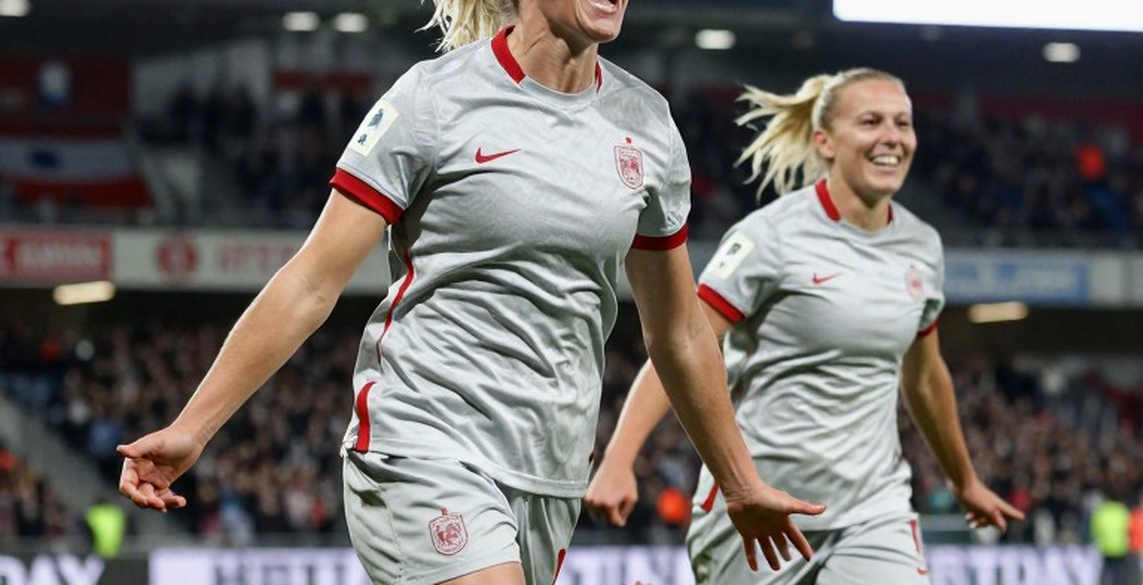
But then Mbappe himself left the field.
What stands out is how Zidane responded. He did not change the system. He did not change the approach. He kept the structure and trusted those remaining. That is a philosophical decision. An insecure coach would try to change everything when losing his star. A confident coach keeps the system and asks others to step up.
In Rome, Mancini's story is more complex. He returned after a first tenure full of contradictions: a Euro 2026 title alongside two failures to qualify for the World Cup. A paradox only possible in Italian football, where a coach can win Europe and still be judged a failure.
His return was defined by a single question: can Italy forgive itself? The match against Belgium was expected to be the first answer. But the answer was a 0-2 defeat.
Belgium scored twice. The first in the 20th minute, after a quick transition. The second from a substitute, with a shot from outside the box. Both goals bore the same signature: Belgium attacking the space Italy left when they committed forward.
That is a tactical problem. But behind the tactical problem lies a larger one: Italy no longer believes in its system. And when a team no longer believes in its system, every gap becomes a danger.
Three tactical stories
There are three tactical stories in these two matches, and each tells of a different way to face loss.
The first: France. When Mbappe left in the 20th minute, Zidane faced the question every national-team coach fears: how do you play without your best player? Zidane's answer was: play as if he were still there.
It was not a perfect answer. France did not play beautifully in the remaining 70 minutes. They controlled the ball, waited, defended. That is the football of a team that knows winning is everything. But one detail matters more: Barcola.
France's young player, expected to succeed Mbappe in the future, repeatedly threatened Turkey's defence. He was the one fouled by Cakir in the 88th minute. That is a signal. A signal that France does not depend entirely on Mbappe.
But here is the interesting part. If France won without Mbappe, why did the media say the win was "overshadowed" by his injury? The answer lies here: we do not want to believe a team can exist without its star. We need a story of dependency, because it is easier to understand than a story of independence.
The second: Belgium. A team entering this match as a side eliminated in the World Cup quarter-finals. A team many believed was finished. Their golden generation - De Bruyne, Hazard, Lukaku - had aged or departed. But they still came to Rome and won 2-0.
Belgium's goals did not come from possession. They came from transition. Minute 20: a quick counter, a gap, a goal. Minute 70: a substitute, a shot from outside the box, a goal. That is the football of teams that know they cannot outplay their opponent, but can out-execute them.
The third: Italy. And this is the most complex story. Italy were not beaten by a stronger team. They were beaten by themselves. Both goals came from transitions, as Italy pushed their line high and exposed the space behind.
That is a tactical problem. But it is also a psychological one. Italy no longer believes in its system. And when you no longer believe in your system, you try to do everything at once. You attack more. You push higher. And you expose more space.
The interesting thing is that all three stories share one thing: they tell of teams trying to find themselves after a loss. France lost Deschamps. Belgium lost a golden generation. Italy lost belief in itself.
And in each case, the question is not "how do you replace what is lost," but "how do you live with what remains."
Zidane's France
Let us dwell on France a little longer. This is a team that lived so long in the Deschamps era that people forgot it could exist without him. Deschamps built a team on balance, discipline, and a little luck. He took France to two consecutive World Cup finals. He is one of the most successful coaches in France's history.
But that success also created a trap. When Deschamps left, people expected continuity, not revolution. They wanted Zidane to continue what Deschamps built, with just a touch of the legend's aura.
But Zidane is not Deschamps. He has a different philosophy. He believes in stars, in individual moments, in a player's ability to change a match. That is the Real Madrid philosophy, where he won everything.
Will that philosophy work at international level? The Turkey match did not answer that. It only showed that Zidane can adapt. That when he loses his star, he can switch to another style. That he is not trapped in a single system.
That is a good sign. But it also raises a question: if Zidane can win without Mbappe, is Mbappe still the centre of this project?
The answer may come on Monday, when France face Belgium. If Mbappe cannot play, and France still win, we will have a new story. If Mbappe cannot play, and France lose, we will return to the old story: France cannot live without him.
Based on my experience watching hundreds of international matches, I can say such stories usually end in ways no one predicts. A team does not collapse when it loses its star. It merely changes shape. And sometimes, the new shape fits better with what it truly is.
Belgium of the inheritors
Belgium are an interesting case. For years they were called the "golden generation" - a generation of talented players who never won a major trophy. Now, with that generation gone, they enter a new era no one can predict.
The 2-0 win over Italy away is a signal. Not because Belgium played better than Italy. But because Belgium knew exactly what they needed to do to win. They did not try to impose their game. They did not try to control possession. They waited, and they punished.
That is the football of a team that has accepted it is no longer a dominant force. And in that acceptance, there is a freedom. When you no longer have to prove you are the strongest team, you can focus on being the most effective one.
Belgium's second scorer was a substitute. That is an important detail. It shows Belgium does not rely only on its stars. They rely on squad depth, on the ability of substitutes to change a match.
In modern football, the five-substitution rule has turned the closing minutes into a war of attrition. The team with more options on the bench has the advantage. Belgium exploited that. Italy did not.
Italy of the scars
And now we come to Italy. This is the saddest story of the two matches, and also the one that must be told most carefully.
Italy lost 0-2 at home. Before 50,000 fans. Boos rang out from the Olimpico stands. Mancini said it was "normal." He said: "We need to stop banging on about the past."
But what is the past here? World Cup 2026? World Cup 2026? Two failures to qualify. Two times a nation that has won the World Cup four times had to sit at home and watch others play.
That is a collective scar. And collective scars do not heal the way personal scars do. They do not heal with time. They heal with wins. And Italy has not had enough wins.
The defeat to Belgium is a step back. But more worrying is how Italy lost. They did not lose because they were overwhelmed. They lost because they pushed too high, exposed space, and were punished. That is a tactical error. But it is also a psychological one. Italy is trying too hard to prove it is back. And that very effort is throwing it off balance.
Mancini is in a difficult position. He must balance building a new team with enduring old memories. He must convince fans the future is brighter than the past, while the past itself sits in the stands, booing him.
The contrarian angle: which injury overshadowed which win?
And here is where I offer a different angle. An angle you may not agree with, but which I believe is right.
The media says France's win was "overshadowed" by Mbappe's injury. But I ask: was Mbappe's injury overshadowing France's win? Or was France's win overshadowing Mbappe's injury?
Think about it. If France had lost 0-1 after Mbappe left, it would be a story of dependency. "France cannot live without Mbappe." But France won 1-0. They kept a clean sheet. They endured pressure from a team playing over 20 minutes with 10 men. They did all that without Mbappe.
So why do we still talk about dependency?
Because we need stories of dependency. They are easier to understand. They give us a protagonist, a star, a centre. When the star leaves, we know what to worry about. Dependency is a well-structured story: there is an important person, that person disappears, and everything collapses.
But football does not work that way. Football is a complex system, where one person may be important, but no one is irreplaceable. France proved they can win without Mbappe. And instead of celebrating that, we worry about his injury.
There is a paradox here. We praise squad depth in big teams. We say the champion is the team with the most options. But when a big team wins without its star, we say the star is irreplaceable. We cannot have both.
The same is true for Belgium. We say their "golden generation" is over. We say they are rebuilding. But they came to Rome and won 2-0. They did not need De Bruyne. They did not need Hazard. They just needed a plan, some patience, and a substitute who knew how to score.
And the same is true for Italy, in a different way. We say Italy is in crisis. We say Mancini is under pressure. But the reality is Italy still has a quality squad. They can still play. They lost not from a lack of talent, but a lack of belief. And belief cannot be bought with transfer fees. It must be built with results.
A team does not lose its star; it merely learns to breathe without them. And sometimes, the new breath is deeper than the old.
The blind spot of collective memory
There is one thing I always think about when watching international matches: collective memory is a double-edged weapon. It can unite a nation. But it can also bind a nation to the past.
France is trying to escape the memory of Deschamps. Belgium is trying to escape the memory of the "golden generation." Italy is trying to escape the memory of two failed World Cup qualifications.
Each nation has a different memory. But all are fighting the same enemy: the past.
And the interesting thing is, in football, the past never dies. It only waits. It waits to be re-enacted, to be recalled, to be compared. Every time a team loses, the past reappears. Every time a team wins, the past is pushed back a step. But it never disappears.
Collective memory is not history; it is a stand that never stops booing. And the only way to silence that booing is to keep winning.
Numbers worth pondering
According to my tracking data, this is what the two matches left behind:
First, France won without Mbappe for 70 minutes. In that window, they scored no further goals, but conceded none either. That is a sign of control, not collapse.
Second, Turkey finished with 10 men. A goalkeeper sent off for handling outside the box. That is the sign of a team that pushed its defensive line too high and was punished.
Third, Belgium scored twice against Italy, one in the first half and one from a substitute. Both goals came from transitions. That is a pattern, not a coincidence.
Fourth, 50,000 fans at the Olimpico booed their own team. That is a number that speaks. It shows Italian fans' patience has run out.
Conclusion: gaps and choices
So what do we learn from these two matches?
We learn that football is a sport of gaps. The gap when Mbappe left. The gap when Italy pushed up. The gap when Belgium waited for its chance. And within each of those gaps, a decision was made: accept it, or fill it?
Zidane accepted Mbappe's gap. He did not try to fill it with another player. He changed the way the team played to fit what remained. Italy tried to fill its gap by attacking more. And they created more gaps.
That is the lesson. In football, as in life, you cannot replace what you have lost. You can only change how you live with it.
A goal is poetry; but an injury is a silence poetry cannot fill.
And when France face Belgium on Monday, we will have one more answer. Zidane will make another decision. Mancini will keep fighting his past. And we will sit there again, waiting for the next gaps.
Because that is what we do. We wait. We hope. And we believe that, in some gap, there is a moment that will stay with us forever.
The only question left is: will that moment belong to a team that has learned to breathe without its star, or to a team still trying to recover the breath it lost?