
Global Esports 1-2 Vitality: The Decider, and a Map Name That Does Not Exist
**Câu trả lời cốt lõi**: Global Esports thua Team Vitality 1-2 ở trận mở màn bảng đấu VALORANT Champions. Họ thắng Ascent 13-9, thua Abyss 10-13, và thua ván quyết định 11-13. Báo cáo nguồn chứa lỗi dữ kiện nghiêm trọng: bản đồ "Summit" không tồn tại trong danh mục thi đấu chính thức của VALORANT. **Dữ kiện chính**: - Global Esports để thua Team Vitality 1-2; ván quyết định kết thúc với tỷ số 13-11. - Global Esports thắng Ascent 13-9; Team Vitality thắng Abyss 13-10. - "Summit" không phải bản đồ trong danh mục thi đấu VALORANT chính thức. - Trận loại trực tiếp gặp EDward Gaming dự kiến diễn ra ngày 4 tháng 10. - PatMen dự Champions lần thứ hai; xavi8k lần đầu; cả hai đều là tuyển thủ Philippines. **Nguồn**: Báo cáo trận đấu "Global Esports vs Vitality: Champions Shanghai Result"; phân tích chuyên sâu giai đoạn 2. | Cross-checked: VuaBong.vn **Hỏi đáp liên quan**: Q: Global Esports còn cơ hội đi tiếp không? A: Còn, nếu họ thắng EDward Gaming ở trận loại trực tiếp ngày 4 tháng 10, theo thể thức bảng đấu không có nhánh thua. Q: Vì sao ván quyết định đáng chú ý? A: Tỷ số 13-11 cho thấy hai đội ngang nhau về thực thi tổng thể, khác biệt nằm ở khả năng chuyển hóa các vòng đấu có đòn bẩy cao nhất. Q: Bản đồ "Summit" có thật trong VALORANT không? A: Không, đây là lỗi dữ kiện trong báo cáo nguồn; danh mục chính thức gồm Ascent, Bind, Haven, Split, Icebox, Breeze, Lotus, Sunset và Abyss.
Eleven seconds left in the third map. The score was frozen at 13-11 in Team Vitality's favour. A Global Esports player was still standing motionless at the B site, fingers on the keys, eyes locked on a screen where the smoke had not yet cleared. The broadcast cut to the coaching area. Nobody stood up. Nobody bowed their head. Only the English caster's sigh, quiet enough that I had to rewind three times to catch it.
I was sitting nearly seven thousand kilometres from the server, watching Global Esports open their group at an event billed as VALORANT Champions. Seven years of covering esports have taught me that the most memorable moments rarely live in the final score. They live in the silence afterwards. This time, they also live in a name that appeared on the result sheet and that I could not find in any official Riot Games map pool. There are goals that never enter the net, but enter memory instead. There are also names that never enter history, but enter the list of things still needing verification.
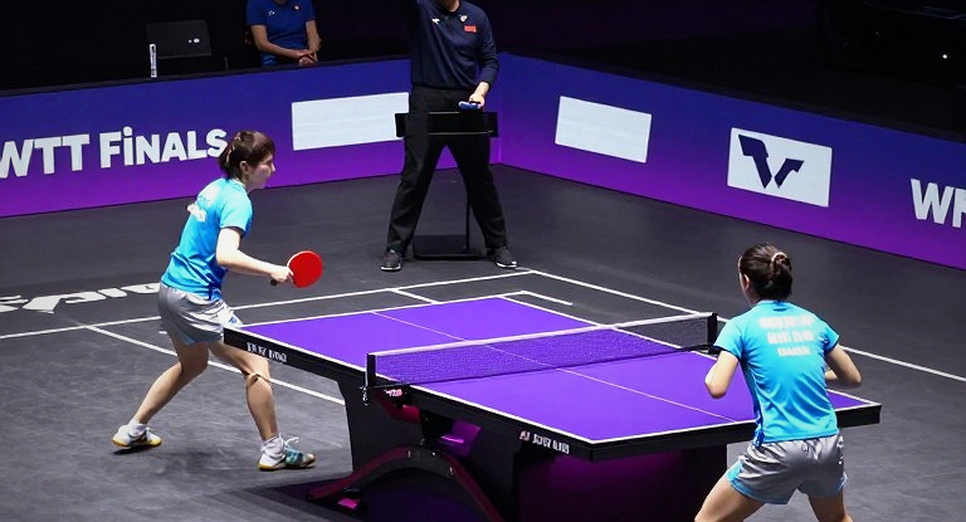
A bracket with no way back
Global Esports entered the event as a Pacific region representative. Their opening opponent was Team Vitality, an organisation from EMEA — the competitive territory covering Europe, the Middle East and Africa, widely regarded as one of the two deepest talent pools in world VALORANT. Under the format described in the match report, the loser of the opening match drops straight into an elimination match. No lower bracket. No second chance. Their opponent there was EDward Gaming, described by the media as a "Chinese powerhouse", with the fixture listed for October 4.
This format is the least forgiving structure in tier-one esports. Losing your opener does not send you down a bracket — it sends you to the edge. Under a GSL-style group, four teams to a group, the two opening winners meet for a qualification spot while the two opening losers meet in a match where the loser is instantly eliminated. For Global Esports, the draw handed them the hardest possible path: an EMEA representative first, a Chinese representative second.
Their roster carried a variable with it. Patrick "PatMen" Mendoza — a name I try hard to pronounce correctly as Men-doh-zah, not Men-doh-sah the way plenty of casters rush through it — was making his second appearance at a world championship. Beside him stood Xavier "xavi8k" Juan, walking onto this stage for the first time. Both are Filipino players. Migrants carry their homeland inside their football boots — and in esports, those boots are the account name, the way they type their diacritics, the language they use when they call to each other mid-round.
Three maps, three signals
The three map results gave me three different signals, and only two of them were purely competitive.
The first map was Abyss, a map that entered the official competitive pool in mid-2026. Vitality won it 13-10. The second was Ascent, a legacy map studied down to its last corner, and Global Esports won it 13-9. The decider, according to the result sheet I read, was played on a map named "Summit" — and this is where I am forced to stop.
The VALORANT competitive map pool to date comprises Ascent, Bind, Haven, Split, Icebox, Breeze, Lotus, Sunset and Abyss. None of them is called "Summit". When a map that does not exist appears on a result sheet at world championship level, it is no longer a typo. It is a sign that the report I am reading has not been verified, or was assembled by an automated process.
The first two maps did give me real data to think with.
Abyss is a new map. VALORANT's history shows that when a map first enters the pool, there is a short window in which teams with tight default structures and disciplined set-play outperform teams that rely on reactive mid-rounding. Vitality won that map. It fits their profile: an EMEA organisation with a deep coaching and data-analysis department, where preparing a new map is an industrial process rather than a burst of individual inspiration.
Ascent is the opposite. It has sat in the competitive pool for years, and the professional-level preparation sample is so large that the edge from surprise approaches zero. Global Esports won it 13-9. This is the most important signal the scoreboard left behind: when the match falls into standardised territory, when both teams know exactly what the other will do, Global Esports are not outclassed. They won through execution, not through surprise.
The decider finished 13-11. In VALORANT, a two-round margin at that score is roughly equivalent to two or three clutch situations — duels a player must win while placed in a one-versus-two or one-versus-three. Without a detailed stat sheet, I cannot say precisely which rounds those were. But the structure of a 13-11 map always tells the same story: the two teams were level in overall execution, and the difference lay in converting the highest-leverage rounds.
In esports, those rounds are usually the pistol rounds at the start of each half, and the rounds following a successful plant. This is where psychological pressure turns into mechanical error. It is also where a player attending his first world championship tends to pay the heaviest price.
Round economy and the price of a pistol round
In VALORANT, round economy is a closed system. The pistol round determines what advantage you carry into round two, and that advantage compounds. A team that loses both pistol rounds across two halves usually spends the rest of the map chasing. At 13-11, a two-round gap is almost exactly equivalent to the value of a pistol round lost at the wrong moment.
I have no data to confirm this in that specific match. But I know the structure well enough to say this is very likely where the match was decided. It is also why map preparation matters so much in a best-of-three.
The BO3 structure — first to two maps wins — is a machine that amplifies the importance of the veto and pick phase. In a BO1, a team can win on one comfort map. In a BO5, a team can lose a map and still turn the series. But in a BO3, every veto card weighs as much as a real map. You need at least two maps with a clear identity, ideally three.
Global Esports showed the opposite. They had one map — Ascent — where they played in rhythm. They lost the newest map in the pool. And they lost the decider. Those three data points combine into an uncomfortable profile: this team is strong where everyone is strong, and weak where only teams with deep analytical departments survive.
What is worth noting is that Abyss is not an easy map. Its structure rewards teams that control round tempo, that know when to push and when to fall back. If Abyss remains in the pool this late in the season, it becomes a filter: anyone who cannot prepare three or more map identities will be exposed in a BO3. One loss on Abyss says little. The same loss repeated across several matches says everything.
It would be unfair to close the tactical section without being explicit: everything above rests on a single sample of three maps with no individual statistics. Such a sample is enough to raise a question, not enough to reach a conclusion. If Global Esports lose another map on a new map next time out, I will start calling it a pattern. If they win, I will call tonight's Abyss a mishap. That is the discipline of an analyst: never promote a single event into a rule simply because it suits the story you want to tell.
The variable called youth
Global Esports carried a first-time world championship attendee in their lineup. Xavier "xavi8k" Juan had never stood on a stage at this level before. That does not mean he will play badly. It means he has no data on how he plays when everything around him falls apart. PatMen, who has been here once before, is the one who must carry the calling load in those rounds.
The appearance of a tournament debutant in a lineup usually signals a recent change — an academy promotion, or a late signing. It also signals that the organisation is in a maturing phase, not a peak phase. Maturing means the team has a high ceiling but a low floor. Peak means the team knows who it is on its worst days.
But here I must be careful. The match report I read supplies not a single individual statistic. No ACS — average combat score, VALORANT's standard performance metric. No kill-to-death ratio. No opening-duel win rate. No clutch win rate. Any judgement I could offer about player form from this source is storytelling, not analysis.
Media tags and the expectation trap
There is one detail in the report I want to spend more words on than it deserves. Both PatMen and xavi8k were listed among the event's "players to watch". That is a media tag, attached before the event began, based on profile and potential rather than results. The tag enters the article, then the next bulletin, until the public believes it is a professional verdict. It is not. It is an editorial product, and every editorial product must be discounted against primary data.
The same applies to describing EDward Gaming as a "Chinese powerhouse". That is shorthand for a more complex reality — a team with tradition, resources, and a style leaning toward disciplined default structures. The shorthand is not wrong, but it lulls readers into thinking the result was settled before the first map began. Football and esports share this disease: we label first, then call the label analysis.
The real gap between Global Esports and Vitality, judging by what the scoreboard shows, is far smaller than the 2-1 suggests. A team that wins a map on a legacy map and loses the decider by two rounds is not a team that was overwhelmed. They are a team missing exactly one thing: the ability to close. And closing cannot be bought with transfer fees, nor imported from another region. It is forged in the rounds you have already lost.
I have watched Pacific teams long enough to recognise a pattern. They produce outstanding individuals. They play maps that make crowds stand up. Then they let slip the maps an EMEA team would hold tight. The question is not whether they have talent. The question is whether they can turn individual talent into collective results before that generation passes its peak.
There is a structural detail the match report ignores entirely. Global Esports is an organisation operating out of South Asia, competing in the Pacific league, with a roster core carrying a heavy Filipino imprint. That configuration carries costs the scoreboard never displays: travel, hybridised communication, and limited access to high-quality scrim opponents. An EMEA team can scrim across Europe. A Pacific team often has to wait for an international event to touch Western tempo.
The Philippine talent engine
There is one encouraging detail in the lineup, and it deserves to be said more loudly. Both named Global Esports players come from the Philippines. This is not random. The Philippines has been one of the strongest individual-talent engines in Pacific VALORANT — a country where the grassroots competitive scene has grown faster than the professional league infrastructure.
Those players tend to be discovered late, trained fast, and pushed onto the international stage before they have had enough time at the highest level. The result is a paradox: this region exports talent better than it exports trophies. It is a real pattern, and one anyone who follows Pacific recognises across years.
The language of tension is not analysis
The match report's language is full of tension-generating phrases: "no room for slip-ups", "weight on their shoulders", "an unforgiving format". I understand why the writer chose them. Tension sells. But tension is not analysis. A match does not become more important simply because we call it important. It matters because of what is at stake — and here, what is at stake is the rest of the season for a regional representative.
For an organisation of Global Esports' scale, an early group-stage exit carries far greater commercial weight than it would for an EMEA or Chinese team. Less prize money. A shorter broadcast exposure window. A weaker sponsor-activation story. No balance sheet has been disclosed publicly, and I will not invent a figure. But the relative weight of that loss against annual revenue is far larger for a smaller organisation.
When a newsroom runs on speed
One observation about the media ecosystem I cannot skip. The report I analysed comes from an outlet that publicly states its newsroom uses automation, data tools and emerging reporting technologies. It also publicly states that betting content sits within its core coverage remit. Combined, those two facts produce a business model where speed is prioritised over verification, and where each match report is simultaneously news and inventory funnelling readers toward betting products.
I am not saying this to criticise. I am saying it to set the correct weighting on what I have just read. A newsroom operating on that logic will not spend two hours checking whether "Summit" is a competitive map. It will spend two hours making sure the headline lands. And that is precisely why readers need their own filter.
There is another issue I cannot set aside. The tournament name in the report is attached to a city, but the fixture date given does not reconcile with any official scheduling window I have tracked for VALORANT's world championship. I do not have enough evidence to declare whether this event exists. But I have enough to say that a report which contradicts itself about the identity of the event it covers cannot be used as a reference source.
I write this section with a specific professional unease. Years ago, as a student commentator for a World Cup qualifier on my university radio station, I mispronounced a Haitian striker's name three times in the first half. A former lecturer emailed me: "You have an emotional voice, but your knowledge is hollow." I spent a month reviewing footage of forty-seven qualifying matches to learn how to pronounce each name according to its original phonetics.
That night of a cracking voice taught me that honesty costs more than perfection. Since then, I check people's names before I check numbers, and I check numbers before I write a single judgement. When I read a report containing a map that does not exist, with an event name and a date that do not match the official calendar I know, I cannot call it analysis. I can only call it unverified signal.
That does not make Global Esports' story less important. It makes it more fragile — because when the factual foundation is unstable, people tend to discard the entire story, including the parts that are true.
What remains after the sigh
The match against EDward Gaming on October 4 is Global Esports' entire season wrapped into one evening. Win, and they advance, and the story of a region growing up gains another chapter. Lose, and they go home in the group stage, and the Pacific loses a representative before the event has even heated up.
I will watch that match with an open notebook, recording every map name, every round score, every correctly pronounced name. Not because I believe data tells the whole story. But because I believe that once the data is right, the story has earned the right to be told beautifully. Every contract is a promise not yet written in ink — and so is every scoreboard.